Living biohybrid miniature robots (LBMs) combine microbes, animal cells or insects with engineered payloads to gain natural movement, sensing and adaptability where rigid microrobots fail. Biological actuators—bacteria, microalgae, immune cells and sperm—offer unique strengths such as tiny‑scale propulsion, environmental responsiveness and cargo delivery. Applications range from targeted drug delivery (including crossing the blood–brain barrier in animal tests) to environmental cleanup and insect‑assisted search‑and‑rescue, but major challenges remain around lifespan, immune response, mutation risk and ethical/regulatory oversight.
Living Biohybrid Robots Could Revolutionize Medicine, Environmental Cleanup and Search‑and‑Rescue
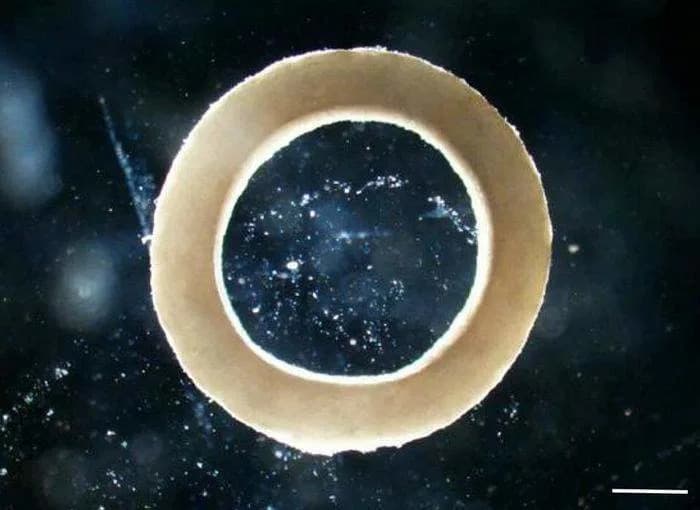
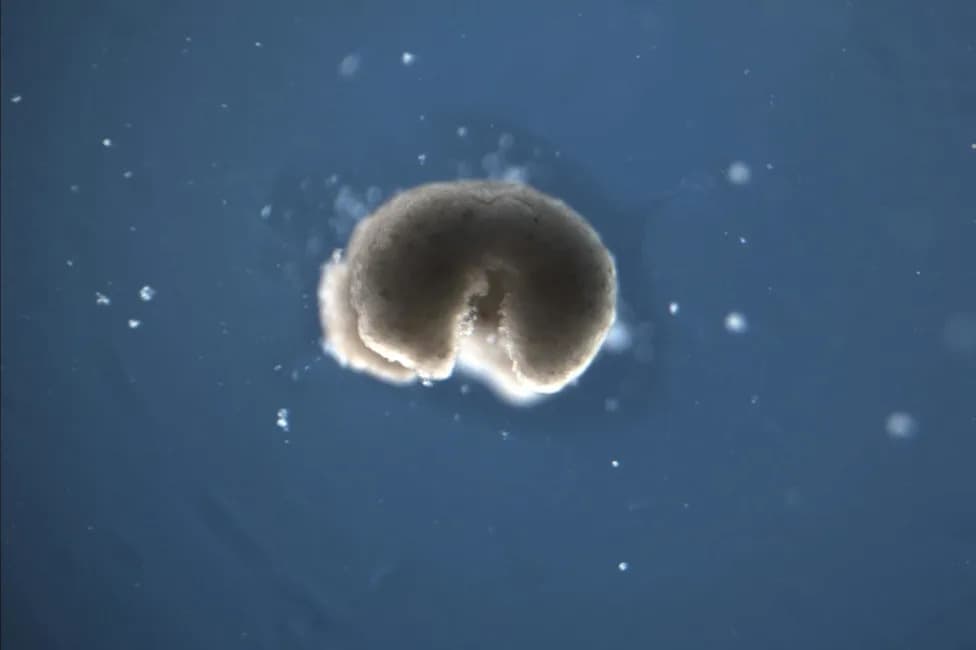
Living biohybrid miniature robots use biology to move, sense and adapt where traditional machines struggle. (CREDIT: Tomohiro Morita, Minghao Nie, and Shoji Takeuchi)
Tiny robots work well on a lab bench but struggle in messy, real-world environments. A new review proposes a different path: instead of ever-smaller chips, engineers can partner with living systems to build living biohybrid miniature robots (LBMs) that combine microbes, animal cells or insects with engineered payloads to gain movement, sensing, adaptability and even self-repair.
What Are LBMs?
LBMs pair biological actuators (bacteria, microalgae, immune cells, sperm cells or whole insects) with synthetic components such as drug carriers, magnetic particles or tiny electronics. This approach leverages embodied intelligence—natural behaviors evolved by organisms—so systems can respond to chemicals, light, magnetic fields or physiological signals rather than relying solely on external control.
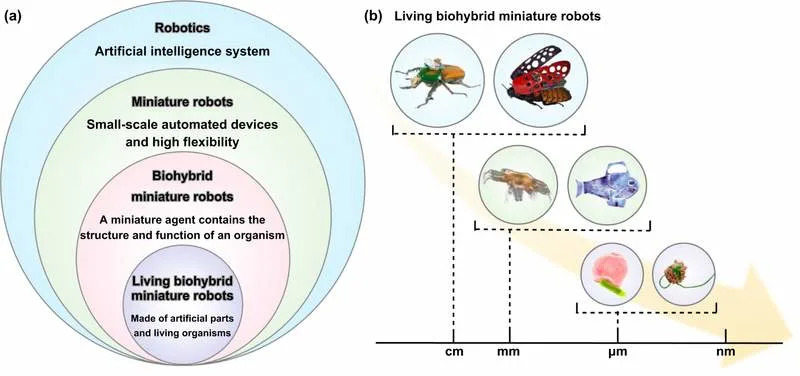
The relationship diagram and size range of LBMs in the field of robotics. (a) Schematic showing the relationships between robotics, miniature robots, biohybrid miniature robots, and LBMs. (CREDIT: International Journal of Extreme Manufacturing)
How Biology Helps
Bacteria and other microorganisms excel at moving through confined, complex spaces. Typical bacterial flagellar motors are roughly 1–3 μm wide and can pass through capillaries as narrow as ~4 μm; some bacteria swim at speeds near 100× their body length per second. For microscopic tasks, bacterial thrust ranges from about 0.5 piconewtons (E. coli) to roughly 4 piconewtons (Magnetospirillum), enough to carry or steer tiny payloads.
Microalgae add complementary capabilities: they swim, transport cargo and produce oxygen by photosynthesis. Algae-based hybrids have already been tested for removing heavy metals, microplastics and viral particles from wastewater. Immune cells naturally home to inflammation and tumors, while cardiac cells and sperm have been repurposed as contractile or motile carriers for drug delivery.
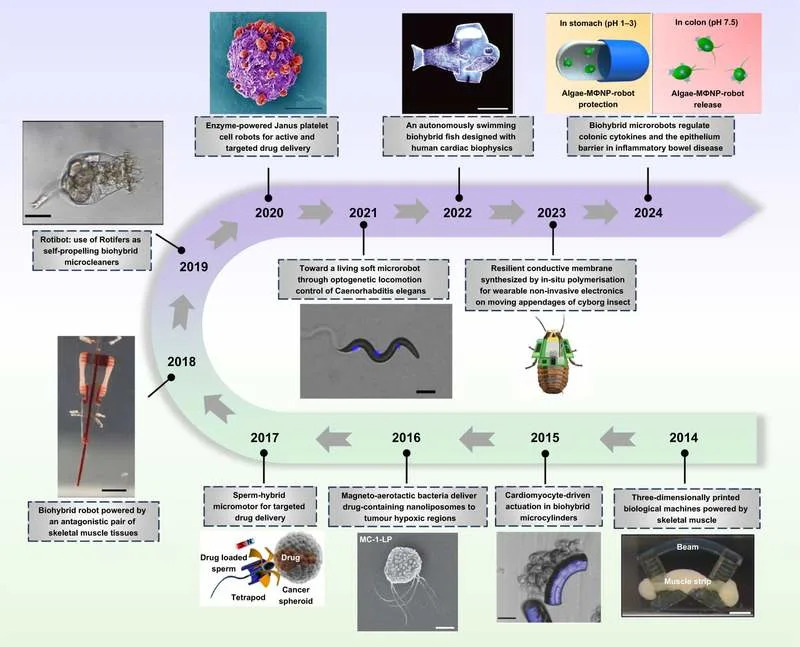
Development roadmap of LBMs. Reproduced with permission from[47,48] John Wiley & Sons. (CREDIT: International Journal of Extreme Manufacturing)
Insect Platforms and Electronic Backpacks
At a larger scale, researchers mount wireless electronics on insects (beetles, cockroaches, locusts) to stimulate nerves or muscles and guide motion. In one study, cyborg beetles navigated a path through unknown obstacles with 94% success, demonstrating practical potential for reconnaissance or search-and-rescue in rubble and confined spaces.
Attachment Strategies
Connecting synthetic payloads to living motors is a core technical challenge. Common methods include:
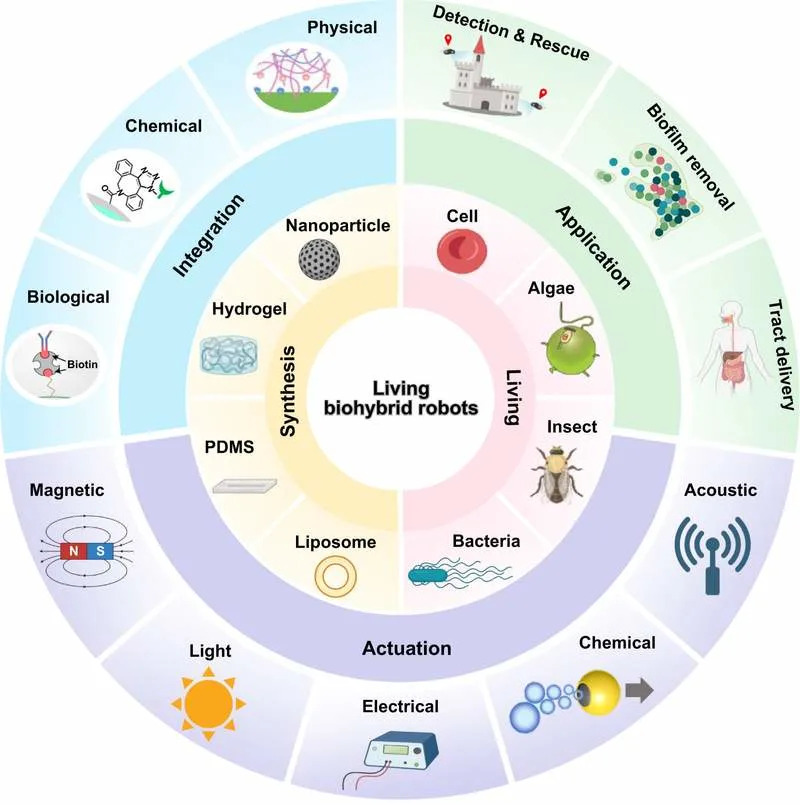
Schematic representation of advanced and potential applications of LBMs. The outer circle is designed to highlight the synergy between these robots and living organisms, reflecting their diversity and flexibility in the medical field. (CREDIT: International Journal of Extreme Manufacturing)
- Electrostatic binding — gentle, Velcro-like adhesion to negatively charged cell surfaces, but relatively weak.
- Covalent linking — "click chemistry" for robust, long-lasting attachment without abolishing motility.
- Mechanical harnesses — miniature backpacks or mounts for insects that interface with the animal's control systems.
Manufacturing and Scale
LBMs may be produced differently from conventional microrobots. Biological components can be grown in bioreactors, offering potential cost advantages and scalability since living systems can reproduce and self-assemble parts of their structure.
Potential Applications
Medicine: LBMs could deliver drugs precisely to the stomach, blood vessels, lungs, joints or urinary tract, concentrate therapies at tumors, and—even in some animal studies—cross the blood–brain barrier. Potential uses include treating cancer, infections, stroke, infertility and lung disease while reducing systemic side effects.
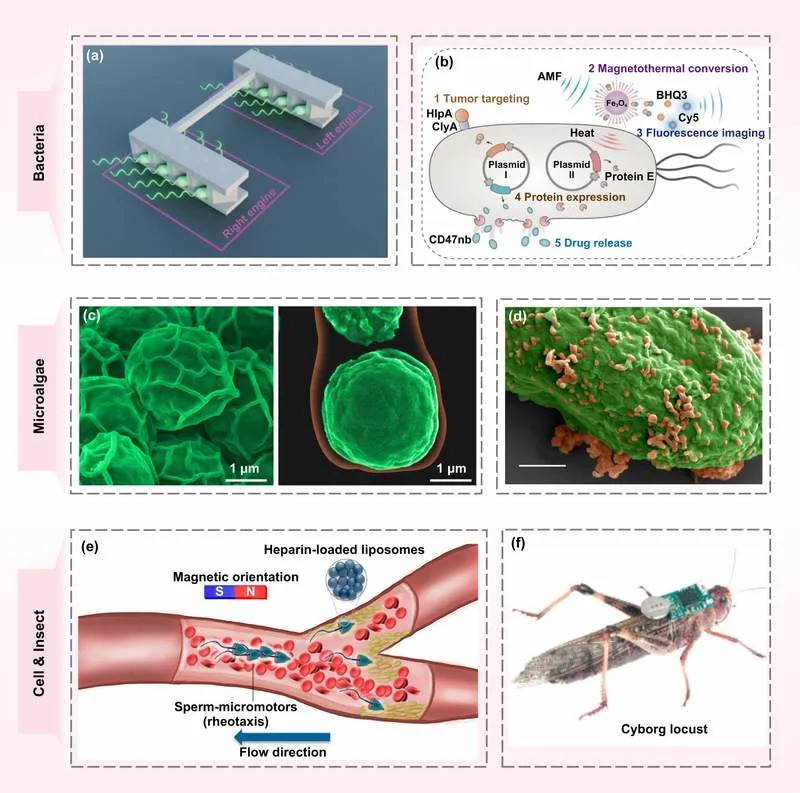
Living organisms in the composition of LBMs. (CREDIT: International Journal of Extreme Manufacturing)
Environment and Disaster Response: Algae- and rotifer-based systems show promise for removing microplastics, heavy metals and pathogens from water. Insect-mounted sensors could scout collapsed buildings or confined spaces ahead of human rescuers. Swarms of living machines might offer early detection for pollution or toxic spills.
Risks, Limitations and Ethics
Significant hurdles remain. Living components have finite lifespans, can mutate, and are sensitive to temperature, pH, oxygen and nutrients. Immune reactions are a major medical concern—host defenses could clear or react to bacterial LBMs. Researchers are investigating "stealth" strategies such as cloaking robots in membranes derived from a patient’s own red blood cells to reduce immune detection.
Ethical and regulatory issues are substantial: genetically modified organisms raise oversight questions, and directing live insects with electronics evokes animal-welfare concerns. Clear rules and safety testing will be needed before LBMs move beyond laboratory demonstrations.
Outlook
By treating biology as a collaborator rather than only a material to replace, engineers may produce machines that navigate natural environments more effectively, adapt to change, and operate with less external power. The review summarizing these ideas is published in the International Journal of Extreme Manufacturing.
Help us improve.