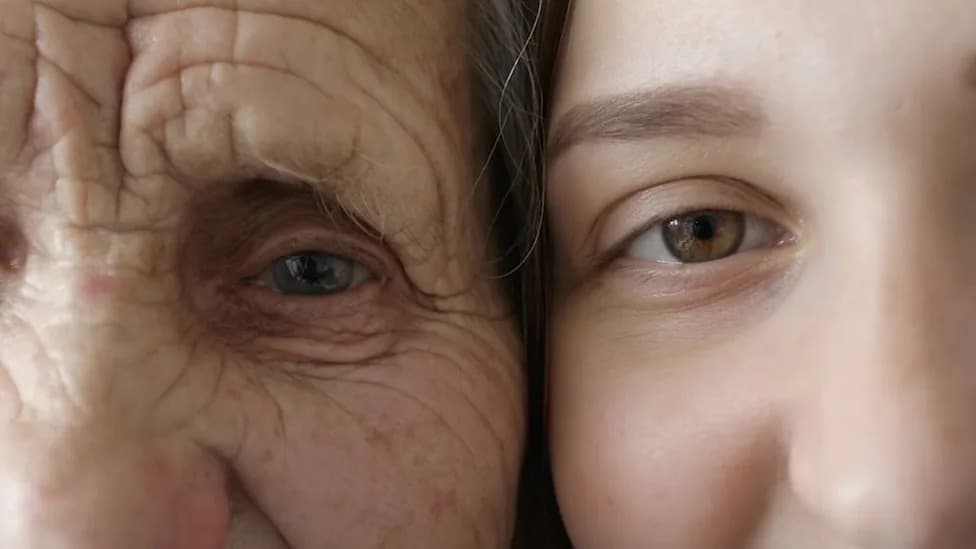
This international analysis of 322 people shows both ancestry and current geography shape molecular profiles and biological aging. Shared heritage left persistent signatures in genetics, metabolism and the microbiome, while relocation produced additional shifts — including accelerated biological aging in East Asians living outside East Asia and higher aging markers in Europeans living in Europe compared with those in North America. The microbiome and sphingolipid-linked pathways emerged as possible mediators. Results are observational and limited by sample size, underscoring the need for larger, diverse studies and for precision medicine that accounts for global diversity.
Where You Live Can Change How Quickly You Age, Large International Study Shows

(Hugh Sitton/Stone/Getty Images)
A new international study suggests that the place you live can influence biological aging as much as — and in some ways independently from — your genetic ancestry. Researchers combined genetics with a wide array of molecular and microbial measures to compare people of similar heritage living in different regions, and found persistent ancestry-linked signatures alongside location-driven shifts in metabolism, immunity and cellular ageing.
Study Design and Scope
YouTube Thumbnail
The team recruited 322 volunteers from around the world (many were attendees at five scientific conferences) representing ancestral backgrounds from Europe, East Asia and South Asia. Instead of examining only DNA, scientists collected rich molecular data — proteins, lipids, metabolites, immune markers and gut microbiome profiles — to create a detailed snapshot of each participant's biology.
Key Findings

Lifestyle factors such asdietandexercisecan also affect how you age. (MoMo Productions/DigitalVision/Getty Images)
Ancestry left a clear, persistent imprint: participants with shared heritage tended to retain similar baseline genetics, microbiome composition and metabolic patterns regardless of where they lived. Examples included heightened immune surveillance in people of South Asian descent, distinct fat-metabolism signatures among East Asian participants, and greater microbiome diversity on average in people of European ancestry.
At the same time, geography mattered. Relocation was associated with measurable molecular changes, and in some cases with altered biological age (an estimate of how 'old' tissues and cells appear compared with chronological age). Notably, East Asian participants living outside East Asia showed signs of accelerated biological aging versus those living in the region. Conversely, Europeans living in Europe showed more advanced biological aging markers than Europeans living in North America.
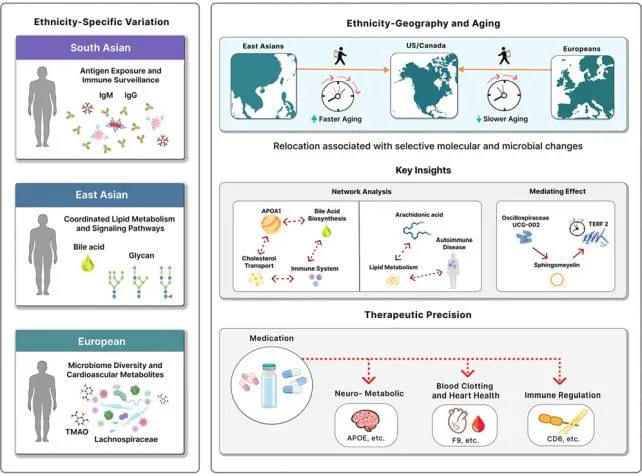
Different populations are affected differently by relocation. (Barapour et al.,Cell, 2026)
Microbiome, Lipids and Telomeres
The gut microbiome emerged as an important mediator: certain bacteria correlated with changes in sphingolipids, a class of fats that were linked to genes involved in maintaining telomeres — the protective caps on chromosomes associated with cellular aging. The authors note that elevated sphingolipid levels have been tied to higher risks of cardiovascular disease, insulin resistance, atherosclerosis and neurodegeneration.
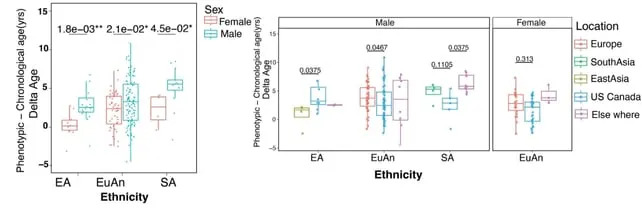
Biological age differed depending on both ancestry and where participants lived. (Barapour et al.,Cell, 2026)
Implications and Cautions
These results suggest medical and nutritional guidance should account for both genetic ancestry and geographic context rather than assuming a one-size-fits-all approach. However, the authors caution that this is not evidence that any ethnicity ‘‘ages better’’ or ‘‘worse’’ universally. The study is observational, the sample is modest and partly composed of conference attendees (a convenience sample), and causation cannot be inferred from these associations alone.

Subscribe to ScienceAlert's free fact-checked newsletter
Possible Drivers
The researchers propose several likely contributors to the location-linked differences: diet, pollution exposure, healthcare access, chronic stress, lifestyle changes after moving, and shifts in the gut microbiome. They call for larger, more diverse studies to confirm mechanisms and to better inform precision medicine that reflects true global diversity.
Publication
The study has been published in the journal Cell.
"Our biology is shaped by a combination of both our genetic ancestry and the places we live," said study co-author Richard Unwin. The findings highlight the need to include global diversity in medical research and to tailor recommendations to both ancestry and environment.
Help us improve.