Quick Take: Voter-approved bans in California and Massachusetts prohibit gestation crates and sales of pork produced with them, prompting many producers to change housing systems. After losing in court, parts of the pork industry inserted federal pre-emption language into the House Farm Bill that would nullify those state rules. The Senate must now decide whether to keep or remove that language — a decision that will determine whether state ballot wins survive.
Congress Could Overturn Voter-Backed Bans On Pig Gestation Crates — What’s at Stake
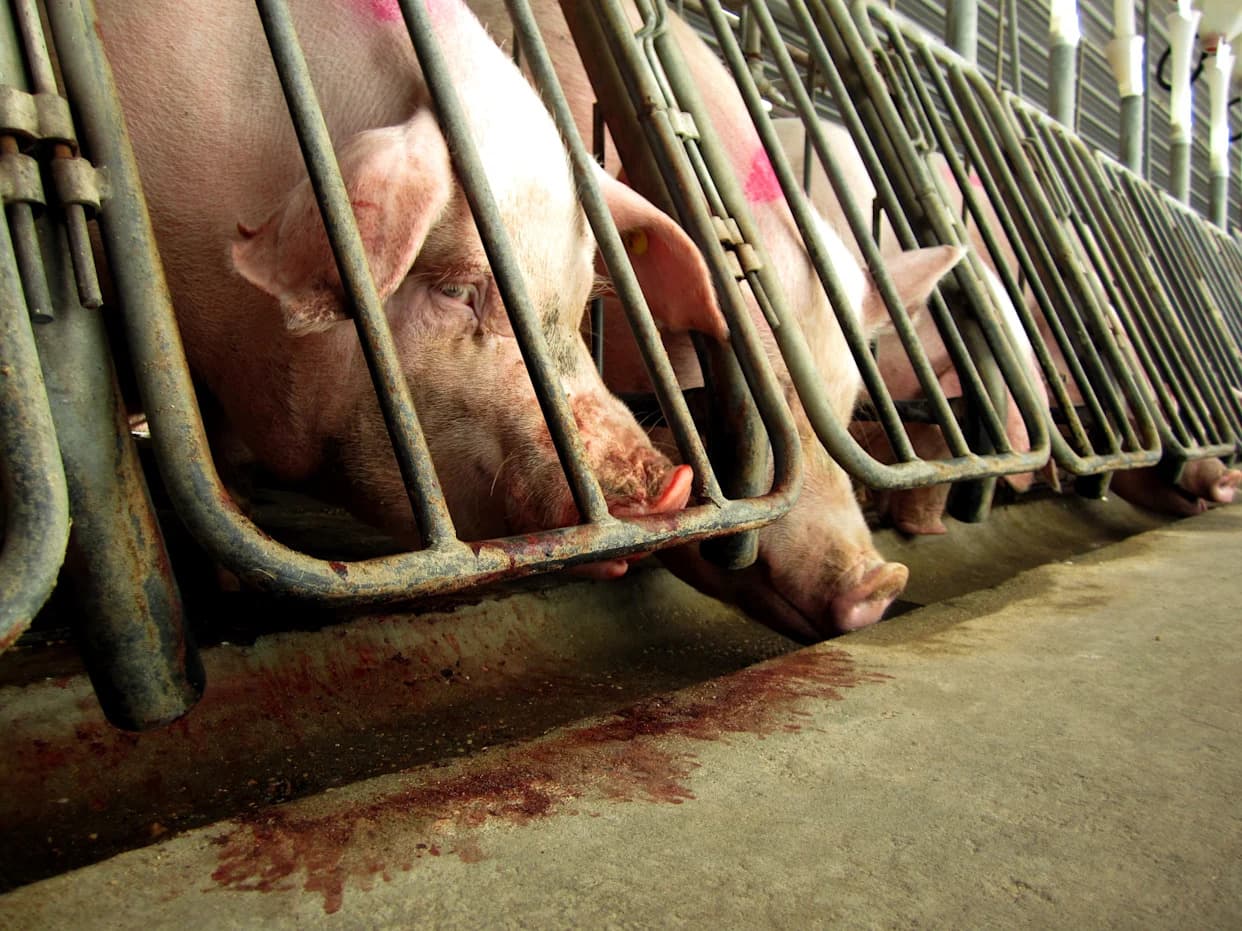
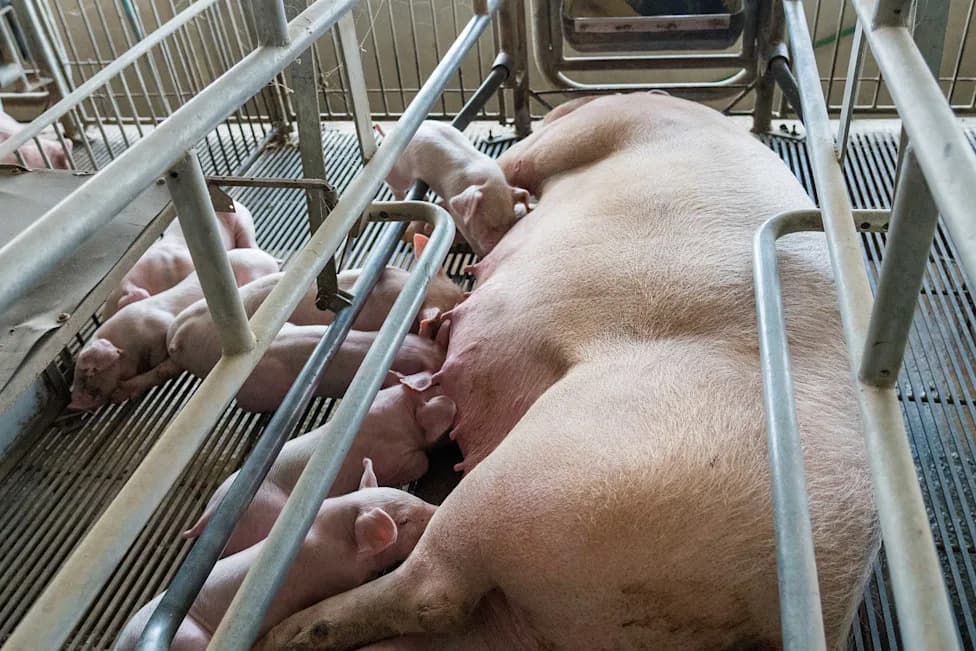
Pregnant pigs in gestation crates at a Smithfield Foods subsidiary. | Humane World for Animals
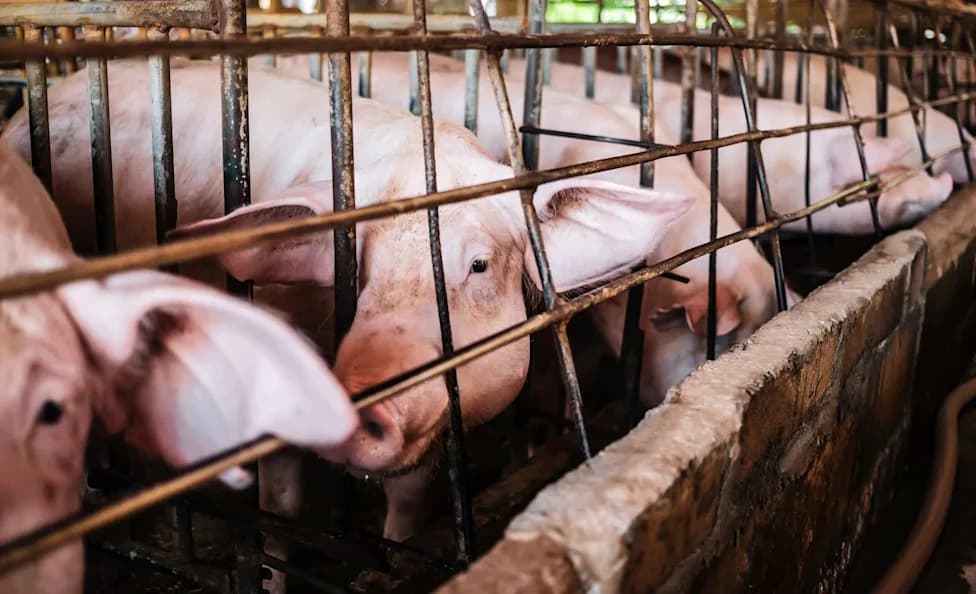
Most of the roughly 6 million breeding sows in the United States spend their lives in gestation crates — narrow metal stalls so small the animals cannot turn around. Animal welfare advocates call the practice one of the most severe, routine forms of farm cruelty.
Voters in Massachusetts (2016) and California (2018) approved ballot measures banning the use of gestation crates and barring the sale inside those states of pork produced with such confinement. Those laws prompted many producers nationwide to retrofit barns or change housing systems so they could still access those large markets.
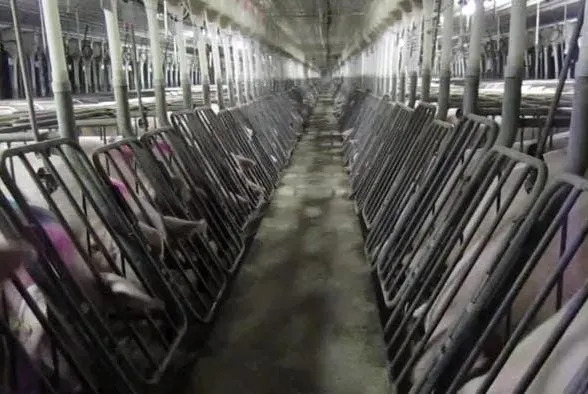
A row of sows in gestation crates. | Humane World for Animals
How the Fight Reached Congress
After repeatedly losing in court, including a 2023 US Supreme Court decision upholding California's law, parts of the pork industry shifted focus to federal legislation. Language from the industry-backed effort, commonly called the Save Our Bacon Act, was added to the House version of the new Farm Bill — a major package Congress reauthorizes about every five years. If included in the final law, that provision would pre-empt state regulations like those enacted by California and Massachusetts and could nullify the sales bans those voters approved.
Why This Matters
Nearly 130 million pigs were raised for meat in the US last year. Breeder sows are typically confined in gestation crates for much of their productive lives so farms can control feeding and monitor pregnancies. Critics point out the severe welfare harms: the animals are social and intelligent, yet many cannot turn, walk, or express natural behaviors; common stress indicators include bar-biting and other repetitive actions. Animal-welfare scientist Temple Grandin has compared life in a gestation crate to forcing a person to live in an economy-class airplane seat.
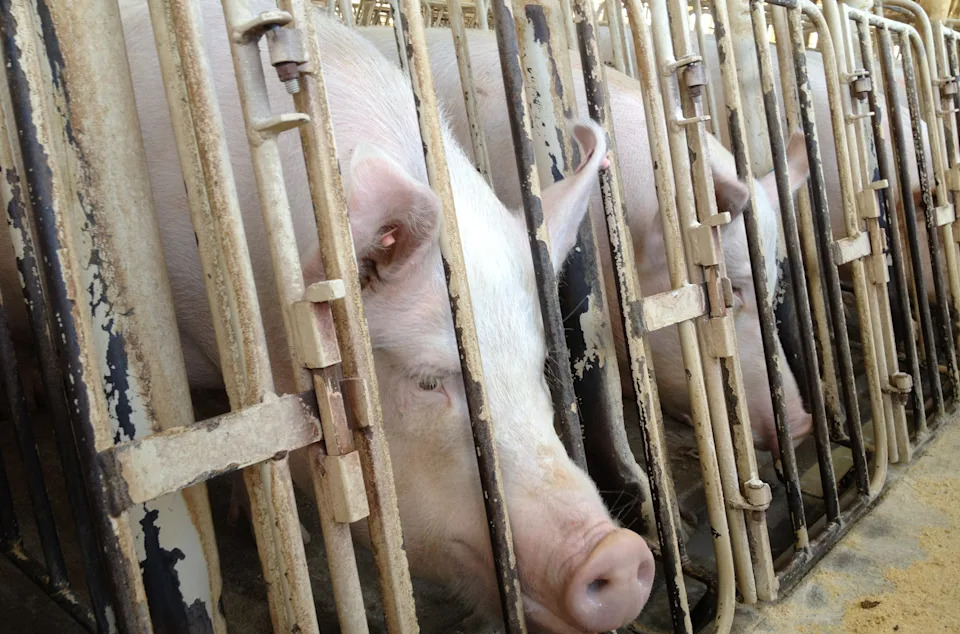
Sows in gestation crates at a farm that raised pigs for Tyson Foods. | Humane World for Animals
Quote: "A vote for the farm bill is a vote to cage an animal that can’t walk or turn around," said Brent Hershey, a Pennsylvania hog farmer who converted his barns to group housing after hearing concerns from family and consumers.
Industry Divisions And Farmer Impact
The pork sector is not united on federal pre-emption. Some large producers and trade groups back the Save Our Bacon language, arguing that state-by-state rules create a costly patchwork. Others, including farmers who have already invested to comply with state laws, oppose federal intervention on both moral and economic grounds. An April 2025 USDA estimate found about 27 percent of US hog producers had made or were in the process of making changes to comply with the state measures; that number likely has grown.
Estimates of conversion costs vary widely. The National Pork Producers Council has suggested a compliance cost of at least $3,400 per sow; some farmers report much lower costs — for example, one farmer estimated about $600 per sow and said his herd experienced fewer deaths and better productivity after converting to group housing.
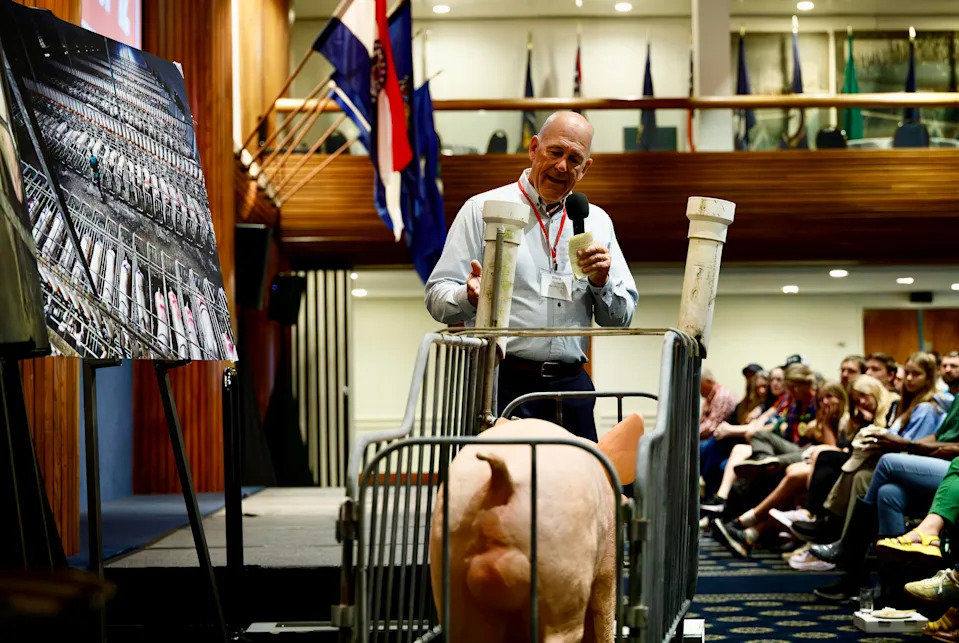
Brent Hershey speaking at a press conference last year about the Save Our Bacon Act. | American Meat Producers Association
Price Effects And Research
A recent non-peer-reviewed analysis by economists at North Dakota State University and USDA reported retail pork prices increased by roughly 73 cents per pound in California and 63 cents per pound in Massachusetts after the laws took effect, representing about 15 percent and a slightly lower percent rise respectively. The authors note that more than half of that rise appears attributable to retail amplification — supermarkets adding premiums beyond production cost increases.
Politics And What Comes Next
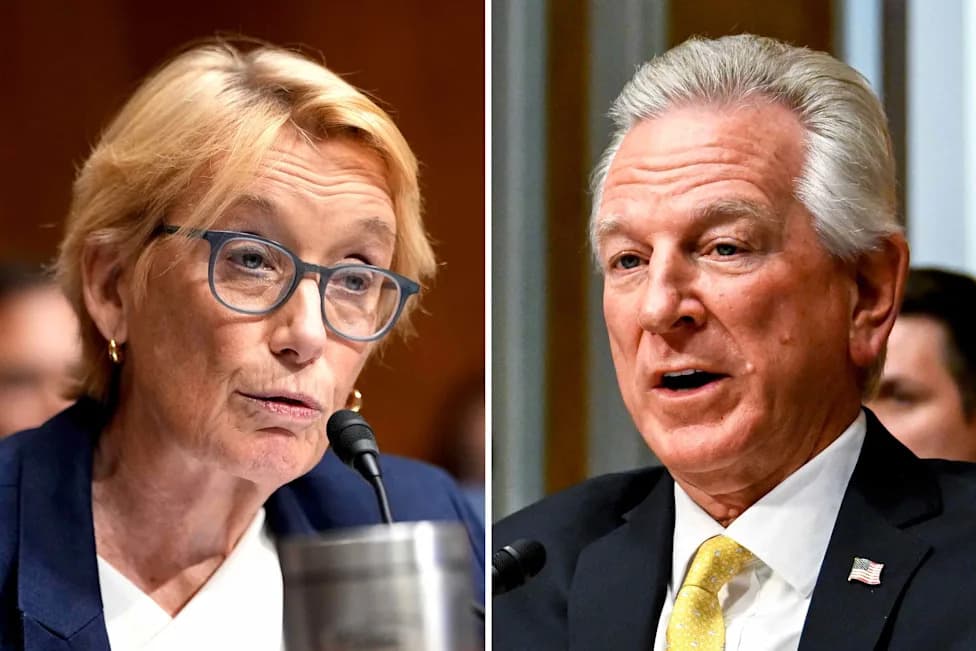
The House included the Save Our Bacon language in its Farm Bill in late April. The Senate is drafting its own version; whether the final Farm Bill contains the pre-emption language will determine if state ballot decisions stand. Several senators from California, Massachusetts, and elsewhere have voiced strong opposition to federal pre-emption, calling it an override of voters who passed the measures by wide margins. Others have declined to take a public position while negotiations continue.
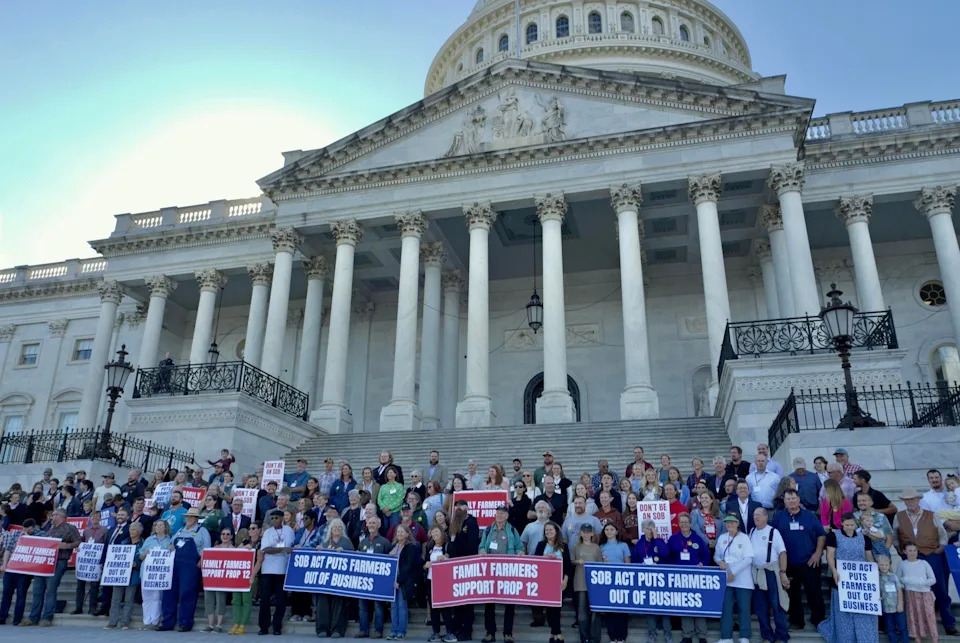
Last year, hog farmers opposed to the Save Our Bacon Act flew to Washington, DC, to lobby members of Congress on the issue. | American Meat Producers Association
If the Senate removes the language, state protections would likely remain intact. If the reconciled bill preserves the pre-emption, California and Massachusetts laws could be undermined despite prior court victories and the ballot mandates of millions of voters.
Context: Industry Tactics
Observers note this episode fits a longer pattern of industry efforts to limit regulation after facing public scrutiny. In prior decades, undercover investigations of farm practices prompted political and legal pushback, including state laws restricting farm access and videotaping. Critics also point to lobbying, targeted research, and marketing that can downplay environmental and welfare harms — practices described in some analyses as greenwashing.
Update, May 15, 3 pm ET: This story was updated to include a statement from Sen. Amy Klobuchar (D-MN).
Help us improve.