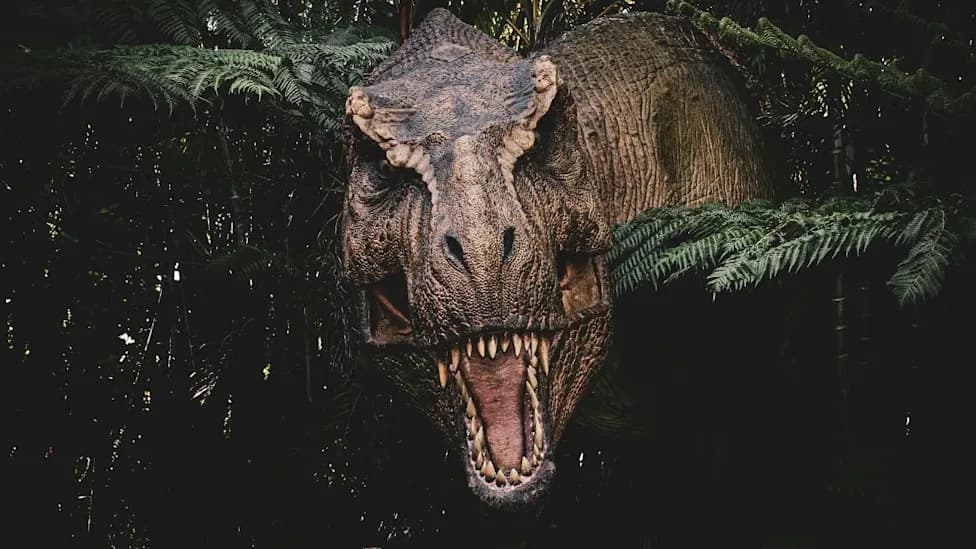
Kevin Padian (UC Berkeley) argues that T. rex’s tiny forelimbs may have evolved to reduce the risk of catastrophic bite injuries during crowded, communal feedings rather than to serve a specific mechanical function. Measurements of a mounted T. rex (largely MOR 555) show forelimb elements far too short to perform many traditional roles. Padian suggests testing the idea by systematically surveying bite marks across museum specimens and comparing damage patterns by age and species. The hypothesis reframes the question from ‘what did the arms do?’ to ‘why was it advantageous to shrink them?’
Why T. rex Had Tiny Arms: A New Hypothesis Says They Were Safer That Way
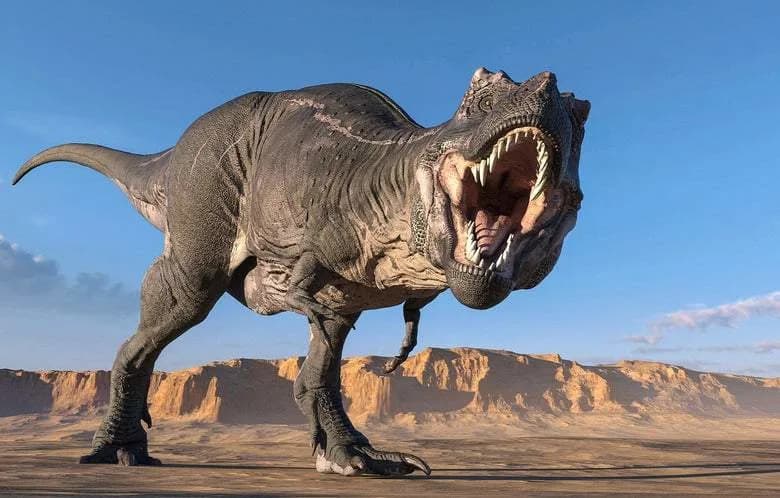
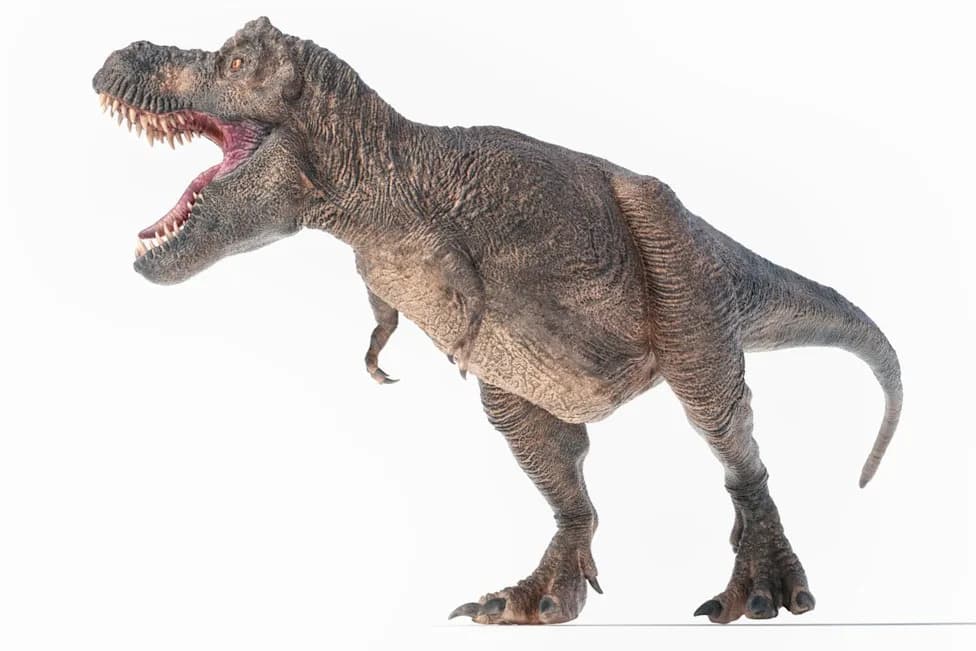
A new study argues T. rex evolved short arms to avoid serious injuries during violent group feeding on carcasses. (CREDIT: Shutterstock)
For more than a century Tyrannosaurus rex has been remembered for a striking mismatch: a massive, bone‑crushing skull paired with forelimbs so short they look almost comical. In a new paper in Acta Palaeontologica Polonica, UC Berkeley paleontologist Kevin Padian argues that those tiny arms may be the product of natural selection for safety rather than for a particular function.
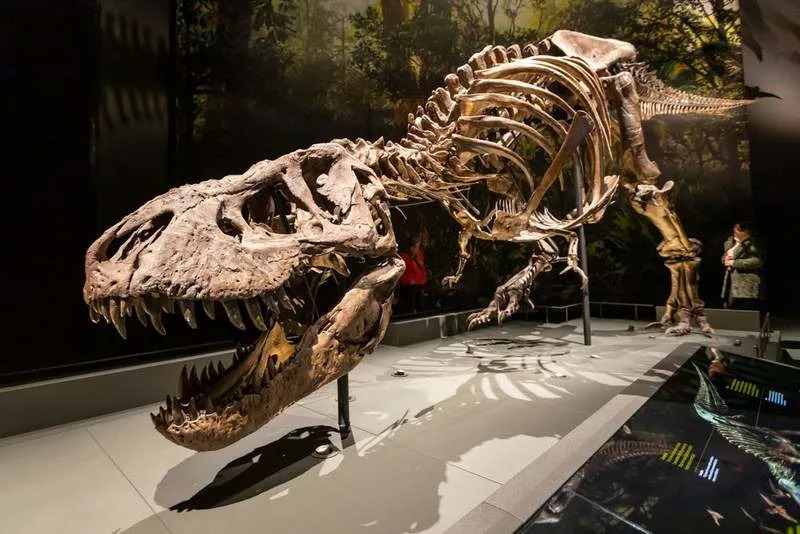
Tiny forelimbs of large tyrannosaurs may have shrunk not because they were useful, but because they were dangerous to keep around. (CREDIT: Shutterstock)
Padian’s Safety Hypothesis
Padian proposes a blunt idea: when multiple large tyrannosaurs crowded a carcass, long forelimbs would be liabilities. In tightly packed, violent feeding scenarios—where powerful jaws operate in close quarters—an arm positioned too near the action could be bitten, torn, or even severed. Shorter forelimbs, he argues, would reduce the risk of catastrophic injury and therefore confer a survival advantage.
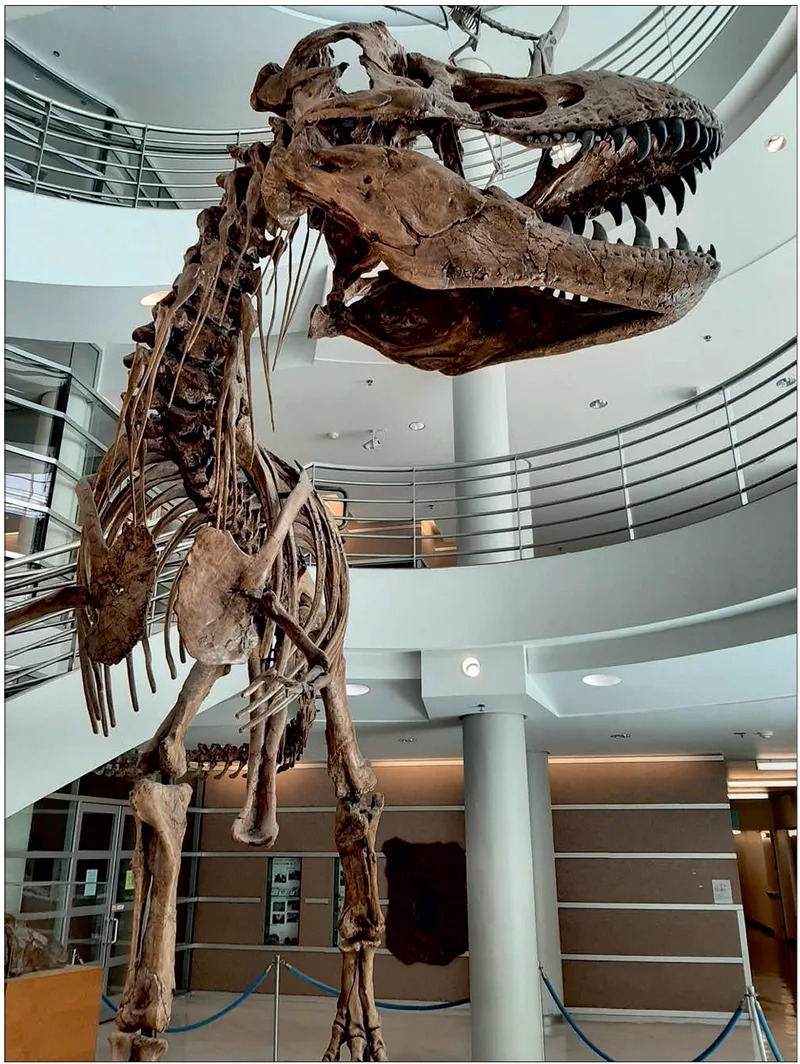
The mounted skeleton of Tyrannosaurus rex Osborn, 1905, in the atrium of the Valley Life Sciences Building at the University of California, Berkeley based mainly on the relatively complete skeleton in the Museum of the Rockies (MOR 555), collected from the latest Cretaceous Hell Creek Formation of Montana, USA. (CREDIT: University of California Museum of Paleontology and the Regents of the University of California)
What The Anatomy Shows
To test earlier functional explanations, Padian measured a mounted T. rex skeleton at the UC Museum of Paleontology largely based on specimen MOR 555 from Montana’s Hell Creek Formation. His measurements reinforce prior work: the skull is roughly 120 cm long, the shoulder girdle about 127 cm, while the forelimb bones are much smaller—humerus ~37 cm, ulna ~20 cm, and digits ~22–25 cm. Even with generous reconstructions of joint mobility, the hands could not reliably reach the mouth, could not touch one another, and could not be brought far in front of the body.
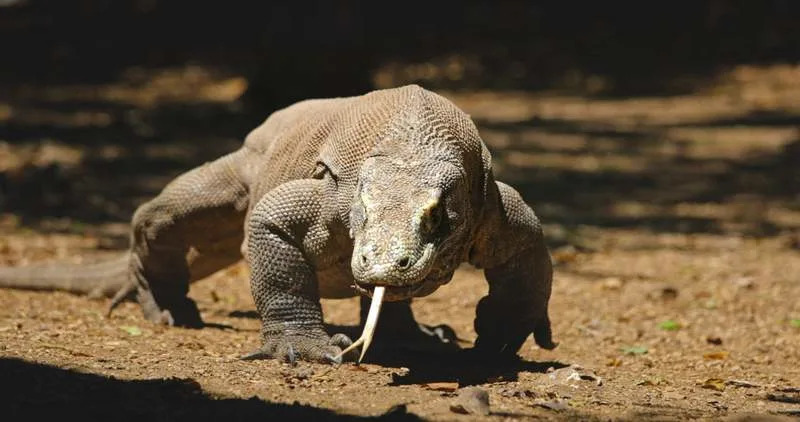
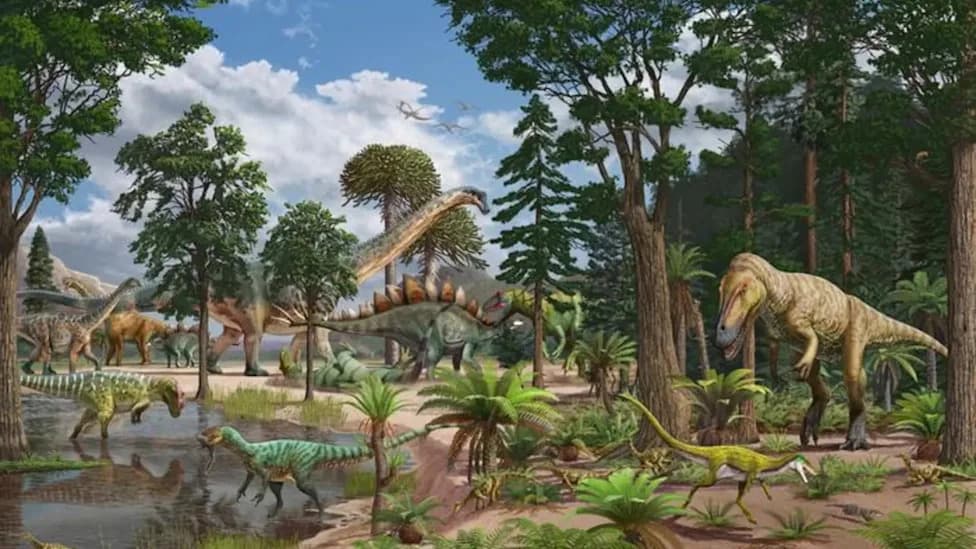
Komodo dragons often converge on prey, with larger animals feeding first and smaller ones staying back. (CREDIT: Shutterstock)
Why That Undermines Old Ideas
Those proportions challenge traditional explanations that the arms were used to hold prey, help the animal rise from the ground, function as mating clasps, or serve as signaling devices. Geometric and mobility limits make those roles unlikely: the forelimbs were simply too short and weak to do most of the tasks previously suggested.
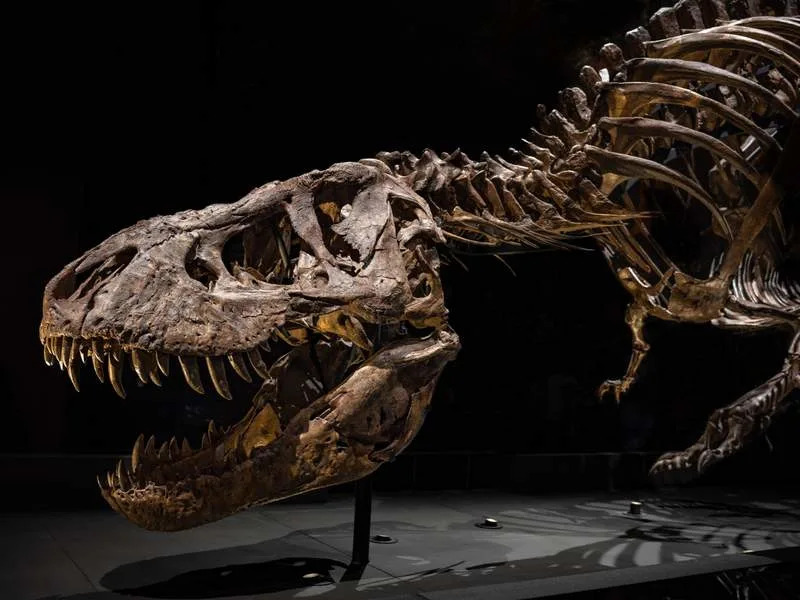
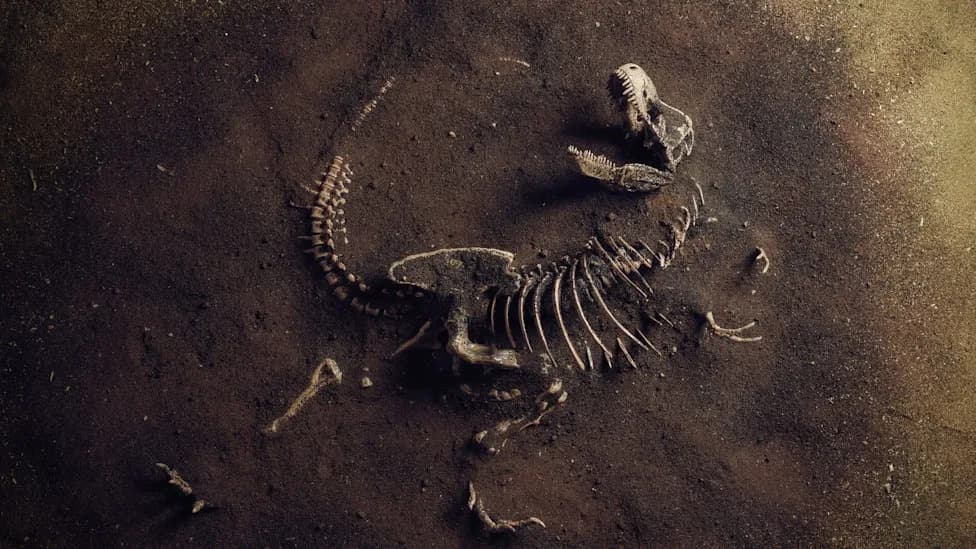
Tyrannosaur skeletons already show wounds on skulls and other bones. (CREDIT: Shutterstock)
Behavioral Context And Modern Analogues
Padian stresses behavior as well as anatomy. Several fossil sites preserve tyrannosaurs of different ages together; while burial together does not prove social hunting, repeated occurrences of adults and juveniles at the same localities increase the possibility that at least some tyrannosaurids fed communally. Modern analogues—Komodo dragons and crocodilians—show that communal feeding can be dangerous and lead to intraspecific injuries, supporting the plausibility of bite risk during crowded feedings.
Convergence And Broader Patterns
The safety hypothesis also fits a broader pattern: other large predatory theropods—abelisaurids and carcharodontosaurids among them—independently evolved reduced forelimbs. Different lineages may have arrived at similar solutions for different reasons, but repeated limb reduction in giant carnivores suggests a common evolutionary pressure worth explaining.
How To Test The Idea
Padian acknowledges the challenge of testing a behavioral hypothesis 66 million years after the fact but argues it is more testable than many earlier stories. He proposes systematic surveys of museum collections for bite marks: if forelimb bones show relatively fewer bite injuries than other parts of the skeleton, that pattern would support the idea that shortening reduced exposure to dangerous bites. He also predicts age‑related patterns—juveniles might show different damage distributions if they fed apart from or later than adults.
Implications For Paleontology
Beyond T. rex, Padian’s reframing is a methodological reminder: instead of assuming a tiny limb must have had a tiny function, researchers should also ask why a structure became reduced. That shift could change how paleontologists study other reduced organs in extinct animals and suggests concrete next steps for collections and fieldwork.
‘The arms are simply too short,’ Padian says. ‘They can’t touch each other, they can’t reach the mouth, and their mobility is extremely limited.’
Research note: Full findings are published in Acta Palaeontologica Polonica. The measurements discussed are based largely on specimen MOR 555.
Help us improve.