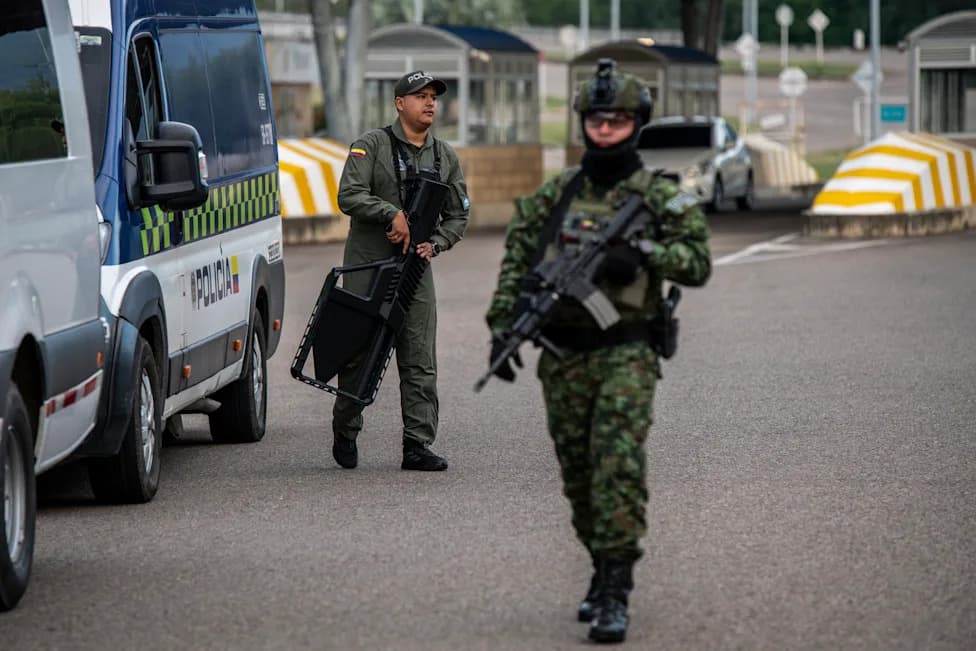
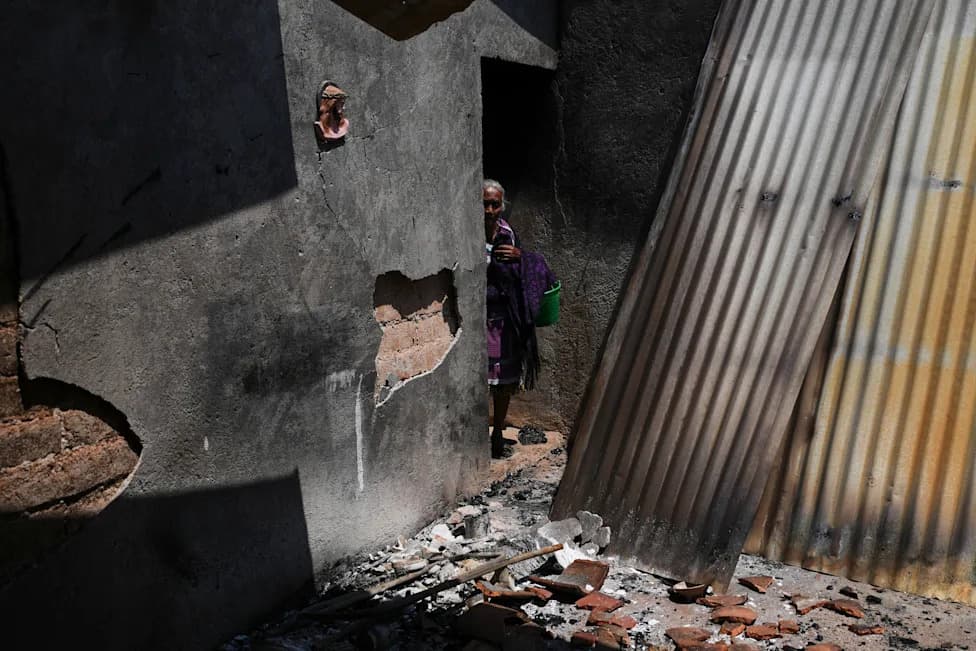
The ICRC’s 2025 report finds a sharp deterioration in Colombia’s humanitarian situation: conflict-driven displacement doubled to 235,619 people, with 42% in Norte de Santander, and mass displacements affected over 87,000 people. Use of explosive devices and drones increased, causing about 965 killed or injured, while lockdowns of small communities nearly doubled. The report warns of lasting damage to livelihoods, social ties and access to essential services amid a fragmented conflict and political debate over the "Total Peace" strategy ahead of May 31 elections.
ICRC: Conflict-Driven Displacement in Colombia Doubled in 2025, Fueling a Deepening Humanitarian Crisis
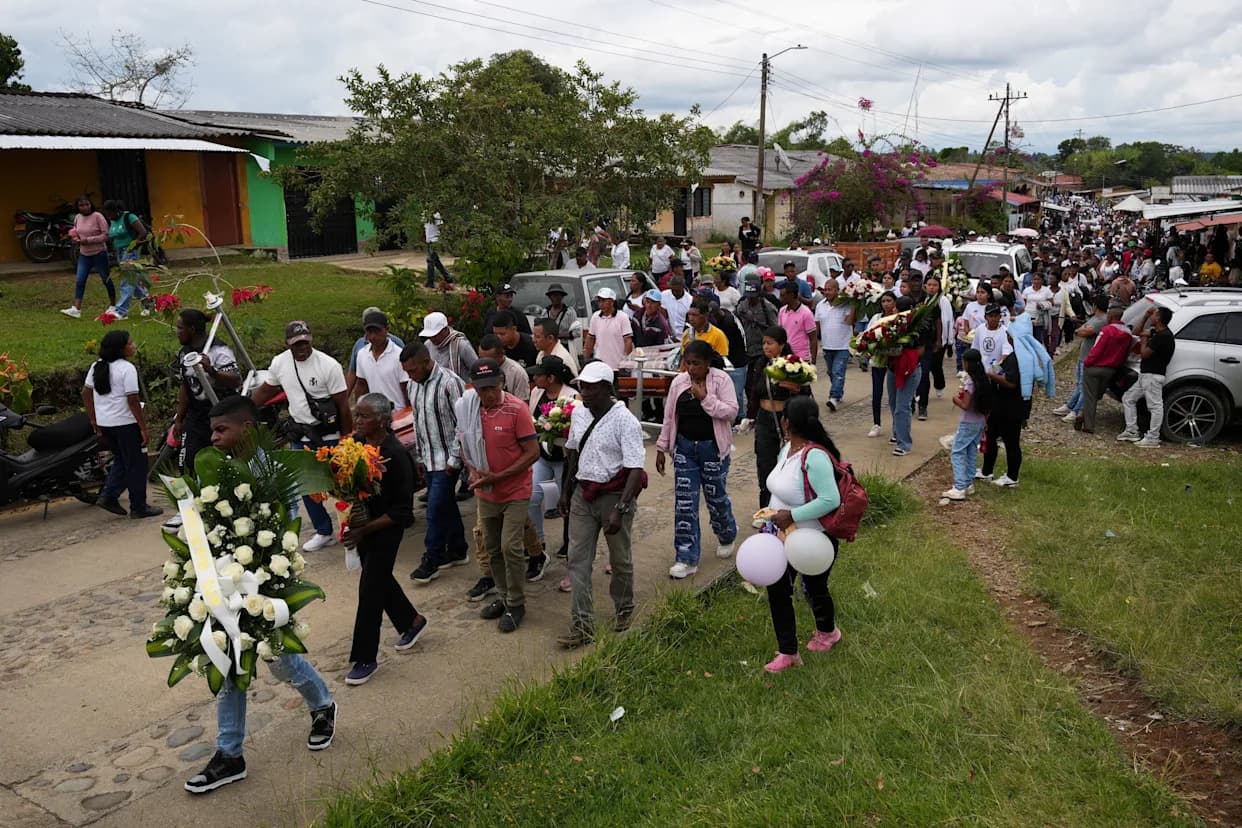
A community in Cajibio, Colombia, holds a funeral service for victims of a deadly attack that authorities blamed on a dissident faction of the former FARC rebel group on April 28 [Jair Coll/Reuters]
The International Committee of the Red Cross (ICRC) warns that Colombia experienced a sharp deterioration in civilian protection in 2025, with displacement, disappearances and explosive injuries rising sharply amid an increasingly fragmented conflict.
Key Findings
The ICRC’s annual report describes 2025 as the "worst humanitarian year" for the country in the past decade. The organisation documented that the number of people displaced by fighting doubled over the year, reaching 235,619 individuals, and that mass displacement events affected more than 87,000 people. Some 42% of those displaced were in the department of Norte de Santander.
Explosives, Drones and Lockdowns
The report highlights a growing use of explosive devices and drones in hostilities. Deaths and injuries from explosives rose by more than a third compared with 2024, with roughly 965 people killed or wounded by explosive devices in 2025. Fear of these threats has driven many families to remain indoors, disrupting education, farming and access to essential services.
Lockdowns imposed on small communities amid clashes nearly doubled in 2025, further restricting movement and access to basic goods and services. The ICRC said these trends are producing both immediate harm and long-lasting damage to livelihoods and social cohesion.
Drivers and Political Context
Since the 2016 ceasefire and demobilisation of the Revolutionary Armed Forces of Colombia (FARC), the conflict has fragmented: dissident factions rejected the peace deal and continue to contest territory alongside criminal and other armed groups. The struggle over territory and illicit economies has intensified local insecurity.
President Gustavo Petro’s "Total Peace" strategy seeks negotiated settlements with armed groups, but the approach is politically divisive. Critics on the right call for a harder security line, and the debate—along with security concerns—figures prominently in the run-up to the May 31 elections.
"The humanitarian situation in 2025 is the result of a progressive deterioration that the ICRC has warned about since 2018," said Olivier Dubois, the ICRC's chief of mission in Colombia. "Civilians are experiencing increasingly serious consequences as a result."
The ICRC stresses the need for increased protection for civilians, humanitarian access, and measures to restore livelihoods and social fabric in affected communities.
Help us improve.