Researchers from the University of Waterloo and Lakehead University used DNA from bones and cheek swabs of living descendants to identify four sailors from Sir John Franklin’s ill-fated 1845 Northwest Passage expedition. Three identified men served aboard HMS Erebus—William Orren, David Young and John Bridgens—and the fourth was Harry Peglar of HMS Terror. The genetic results resolved a 166-year mystery about Peglar’s remains and add human detail to an enduring Arctic tragedy, with findings published in early May in Journal of Archaeological Science: Reports and Polar Record.
DNA Identifies Four Sailors From Franklin’s Doomed 1845 Arctic Expedition — Case of Mistaken Identity Solved
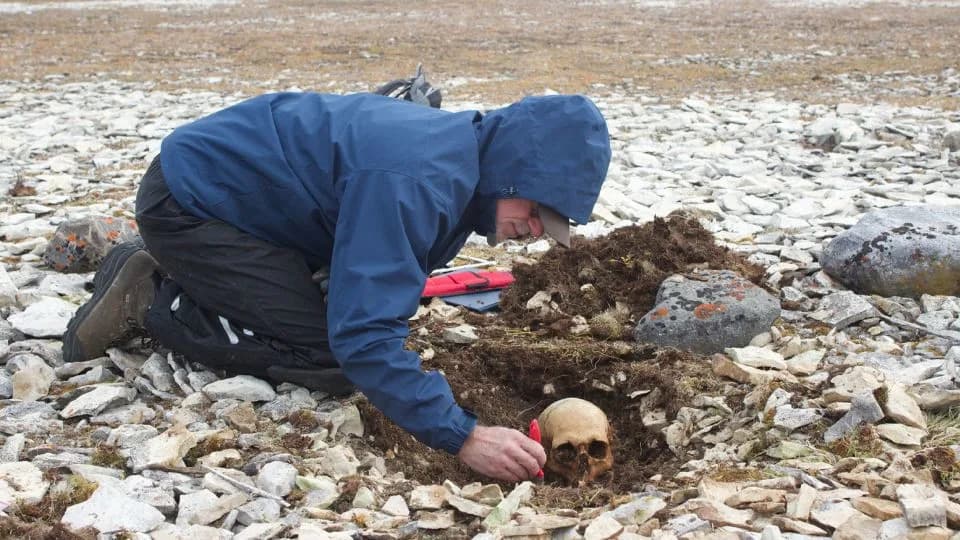
Dr. Douglas Stenton excavates the bones of Franklin expedition sailors at Erebus Bay in 2013. - University of Waterloo
Researchers have used genetic matches with living descendants to identify the remains of four sailors who died during Sir John Franklin’s ill-fated 1845 expedition to find the Northwest Passage. The breakthrough—led by teams at the University of Waterloo and Lakehead University—links scattered bones recovered on King William Island and the Adelaide Peninsula to named crew members and resolves long-standing mysteries about at least one set of remains.
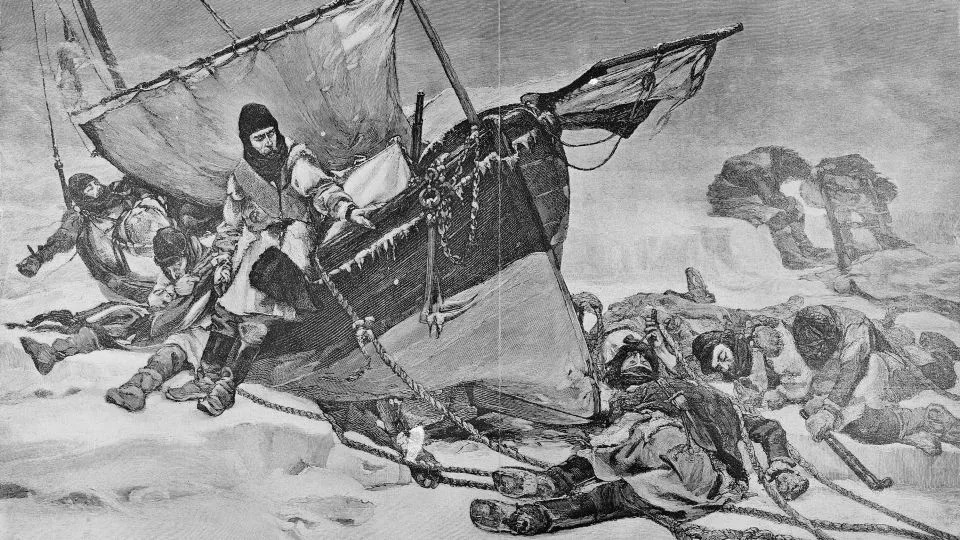
An engraving shows the end of Sir John Franklin's ill-fated Arctic expedition based on a painting by British artist W. Thomas Smith. - Bettmann Archive/Getty Images
Background
Franklin set out in 1845 with two ships, HMS Erebus and HMS Terror, and 129 crew members to locate a Northwest Passage linking the Atlantic and Pacific. The ships became trapped in Arctic ice and were abandoned in April 1848. Of the men who left the vessels, 105 survived the initial desertion but none reached safety; only three of the earliest-deceased were buried with identified headstones. Over the decades, searches and archaeological work have recovered artifacts and scattered remains, but identifying individuals from fragmentary bones remained difficult.
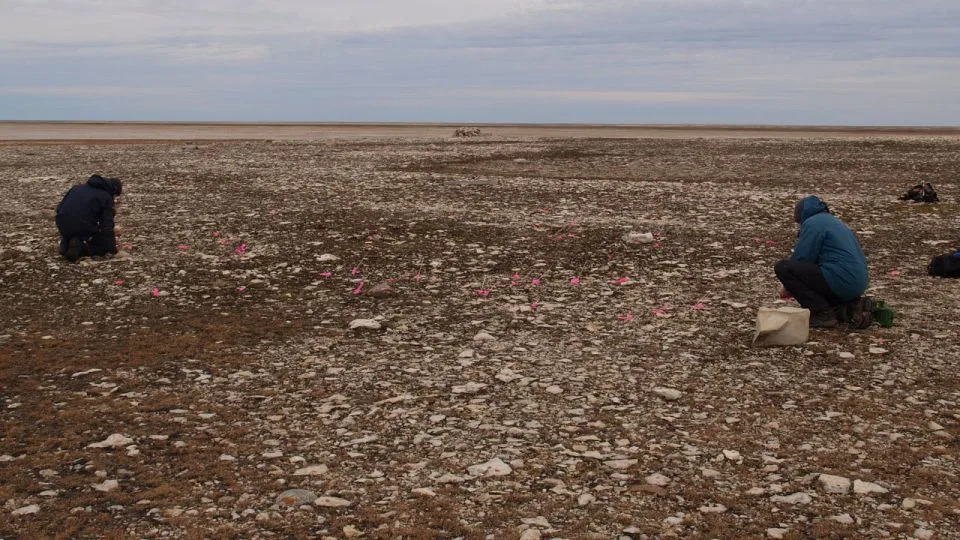
A memorial cairn (background) contained 13 members of the Franklin expedition who died at Erebus Bay. - University of Waterloo
The New Identifications
Using DNA extracted from bones and teeth, compared with cheek-swab samples provided by descendants, researchers identified three sailors from HMS Erebus—William Orren, David Young and John Bridgens—and one sailor from HMS Terror, Harry Peglar. The Erebus remains had been found together on the southern shore of Erebus Bay; Peglar’s skeleton was recovered much farther away, roughly 81 miles (130 km) from the other discovered remains.
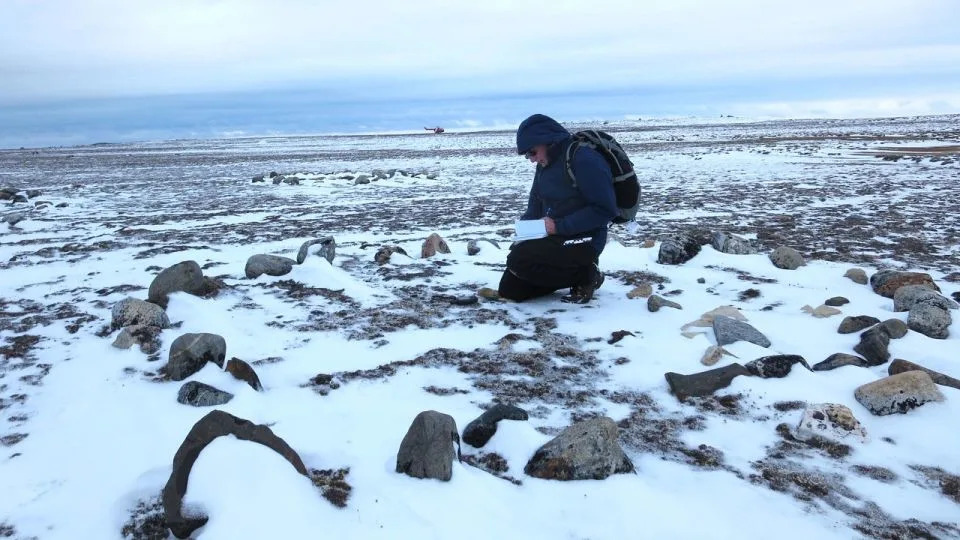
Stenton records site features on a small island not far from the wreck of HMS Erebus. - University of Waterloo
“It’s opening up a new chapter in the story of the Franklin expedition,” said Dr. Douglas Stenton, adjunct assistant professor of anthropology at the University of Waterloo and lead author of the studies.
Resolving Peglar’s Puzzle
Harry Peglar’s remains had long perplexed searchers: when a mid-19th-century party found his skeleton in 1859, he wore a steward’s uniform rather than the petty-officer garb expected of a foretop captain, yet personal papers recovered with the body identified him as Peglar. After exhaustive genealogical and genetic comparisons—including testing descendants of every known steward aboard—DNA results confirmed the skeleton was Peglar himself. Researchers suggest archival records showing prior incidents of drunkenness and "mutinous conduct" could explain a possible demotion aboard ship, though the definitive reason remains open to interpretation.
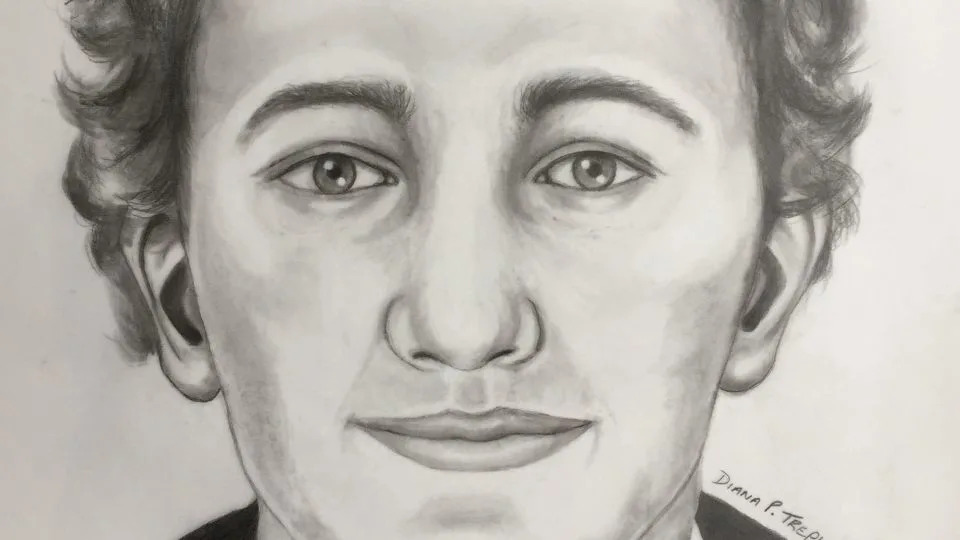
An artist's sketch depicts David Young, Boy 1st Class from the HMS Erebus, who was identified in the new research. - Diana Trepkov, Investigative Forensic Artist
Methods
Fieldwork on King William Island and the Adelaide Peninsula was led by Stenton between 2008 and 2023, documenting sites with photography and lidar and collecting artifacts and human remains for study. Skeletal samples were analyzed at Lakehead University’s Paleo-DNA Laboratory. Genetic comparisons used both Y-chromosome markers and mitochondrial DNA to match remains to descendants who could provide an uninterrupted paternal or maternal line.
Human Stories and Wider Context
The new identifications build on recent genetic work that named engineer John Gregory and officer James Fitzjames (whose bones bear evidence interpreted as cannibalism). These studies help re-center the human stories behind the tragedy—Bridgens, for example, is described in archival records as having hazel eyes and dark hair and beginning a seafaring life as a musician at age 11; Young joined the expedition aged 17 after growing up in poverty. BBC journalist Rich Preston discovered Bridgens is his great-great-great-uncle after being contacted by the research team.
What’s Next
The teams continue to analyze artifacts and remains to identify more crew members and to better understand the expedition’s failures. Researchers say greater participation by descendants sharing DNA will accelerate identifications and may shed new light on the sequence of events that led to the ships’ abandonment and the crew’s deaths.
“They’re not just names anymore,” Stenton said. “Our work helps put more of a human face on it. For some descendants, it may provide a measure of closure.”
Publications: The Erebus identifications appear in the Journal of Archaeological Science: Reports (published May 6); Peglar’s identification appears in Polar Record (published May 7). The wrecks of the Erebus and Terror were located in 2014 and 2016, respectively.
Help us improve.