Conflicts in the Middle East have pushed more global shipping around the Cape of Good Hope, increasing collision risks with whales off South Africa's southwest coast. A recent IWC presentation found vessel counts in a recent period nearly doubled year-on-year and the fastest traffic — the greatest strike risk — rose fourfold. Researchers recommend modest lane shifts, real-time alerts and detection technologies to reduce strikes, while South African authorities say they will review mitigation options after further study.
Middle East Conflicts Drive Ships Into South African Whale Habitats, Raising Collision Risk
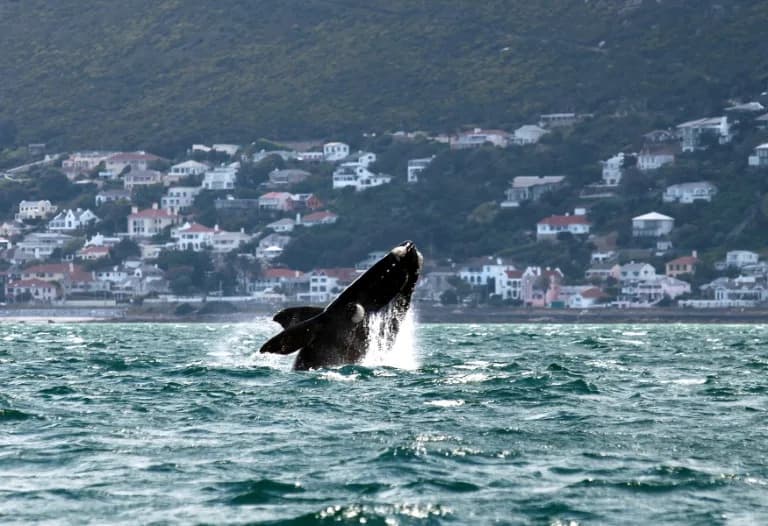
A Southern right whale shown off Muizenberg Beach in False Bay, Cape Town on October 11, 2013 (JENNIFER BRUCE)(JENNIFER BRUCE/AFP/AFP)
Rising conflicts in the Middle East have diverted global shipping away from the Red Sea and Suez Canal, pushing more vessels around the Cape of Good Hope and into important whale habitat off South Africa's southwest coast, researchers warned.
Key Findings
A paper presented to the International Whaling Commission (IWC) by University of Pretoria whale unit lead Els Vermeulen reports a substantial increase in ship-strike risk after the November 2023 hijacking of the Galaxy Leader and subsequent attacks. Between March 1 and April 24 this year, the IMF PortWatch monitor recorded an average of 89 commercial vessels rounding southern Africa, compared with 44 in the same period of 2023.
The study highlights an "extensive spatial overlap" between busy shipping corridors and globally significant populations of whales along South Africa's southwestern coast, amplifying the risk of collisions.
Why Whales Are Vulnerable
Researchers say several factors make whales particularly exposed: the fastest merchant traffic — which poses the greatest strike risk — has increased fourfold, and some species do not move away from approaching ships when they hear them. Chris Johnson, global lead of WWF's Whale and Dolphin Conservation initiative, noted that certain whales may sink lower in the water rather than flee noisy vessels.
"My heart stopped -- you know that they're striking a couple of whales," said Els Vermeulen after seeing videos of cargo ships transiting through dense groups of humpback whales.
Changing whale behaviour may also be increasing overlap with ships. Since about 2011, seasonal "superpods" of humpback whales have been feeding off South Africa's west coast — an area that has become busier with rerouted global traffic, according to blue economy consultant Ken Findlay.
Scale And Consequences
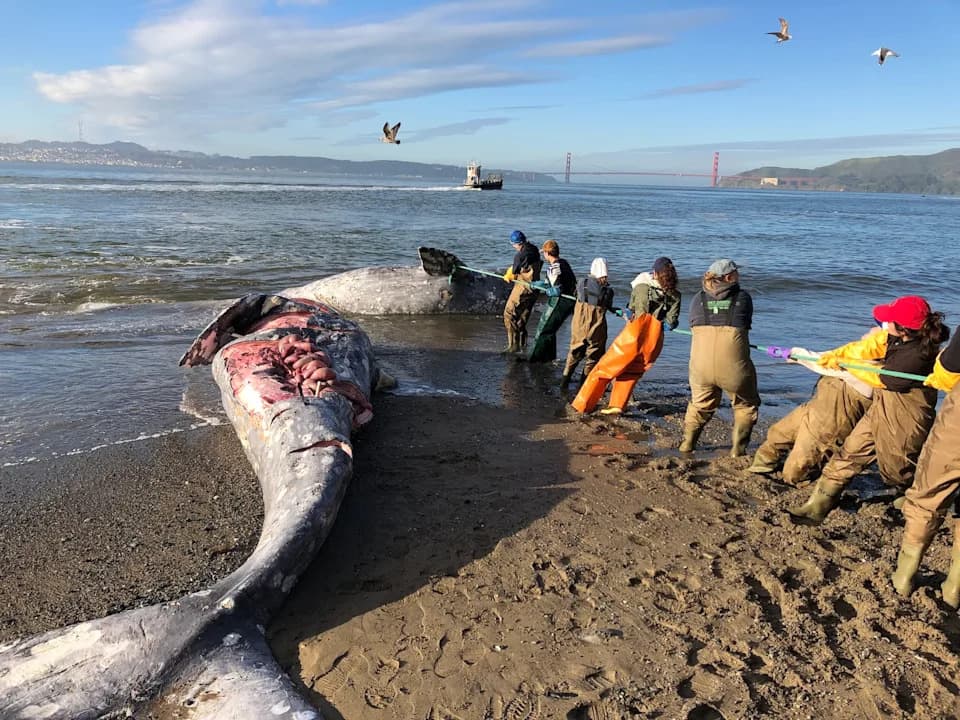
Collisions are widely believed to be underreported but are a significant cause of whale mortality. A 2024 paper in Science describes vessel strikes as a major threat to recovery efforts that have been under way since the 1986 international whaling ban.
Possible Mitigation
The IWC report suggests that modest adjustments to shipping lanes — pushing traffic slightly farther offshore — could reduce strike exposure by roughly 20–50% for some species while adding only about 20 nautical miles to journeys that may exceed 10,000 nautical miles. Practical options under discussion include voluntary reroutes by shipping companies (the global operator MSC has already altered routes around known whale areas in other regions), ship alerts via apps or radio, and AI-enabled cameras or detection systems on vessels.
South Africa's Department of Forestry, Fisheries and the Environment (DFFE) told AFP that it will examine "all available solutions and mitigation measures" and that maritime authorities will collaborate with the DFFE once scientific assessments are complete.
Outlook
Experts emphasize that timely, evidence-based measures and cooperation between conservation groups, shipping companies and regulators are needed to reduce lethal encounters between ships and whales as global shipping patterns continue to shift.
Help us improve.