Summary: The unresolved Persian Gulf standoff is eroding U.S. leverage ahead of President Trump’s summit with Xi Jinping. Washington’s push for a quick Iran freeze before May 14 increases urgency that Beijing can exploit, while Tehran has incentives to delay. Control of the Strait of Hormuz, Saudi restrictions on U.S. basing, and the demands of asymmetric warfare limit U.S. options. A narrow, temporary freeze through May 15 could keep the crisis from dominating the Beijing meeting, but any arrangement would be fragile.
Gulf Standoff Erodes U.S. Leverage Ahead of Trump‑Xi Summit, Giving China a Strategic Edge
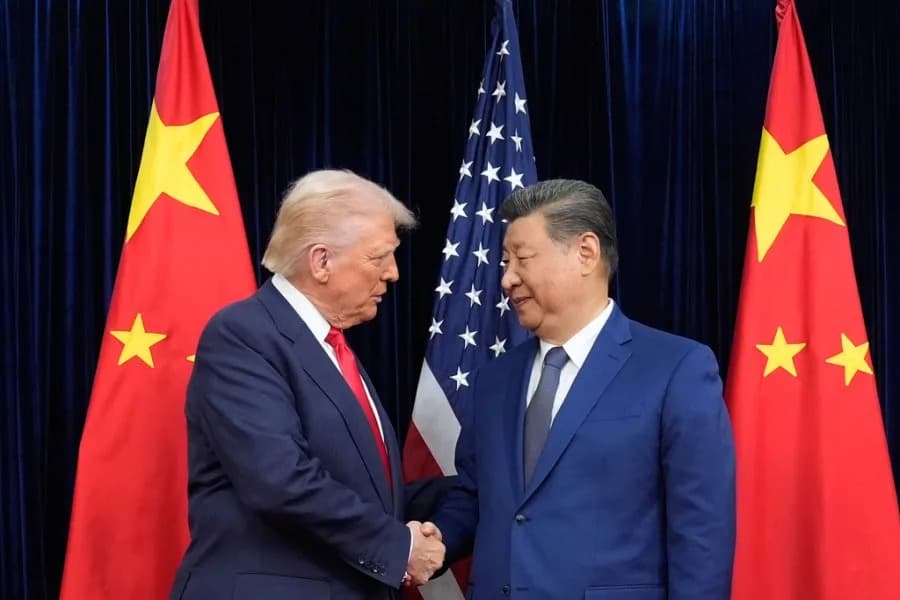
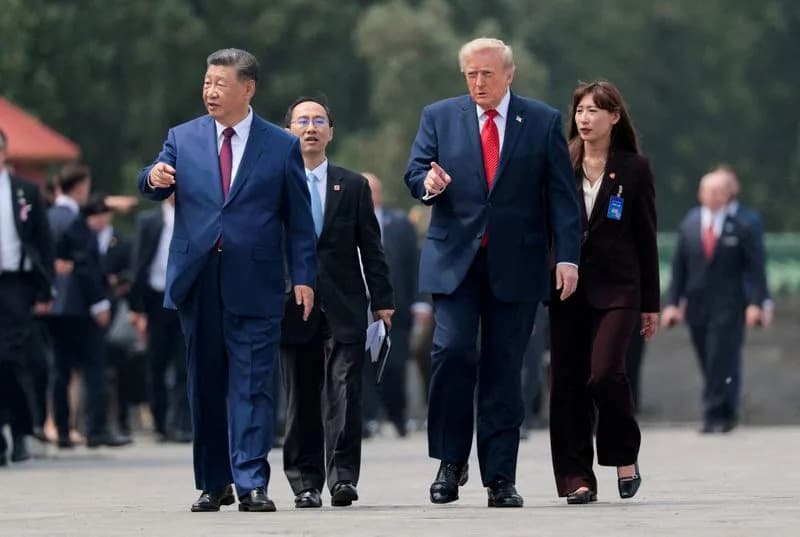
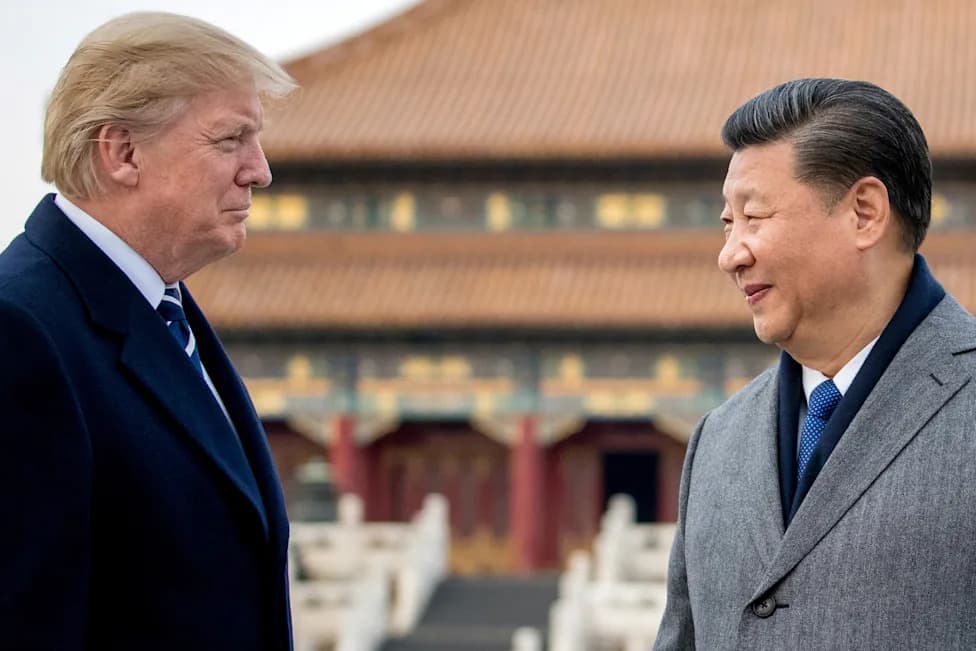
As President Trump prepares to travel to Beijing to meet Xi Jinping, the unresolved conflict in the Persian Gulf threatens to hand China a potent non‑tariff bargaining advantage before the leaders even shake hands.
Why Timing Matters
With the summit approaching, Washington is racing to freeze the Iran crisis because nothing weakens U.S. negotiating power with China more than arriving while the Strait of Hormuz remains contested and global energy markets are unsettled. The harder the U.S. presses for a quick settlement before May 14, the more it telegraphs urgency — and the larger the bargaining chip that Beijing can exploit.
The Incentives at Play
All three capitals — Washington, Tehran and Beijing — are driven by clear but opposing incentives. The U.S. wants a signable memorandum of understanding, even a narrow one, to avoid entering the Beijing meeting dominated by a live regional conflict. Tehran, watching the clock, has every reason to delay talks until the last feasible moment. Beijing benefits from remaining the indispensable third party: able to apply discreet pressure to help clinch a deal, but likely at a price.
Diplomatic Mismatch
The substantive gap is stark. The U.S. seeks a 20‑year freeze on uranium enrichment; Iran is proposing five years. That difference is not a rounding error — it reflects a fundamental disagreement over whether Iran will retain any sovereign nuclear capability at the end of negotiations.
The Maritime Dimension
The maritime theater makes the mismatch painfully concrete. Iran controls the Strait of Hormuz, through which roughly one‑fifth of the world’s oil flows, while the United States exerts leverage via measures limiting Iranian port access. These are mirror levers: reopening one without addressing the other would amount to a unilateral concession.
Even as the U.S. has paused escort operations in the strait, Iran continues to assert it is a “responsible actor” while conditioning any reopening of navigation on sanctions relief. Every day of disruption increases Tehran’s leverage not only against Washington but indirectly with Beijing, which depends heavily on Iranian crude and has publicly urged a restoration of safe commercial navigation.
Regional Realities
Saudi Arabia’s quiet refusal to permit U.S. use of its airspace or bases for action against Iran sharpens Washington’s dilemma. This is not a sign of hostility but an acceleration of long‑standing Saudi strategic hedging: Riyadh is diversifying security relationships and avoiding entanglement in a U.S.‑Iran confrontation. Pakistan’s recent role in facilitating the release of Iranian crew members underlines that regional diplomacy increasingly operates outside traditional U.S.‑led channels.
Asymmetric Warfare and Strategic Bandwidth
The asymmetric warfare now shaping conflicts from Ukraine to Gaza to the Gulf imposes a steady drain on U.S. military bandwidth. Cheap drones, dispersed missile tactics and ambiguous maritime incidents stretch American resources across multiple theaters. With the summit days away, this drain limits Washington’s capacity either to escalate or to absorb escalation, increasing pressure to secure a pause before May 14.
What Success Looks Like
Success need not be a grand bargain. A thin, reciprocal arrangement that gets both sides through May 15 without an explosion — a narrow freeze framework, a face‑saving maritime de‑escalation and a temporary alignment of incentives — could prevent the Gulf crisis from dominating the Beijing summit on Xi’s terms. But any such agreement would be fragile and vulnerable to unraveling once the summit ends and the artificial deadline passes.
Conclusion
How Washington manages the days before the summit will not end the Gulf crisis, but it will determine the terms on which the United States enters the Beijing talks. The summit is unlikely to resolve the standoff, but it will reveal whether the U.S. has chosen to pursue a genuine path to resolution or to endure a protracted confrontation. In a moment when China’s influence, Iran’s leverage and Saudi Arabia’s autonomy converge, that choice will shape much more than the optics of a single meeting.
Author: Charbel A. Antounis is a Washington‑based journalist who covers U.S. foreign policy with a focus on the Middle East and North Africa.
Help us improve.