Researchers using machine-learning techniques analyzed roughly 83 million faint stars in TESS's first-year data and flagged 10,091 previously unreported transit-like signals as candidate exoplanets. These detections target stars up to 16 times fainter than typical TESS searches; candidates require follow-up to be confirmed. So far one candidate, TIC 183374187 b, has been validated as a hot Jupiter. The team plans to extend the search to TESS's second-year data, while future missions like the Roman Space Telescope will enable deeper study of exoplanet atmospheres.
Machine Learning Spots 10,091 Hidden Exoplanet Candidates in TESS Data
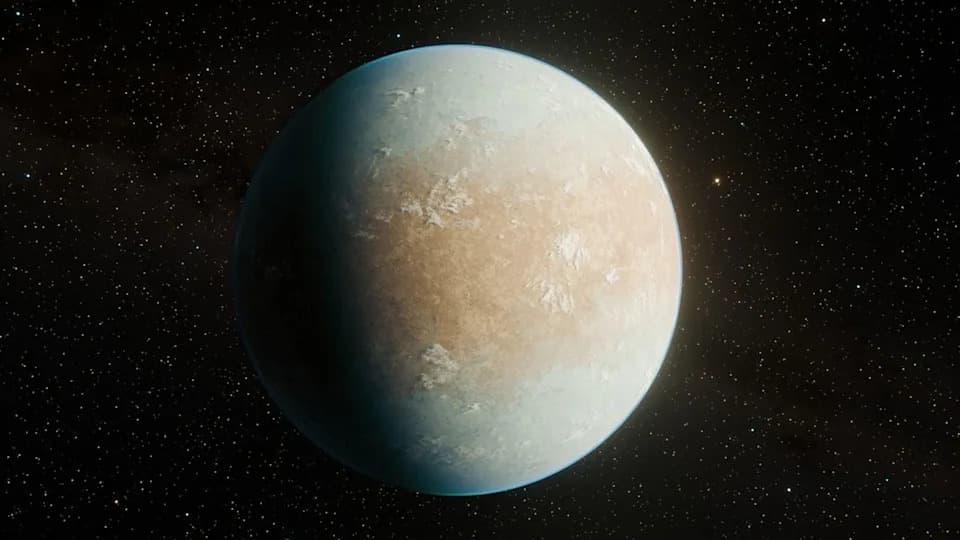
An exoplanet drifts through the dark vastness of space. | Credit: NASA/JPL–Caltech/Keith Miller (Caltech/IPAC).
Using NASA's TESS observations and machine learning, researchers have identified a striking 10,091 previously unreported candidate exoplanets in a single survey of the spacecraft's first year of data.
Survey and Methods
The team applied machine-learning algorithms to a vast sample of roughly 83 million stars observed by the Transiting Exoplanet Survey Satellite (TESS) during its first year. They deliberately probed stars up to about 16 times fainter than those typically targeted in standard TESS searches, uncovering 10,091 transit-like signals that were not previously cataloged.
What 'Candidates' Means
These detections are classified as candidates until follow-up observations and additional analyses confirm they are bona fide planets. Some candidate signals will likely be validated as planets; others may be explained by eclipsing binary stars, background objects, or instrumental noise.
Early Confirmation and Next Steps
The research team has already validated one candidate: TIC 183374187 b, a hot Jupiter — a gas giant with a mass similar to Jupiter that orbits very close to its host star and therefore reaches high temperatures. The group plans to extend their machine-learning analysis to TESS's second year of observations to search for more hidden candidates and to carry out follow-up studies to vet and confirm the most promising signals.
Context and Future Prospects
For perspective, NASA's Exoplanet Archive lists more than 6,200 confirmed exoplanets so far. If a significant fraction of these 10,091 candidates are validated, they could substantially increase the known population of exoplanets and provide many new targets for atmospheric characterization and demographic studies.
Looking ahead, upcoming missions will deepen exoplanet science in complementary ways. NASA's Nancy Grace Roman Space Telescope will include a Coronagraph Instrument capable of direct imaging and atmospheric study of some exoplanets (the mission is currently scheduled no earlier than early September 2026). Farther in the future, the planned Habitable Worlds Observatory aims to push direct detection and characterization of potentially habitable planets even further.
The team's results were published on April 28 in The Astrophysical Journal.
Help us improve.