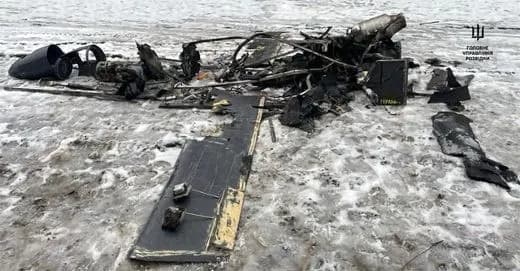
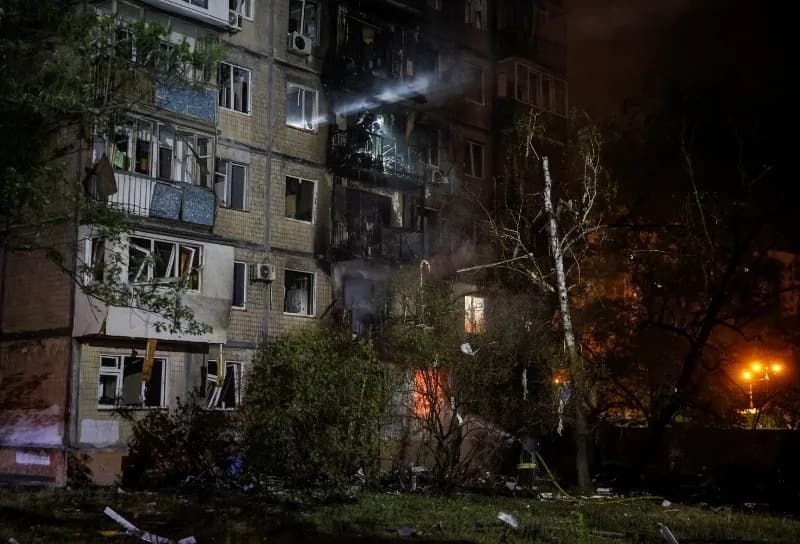
New CIR analysis shows Russia has increasingly used domestically produced drones to strike small Ukrainian power substations, intensifying grid disruption during the past winter. CIR mapped 270 verified strikes and found small substations made up 58% of verified hits from October 2025 to April 2026, up from 31% a year earlier. Ukraine reported over 1,000 missiles and about 27,000 Shahed-type drones launched between November 2025 and March 2026, contributing to an estimated $25 billion in damage to the energy sector.
Russian Drone Swarms Target Small Ukrainian Power Substations — New Data Shows Escalation

FILE PHOTO: Rescuers remove debris at a thermal power plant damaged by multiple Russian missile strikes, amid Russia's attack on Ukraine, in an undisclosed location in Ukraine February 9, 2026. REUTERS/Valentyn Ogirenko/File Photo
New analysis from the London-based Centre for Information Resilience (CIR), shared exclusively with Reuters, indicates that Russia has increasingly shifted aerial attacks toward small power substations across Ukraine. A rapid expansion in domestic drone production has allowed Russian forces to broaden their choice of targets and increase the tempo of strikes, particularly over the recent winter campaign.
What the Data Shows
CIR researchers geolocated and verified videos to map 270 confirmed strikes on energy infrastructure. Their analysis found that smaller distribution substations accounted for 58% of CIR-verified strikes between October 2025 and April 2026, up from 31% during the same period the previous year. CIR’s dataset does not always specify the exact weapon used, but Ukrainian officials say drones — rather than costlier missiles — are mainly used against these smaller targets.
Scale And Impact
Between November 2025 and March 2026, Ukraine’s defence ministry reported that Russian forces launched in excess of 1,000 missiles and about 27,000 Shahed-type drones. These operations, which often combine waves of hundreds of drones with dozens of missiles, have battered both generation facilities and the transmission and distribution networks, causing intermittent power and heat outages for civilians, businesses and the military.
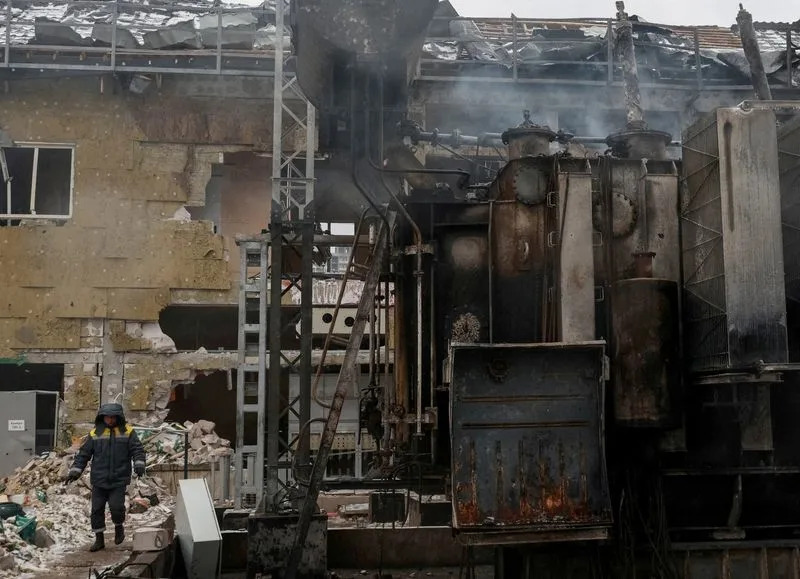
FILE PHOTO: An energy worker walks at a power sub station damaged by a recent Russian drone and missile strike, amid Russia's attack on Ukraine, in Odesa, Ukraine February 18, 2026. REUTERS/Nina Liashonok/File Photo
The World Bank estimates roughly $25 billion in damage to Ukraine’s energy sector, with rebuilding and recovery costs estimated at more than $90 billion. Experts note that while strikes on individual distribution substations rarely cripple the entire national grid, they cause serious local outages affecting tens of thousands of people.
Defence Challenges And Tactics
Ukraine directs its limited air-defence resources toward major high-voltage assets and power plants, leaving many of the more than 3,000 smaller transformers and roughly 115–120 high-voltage substations harder to protect. Joshua Scriven of CIR’s Eyes on Russia team said that before 2025 Russia needed to stockpile drones to create enough volume to overwhelm defences, but higher daily sortie rates now allow greater flexibility in selecting smaller, distributed targets.
“Striking distribution substations isn’t going to have a large-scale impact on the wider grid, but it can certainly cause local issues,” said Scriven, noting that tens of thousands of people can be affected by such outages.
Outlook
CIR’s findings highlight how increasing drone production and evolving tactics enable targeted disruption of civilian infrastructure without necessarily relying solely on large, high-profile strikes. The pattern underlines persistent vulnerabilities in Ukraine’s distribution network and the continued humanitarian and economic consequences of these sustained attacks.
Sources: Centre for Information Resilience (CIR) analysis, Ukraine defence ministry, World Bank, Energy Research Centre (Kyiv), reporting by Reuters.
Help us improve.