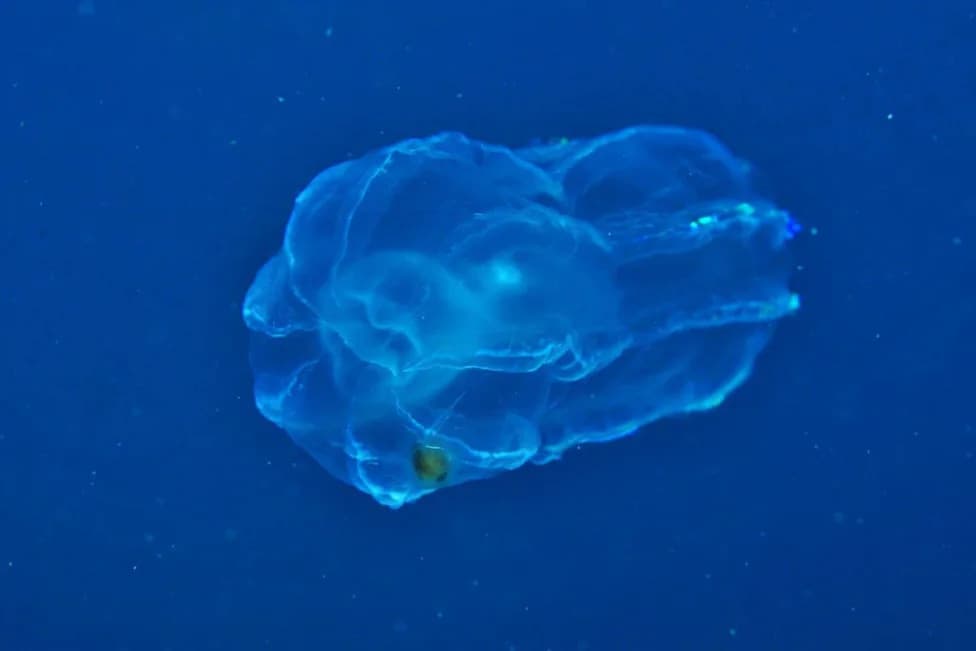
Hundreds of thousands of indigo‑blue Velella velella, known as "by‑the‑wind sailors," washed ashore along the U.S. West Coast in late April–early May 2026, creating miles‑long carpets of bubble‑like rafts. Scientists say the dense strandings—possibly linked to an unusually warm winter and marine heat waves—offer rare research and citizen‑science opportunities. Observers are asked to submit GPS‑tagged photos via platforms like iNaturalist to help track and study these events.
Indigo Armadas: Hundreds of Thousands of 'By‑The‑Wind Sailors' Wash Up Along U.S. West Coast
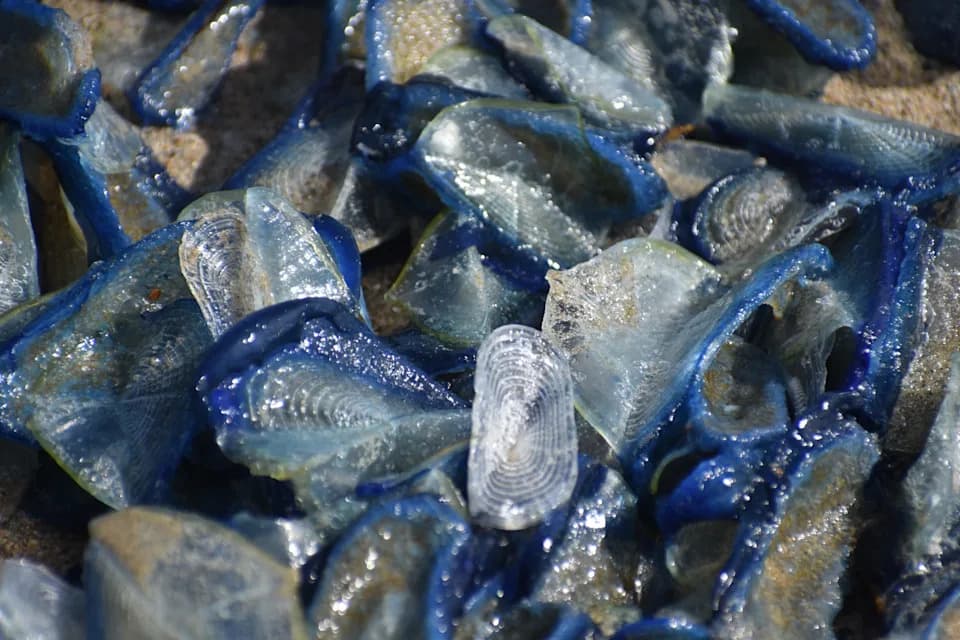
Enormous volumes of mysterious blue creatures known as Velella velella, like these at Santa Claus Beach in Carpinteria in Santa Barbara County, have been washing up all along the California coast, driven by offshore winds.
Hundreds of thousands of small, indigo‑blue marine organisms—Velella velella, commonly called "by‑the‑wind sailors"—have washed up in massive numbers along beaches from Washington through California in late April and early May 2026. The striking sight has drawn beachgoers, shorebirds and scientists, and it presents a rare opportunity for public participation in research.
What Are Velella velella?
Velella are colonial hydrozoans in the phylum Cnidaria (the same phylum that contains jellyfish). Each palm‑sized raft is an integrated community of polyps: a central mouth surrounded by many small feeding polyps, with a translucent triangular "sail" that catches the wind and carries the colony across the ocean surface.
Why So Many Now?
Flotillas of Velella commonly arrive on Pacific Coast beaches in spring when offshore winds shift, but observers say the recent strandings have been unusually dense, particularly along California's coast. Researchers note that one study found larger Velella concentrations may follow unusually warm winters; the winter of 2025–2026 was a record‑breaking season in California and featured intense marine heat waves offshore, which may help explain the large aggregations—though scientists caution more research is needed.
"In a lifetime of living and doing marine science in Southern California I've never seen that many pile up on a beach," said Douglas McCauley, director of the Benioff Ocean Initiative at UC Santa Barbara.
Ecology and Life Cycle
Velella feed on zooplankton, fish eggs and krill. Predators include large ocean sunfish (mola mola), which have been observed consuming vast flotillas at sea. Each Velella produces thousands of tiny, free‑swimming larvae—sesame‑seed sized—that sink to the seafloor before later developing into new floating colonies. Some species of photosynthetic algae live inside Velella tissues and are passed to budding offspring, effectively turning each colony into a small "solar panel" at the ocean surface.
Scientific And Practical Interest
Scientists are interested in Velella for several reasons:
- They offer a living laboratory for studying how surface‑dwelling species respond to climate variability and marine heat waves.
- Their visible aggregations help link observations across scales—from satellite imagery to drone and microscope studies—improving understanding of spatial patterns in the ocean.
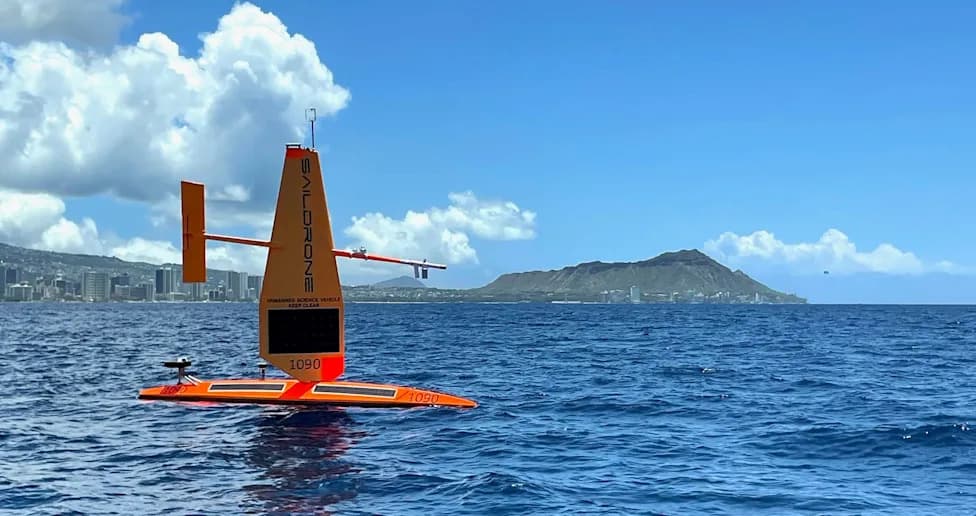
- Engineers and oceanographers have explored Velella as bioinspiration for unmanned surface vehicles and low‑cost ocean sensors.
How You Can Help
Researchers urge beachgoers, sailors and citizen scientists to document sightings. Photos taken with GPS enabled are particularly valuable. Observations can be submitted through platforms such as iNaturalist to help build a geotagged record of where and when mass strandings occur.
Why This Matters
Mass strandings of Velella are visually spectacular, ecologically informative and potentially informative about broader ocean conditions. Tracking these events helps scientists study climate links, predator–prey interactions, and biological adaptations—like the colonies' remarkable ability to right themselves in wind and waves.
Reporting Note: If you photograph Velella, enable location services on your device and upload images to citizen‑science platforms to support research efforts.
This report is based on observations and comments from researchers including Douglas McCauley (Benioff Ocean Initiative), Steven Haddock (Monterey Bay Aquarium Research Institute) and Rebecca Helm (Georgetown University), and was originally reported by USA TODAY.
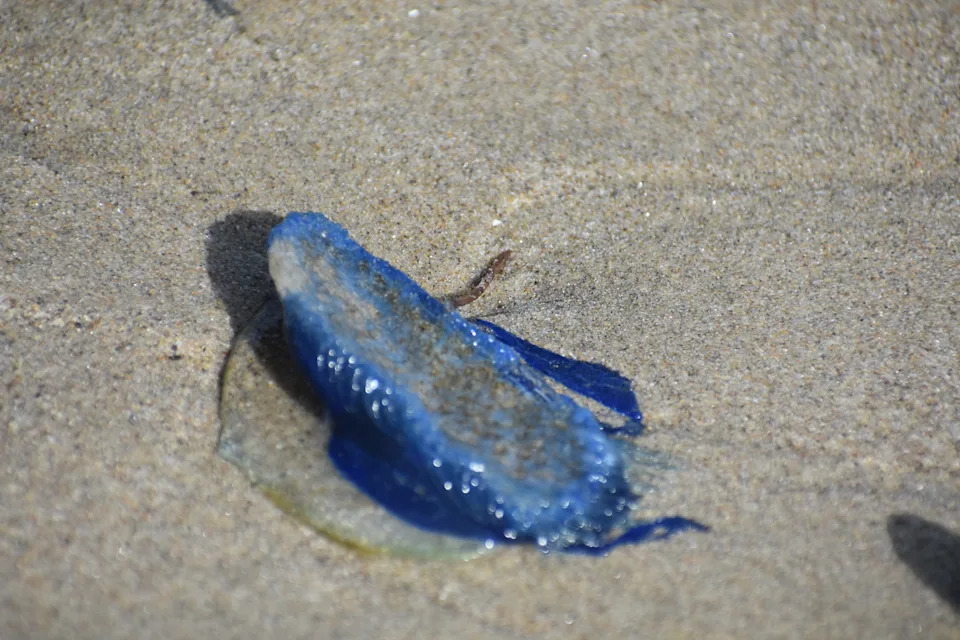
A close up of the creatures known as Velella velella, or by-the-wind sailors, after washing up on the beach in Carpinteria, California, driven by offshore winds.
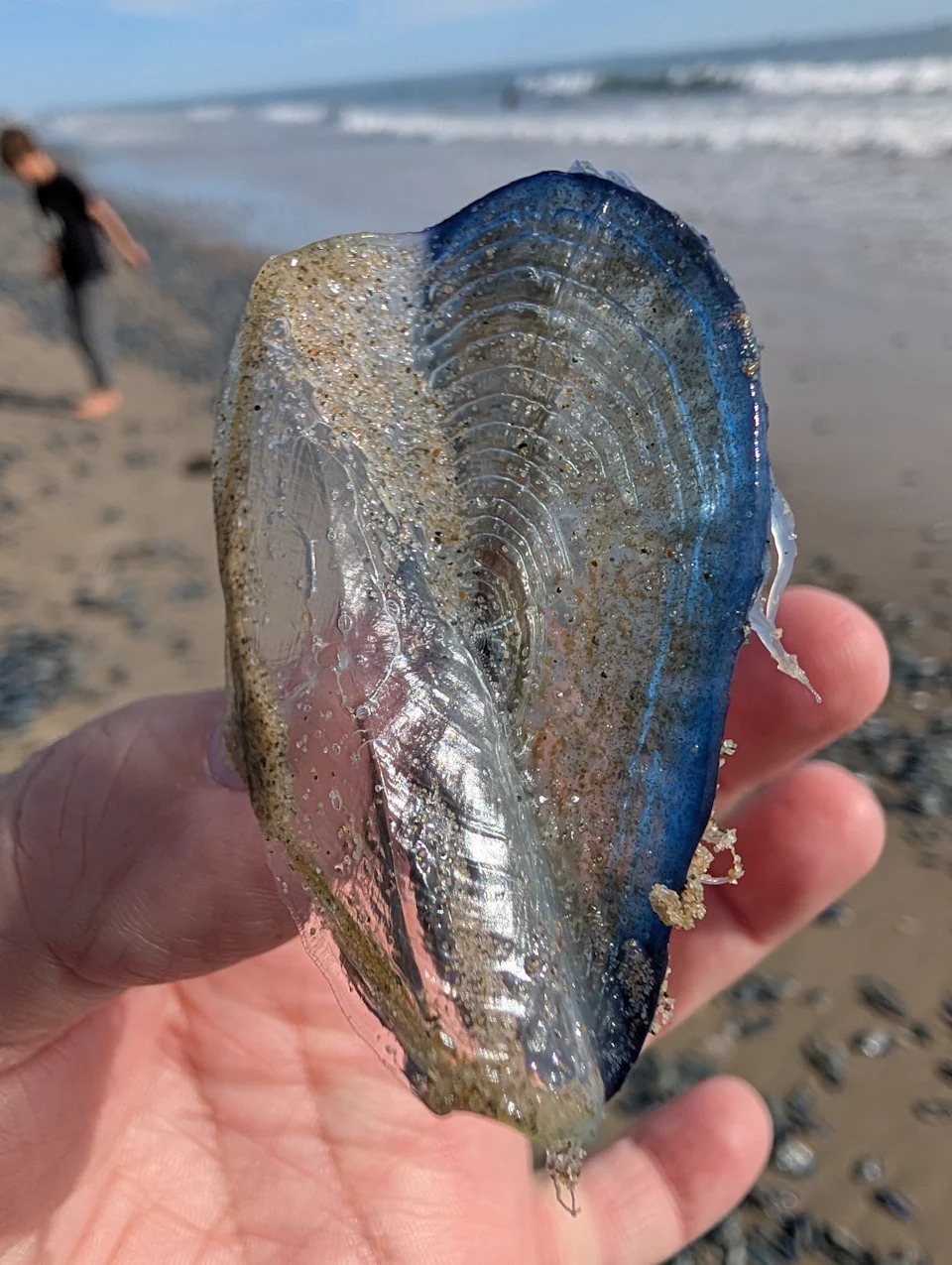
These interesting creatures usually float along the surface far offshore but washed up along U.S. Pacific Coast beaches in late April and early May 2026 by the changing winds that move them around the ocean. Not quite jellyfish, they're named velella velella, but are commonly called by-the-wind sailors.
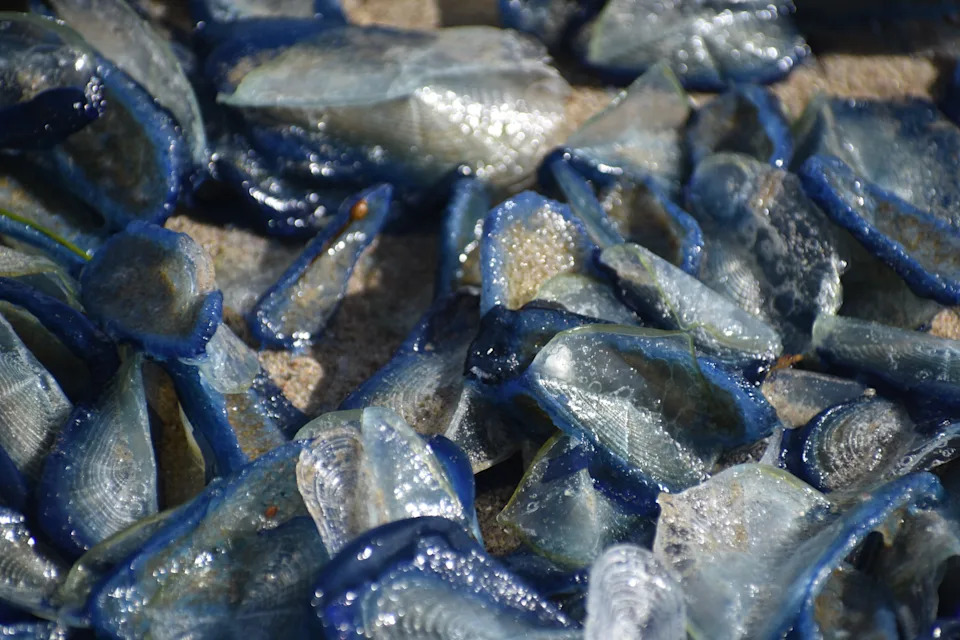
These mysterious blue creatures known as by-the-wind sailors were turning up all along the Pacific coast from Washington to California in late April and early May 2026.
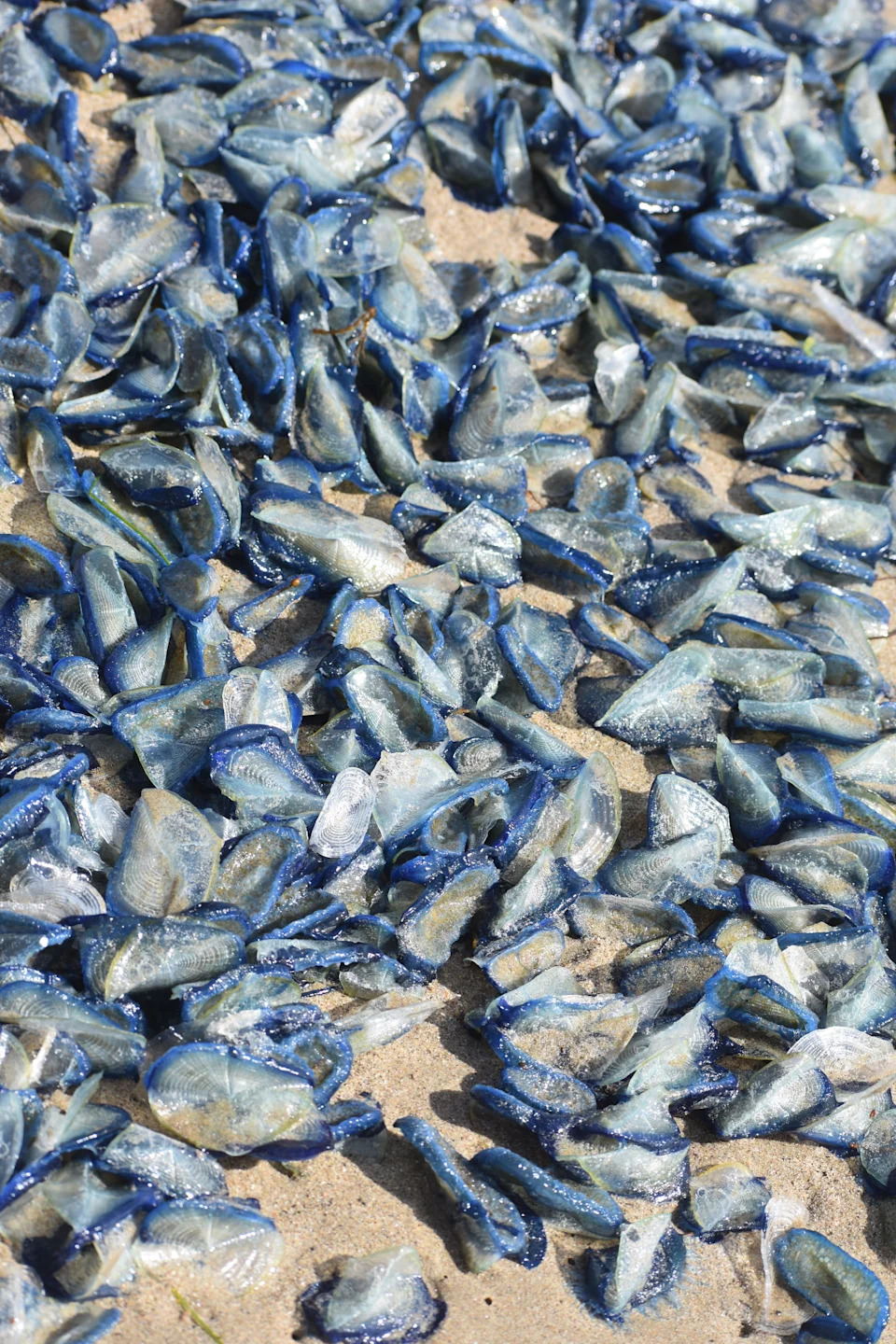
These mysterious blue creatures known as by-the-wind sailors were turning up along the Pacific coast, but especially dense in California, in late April and early May 2026.
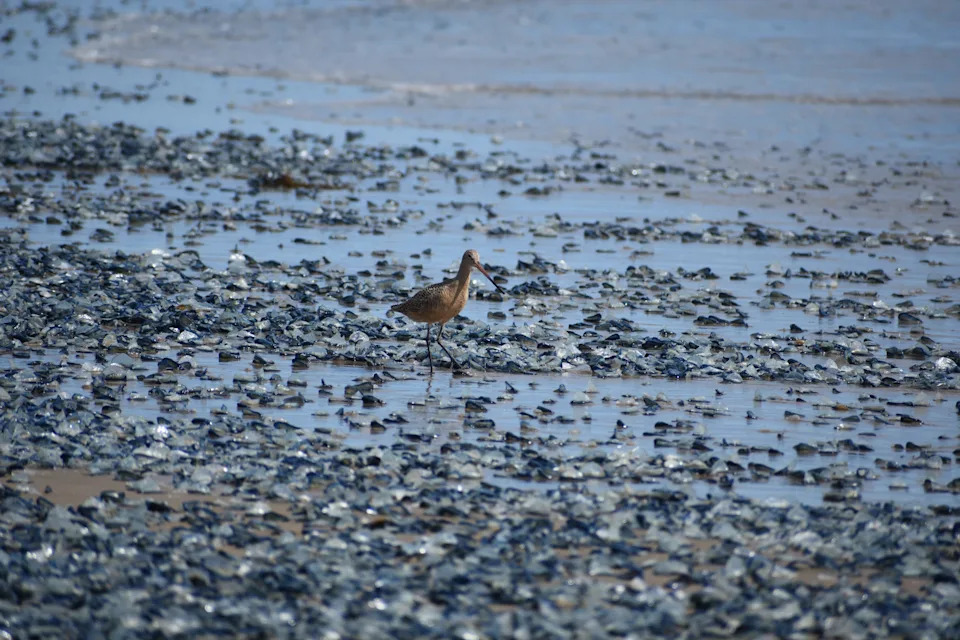
A marbled godwit, a shorebird species, forages for food among a dense flotilla of the creatures known as Velella velella that washed up ashore in Santa Barbara County on April 23, 2026.
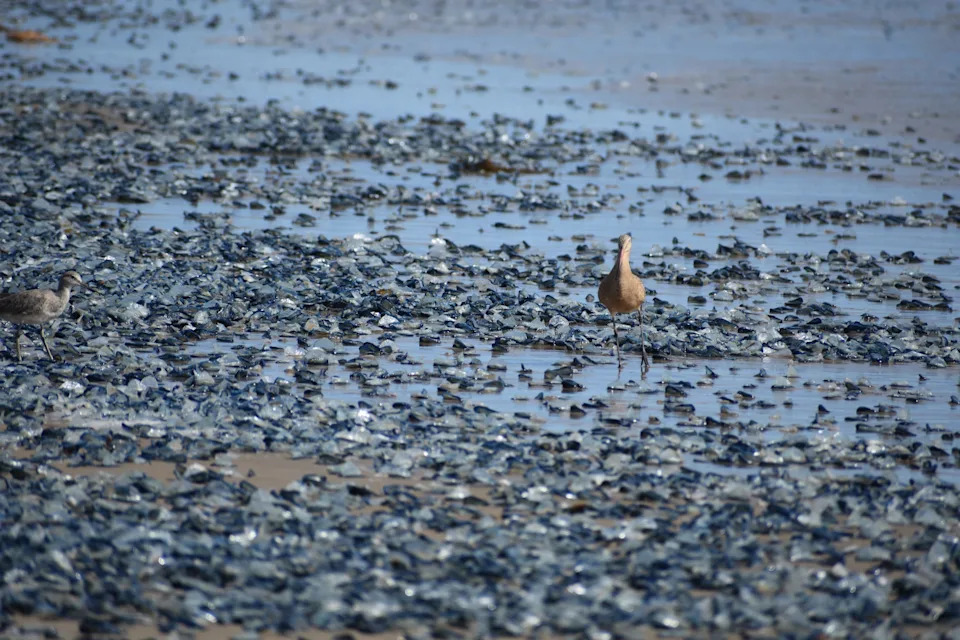
A marbled godwit shorebird forages for food among thousands of by-the-wind sailors that washed up ashore in Santa Barbara County.
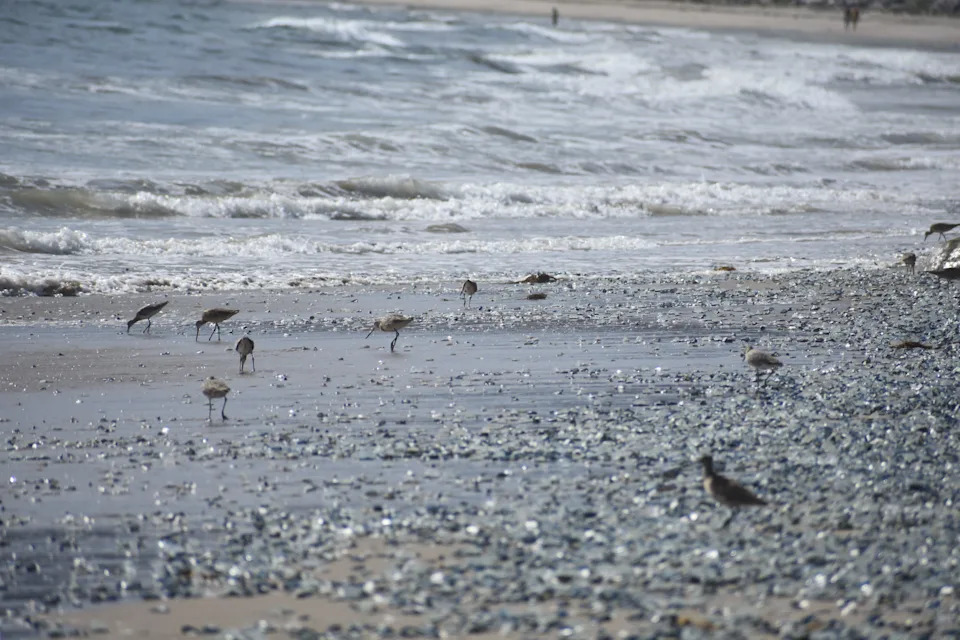
A mixed flock of shorebirds forage along the shore amidst thousands of Velella velella, or by-the-wind sailors that washed up on the beaches of Santa Barbara County, California in April 2026.
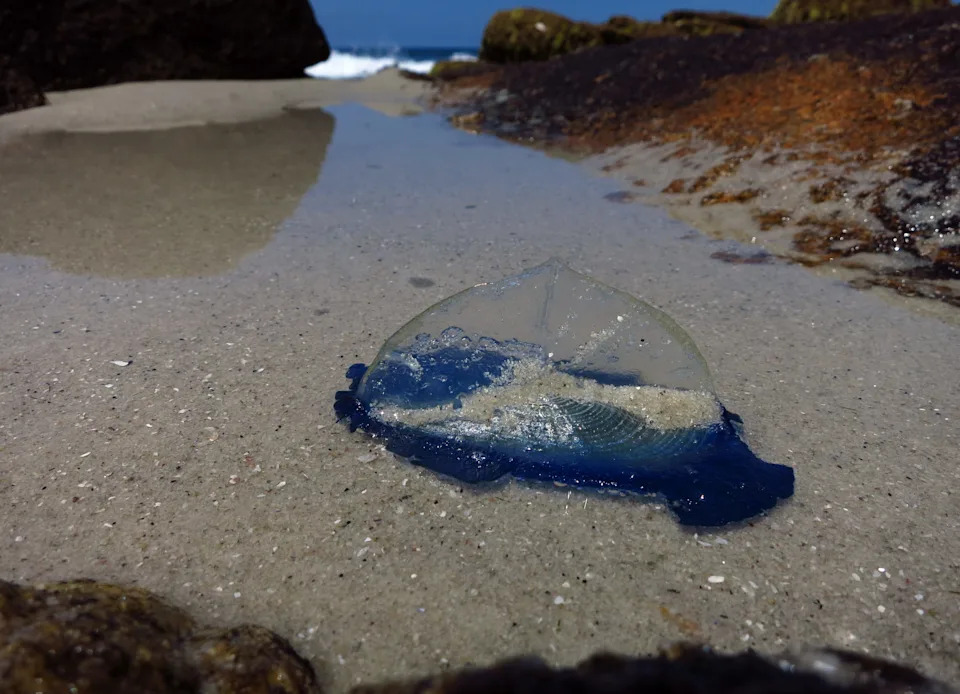
A dead Velella velella sits in a tide pool in Pebble Beach, California on Aug. 26, 2014, after millions of the jellyfish-like creatures informally known as "by-the-wind sailors" washed up on Pacific Coast beaches.
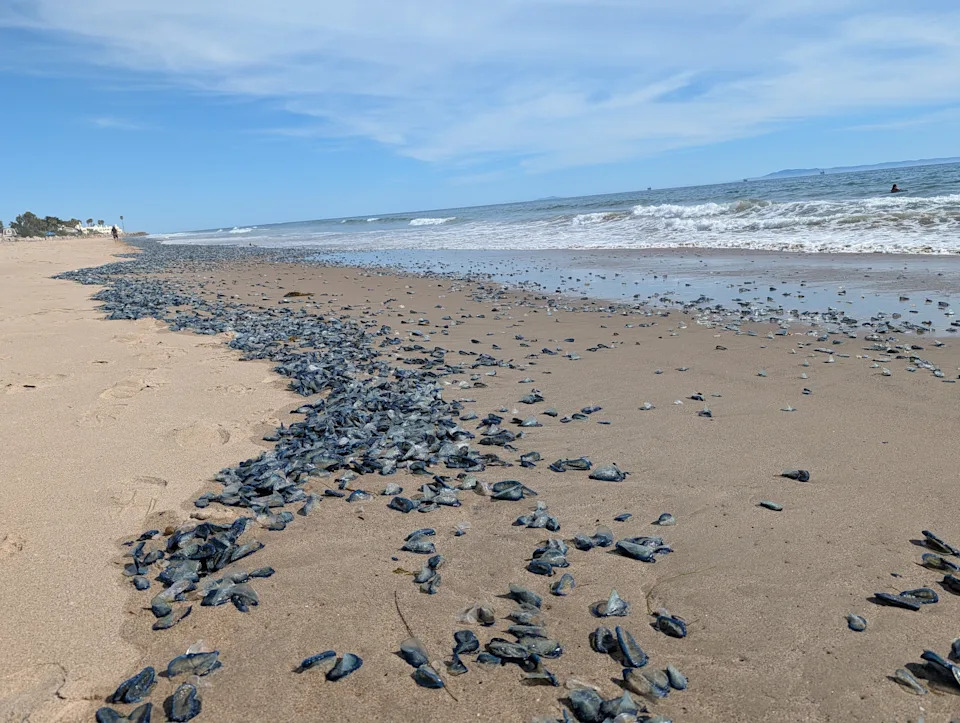
These mysterious blue colonial organisms at Santa Claus Beach lined the coast in Santa Barbara County, California on April 3, 2026.
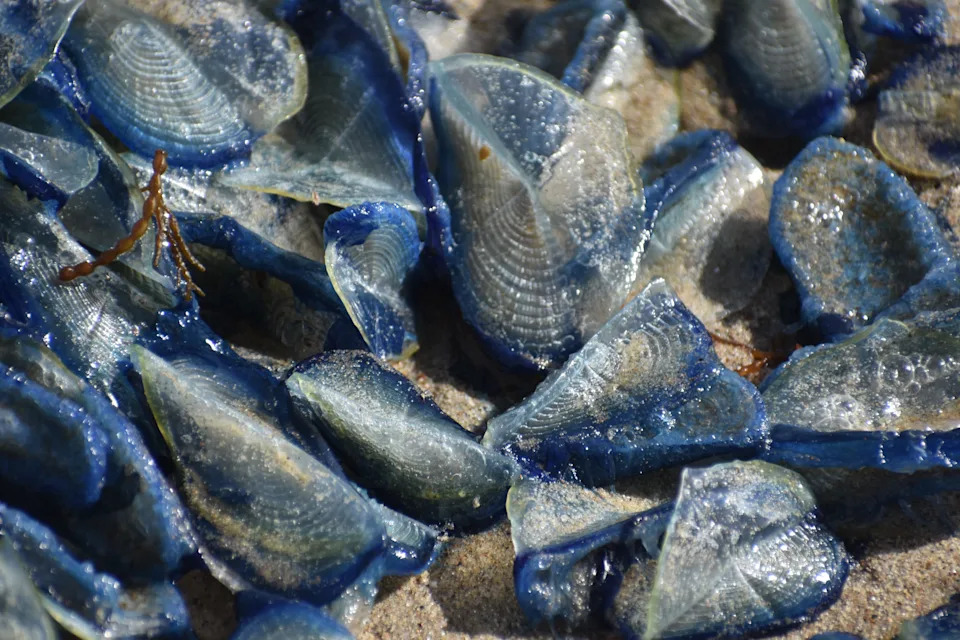
A close up of the indigo blue by-the-wind sailors washing up on beaches along the U.S. Pacific coast on April 23, 2026.
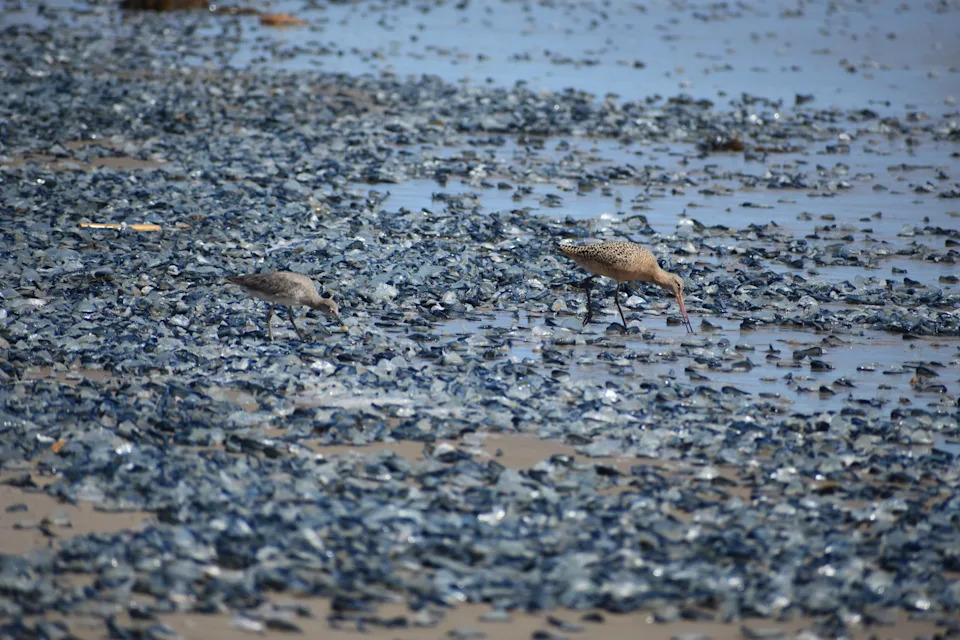
Two shorebirds, a willet and a marbled godwit, forage along the beach in between thousands of by-the-wind sailors, also known as Velella velella, that had washed up on the beaches of Santa Barbara County, California on April 23, 2026.
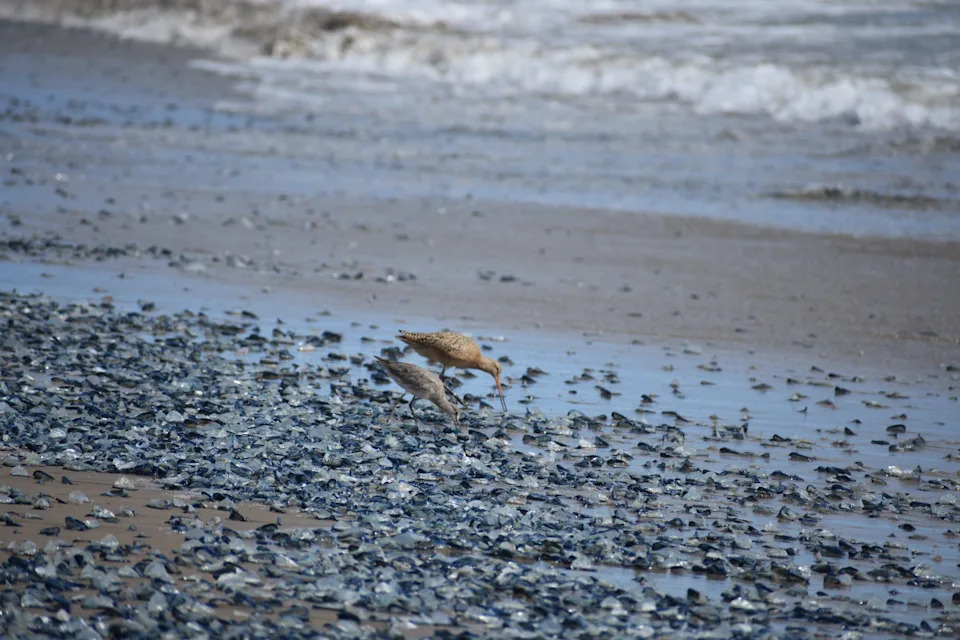
Two shorebirds, a willet and a marbled godwit, forage along the beach in between thousands of by-the-wind sailors, also known as Velella velella, that had washed up on the beaches of Santa Barbara County, California on April 23, 2026.
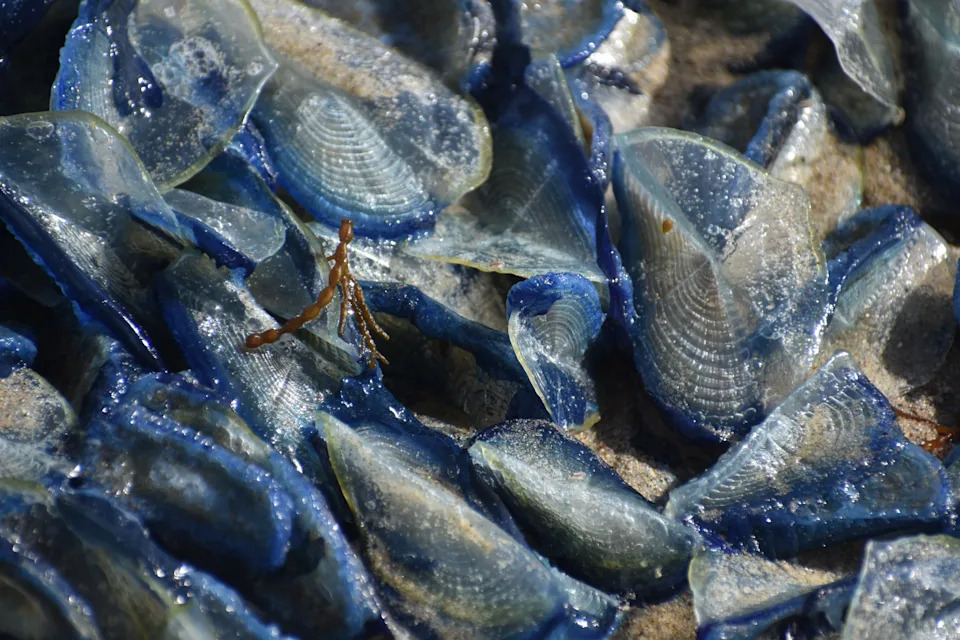
Enormous volumes of these mysterious blue organisms, like these at Santa Claus Beach in Carpinteria in Santa Barbara County, reappeared along the California coast in late April 2026, driven by offshore winds. Known as velella velella, they're more commonly called by-the-wind sailors.
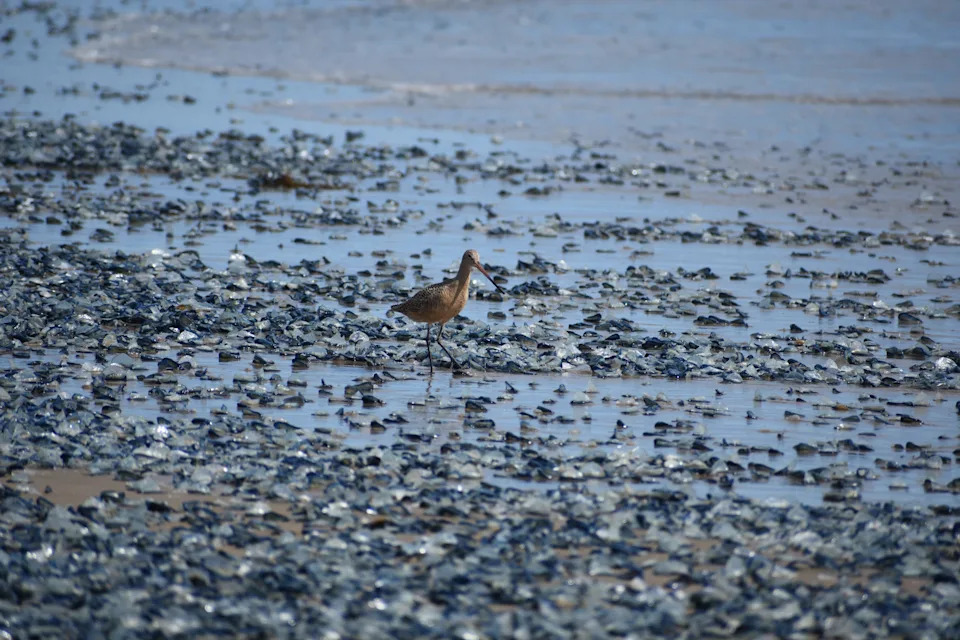
A marbled godwit forages among thousands of velella velella, also known as by-the-wind sailors, on a beach in Carpinteria, California on April 23, 2026.
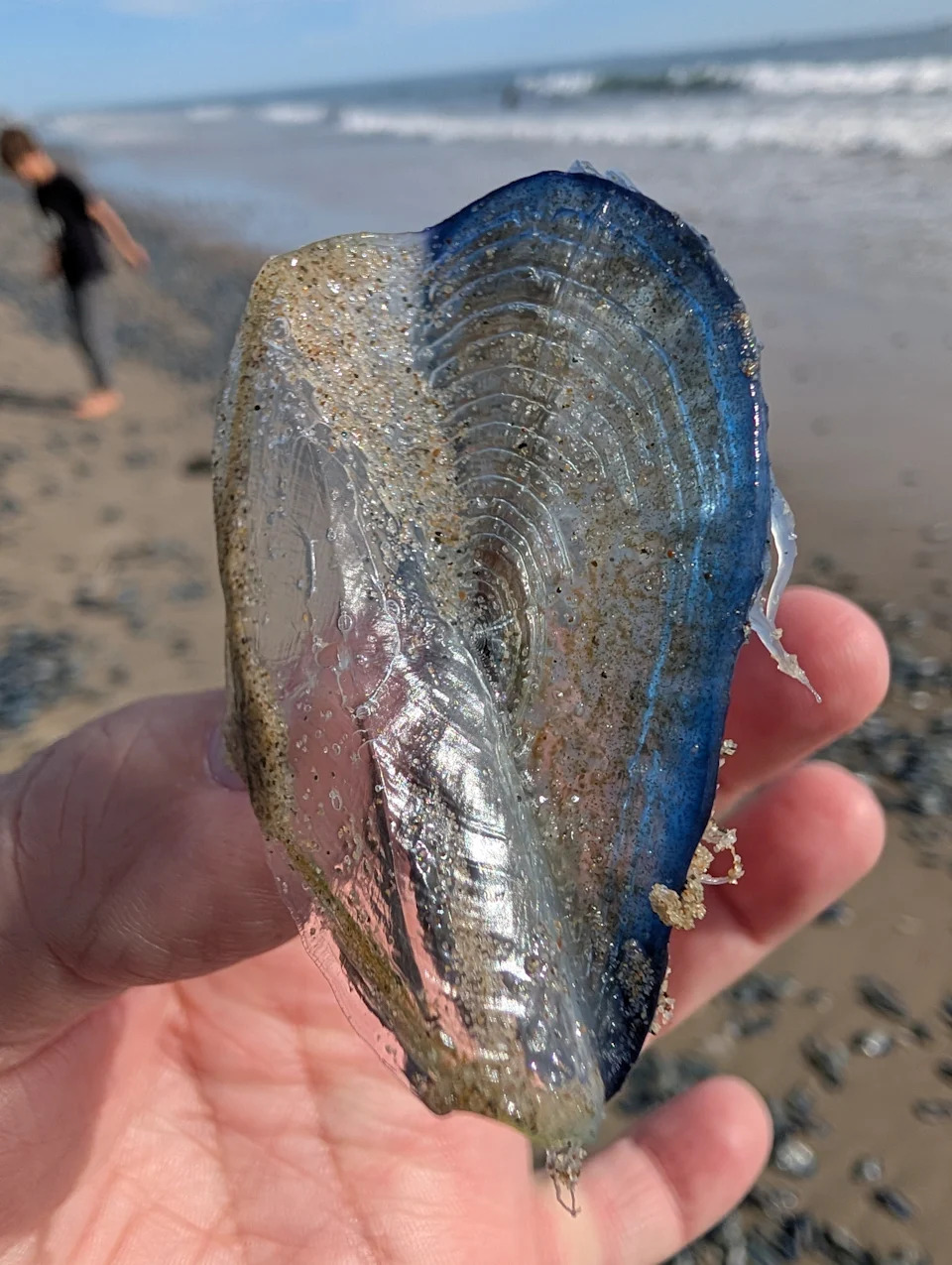
These interesting creatures usually float along the surface far offshore but washed up along U.S. Pacific Coast beaches in late April and early May 2026 by the changing winds that move them around the ocean. Not quite jellyfish, they're named velella velella, but are commonly called by-the-wind sailors.
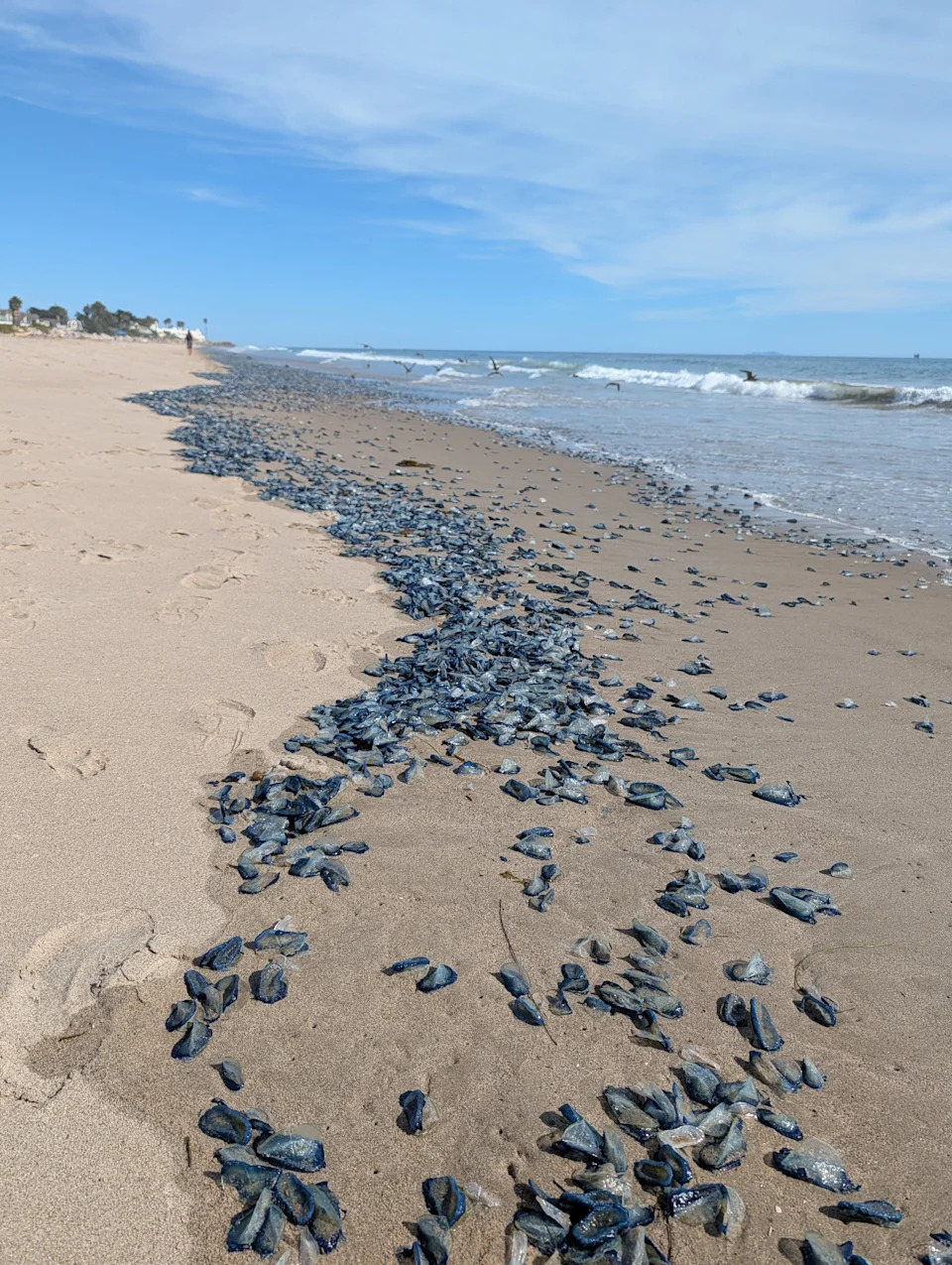
Enormous volumes of these mysterious blue organisms, like these at Santa Claus Beach in Carpinteria in Santa Barbara County, lined beaches along the California coast in late April 2026, driven by offshore winds. Known as velella velella, they're more commonly called by-the-wind sailors.
Help us improve.