Iranian Foreign Minister Abbas Araghchi met China’s Wang Yi in Beijing in a one‑day visit focused on preserving the April ceasefire and reopening the Strait of Hormuz. The talks occurred one week before President Xi Jinping's summit with US President Donald Trump and sought clarity on whether China would make concessions to Washington that might worry Tehran. Pakistan has been mediating US‑Iran talks, but negotiations in Islamabad in April failed to bridge key differences over nuclear enrichment and control of the strait.
Iran’s Foreign Minister Visits Beijing to Press China on Strait of Hormuz Ahead of Xi‑Trump Summit
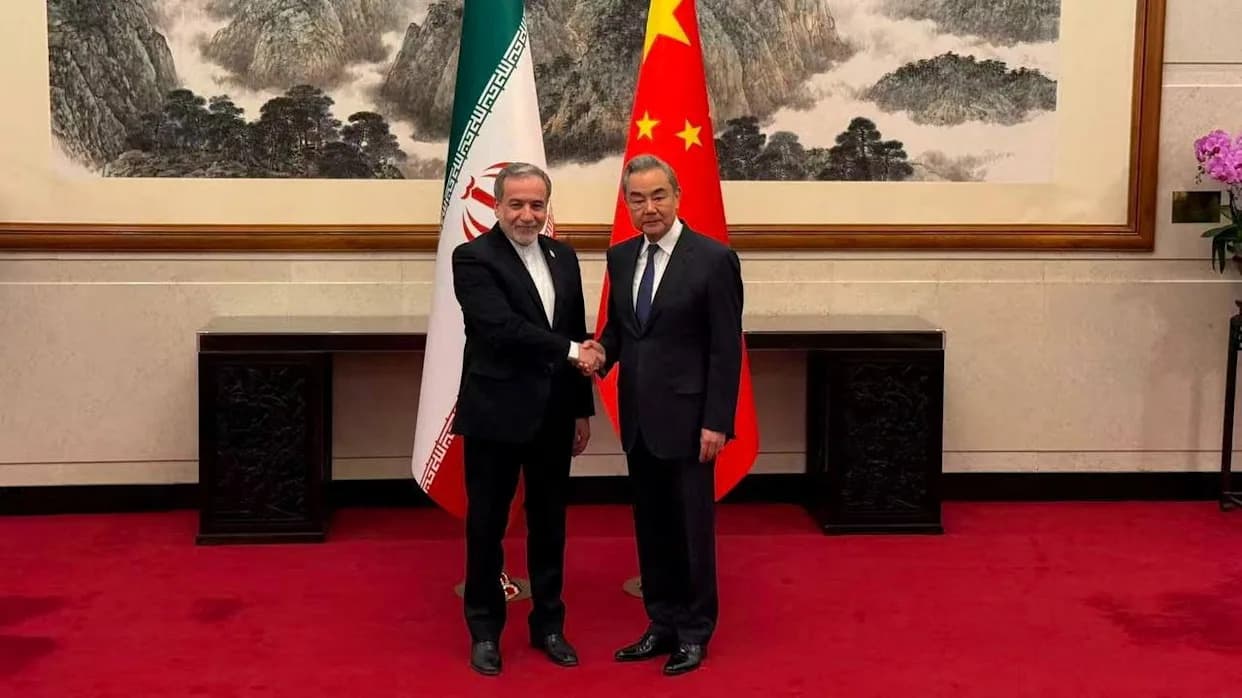
Iranian Foreign Minister Abbas Araghchi meets his Chinese counterpart, Wang Yi, in Beijing, on May 6, 2026 [ Handout/Abbas Araghchi/Telegram via Reuters]
Iranian Foreign Minister Abbas Araghchi travelled to Beijing for a one‑day meeting with his Chinese counterpart, Wang Yi, as tensions between Tehran and Washington remain high over control of the Strait of Hormuz.
The visit took place one week before US President Donald Trump was scheduled to meet President Xi Jinping in Beijing on May 14–15, and was described by China's Xinhua news agency as having begun without further public detail.
Background
This was Araghchi's first trip to China since the outbreak of hostilities on February 28. The two ministers had spoken by phone several times since then. Iran has periodically closed the Strait of Hormuz — a critical global shipping lane for oil and gas — a move that pushed up fuel and fertiliser prices and unsettled markets worldwide.
Key Agenda Items
Al Jazeera correspondent Katrina Yu, reporting from Beijing, said the talks centred on two priorities: preserving the ceasefire reached in April and negotiating steps to reopen the Strait of Hormuz. Beijing is weighing competing priorities: publicly criticising a US naval blockade of Iranian ports while also expressing concern about Iran's repeated closures of the strait.
“China has been very critical of the US naval blockade on Iranian ports, calling it dangerous. But increasingly, Beijing has also been critical of Iran's decision to continually close that vital chokepoint,” Yu said.
Araghchi reportedly sought clarification from Beijing about what concessions, if any, China might offer Washington at the upcoming Xi‑Trump summit, and whether such concessions could affect Tehran. Conversely, China has sought assurances that Iran will avoid any escalatory steps in the run‑up to the summit.
Diplomatic and Security Developments
After the April ceasefire, the United States imposed a blockade on Iranian ports to pressure Tehran during peace negotiations. Separately, the US launched a short‑lived operation to escort stranded vessels out of the Strait of Hormuz; President Trump later announced a pause to that operation, saying it was taken at the request of Pakistan and other countries and because “great progress” had been made toward an agreement with Iranian representatives.
Pakistan has been leading mediation efforts between Iran and the US. Direct talks in Islamabad on April 11–12 failed to produce a deal, with major sticking points including US demands that Iran halt all nuclear enrichment and Tehran's insistence on retaining control over transit through the Strait of Hormuz.
Implications
The meeting in Beijing highlighted China's balancing act: supporting regional stability and protecting its energy interests while managing relations with both Tehran and Washington ahead of a high‑stakes summit. The outcome of the talks could influence whether the strait is reopened and how the international community responds to any further closures or sanctions.
Help us improve.