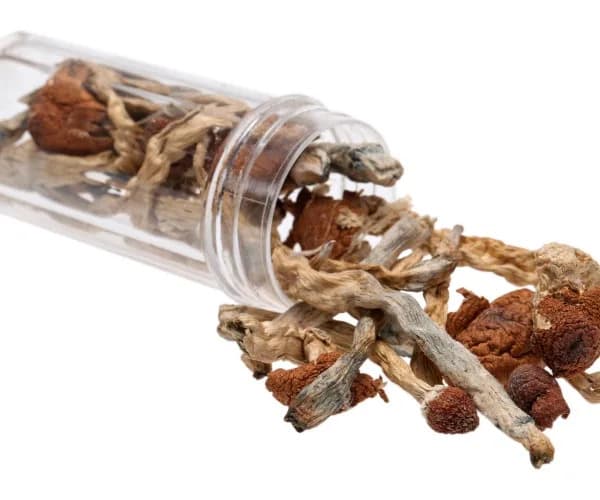
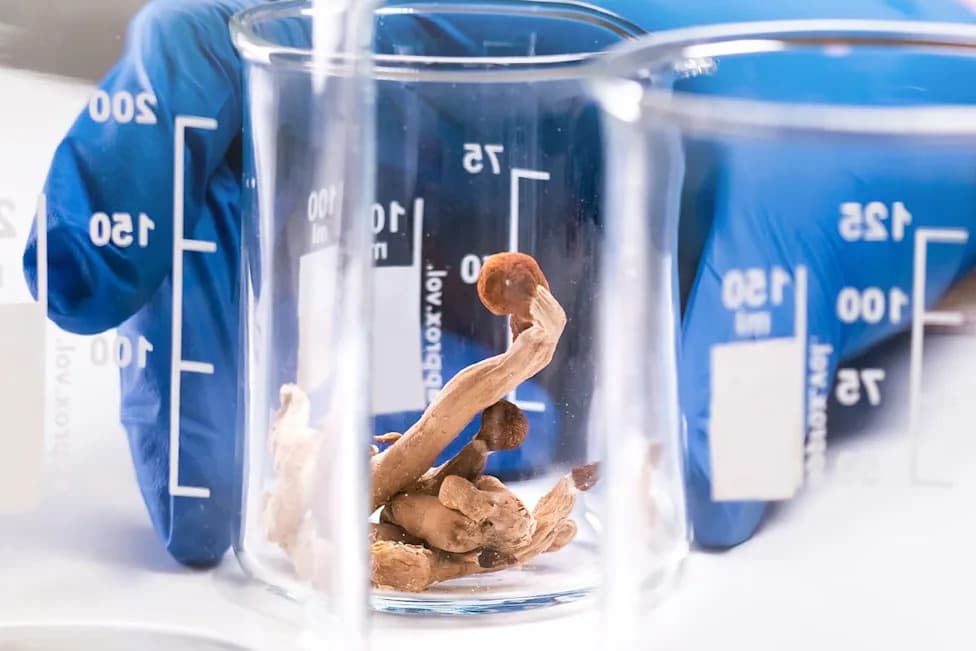
A small study of 28 healthy adults found that a single 25 mg psilocybin session — given one month after a 1 mg subtherapeutic dose — was associated with altered water diffusion in white-matter tracts linking the prefrontal cortex and midbrain. Participants who reported stronger psychedelic experiences and greater psychological insight showed larger DTI changes one month later, and about 70% reported improved wellbeing at two and four weeks. The results are preliminary and exploratory; larger studies are needed to confirm whether these microstructural changes underlie clinical benefits.
Single Psilocybin Session Linked to Measurable Changes in Brain Microstructure, Small Study Finds
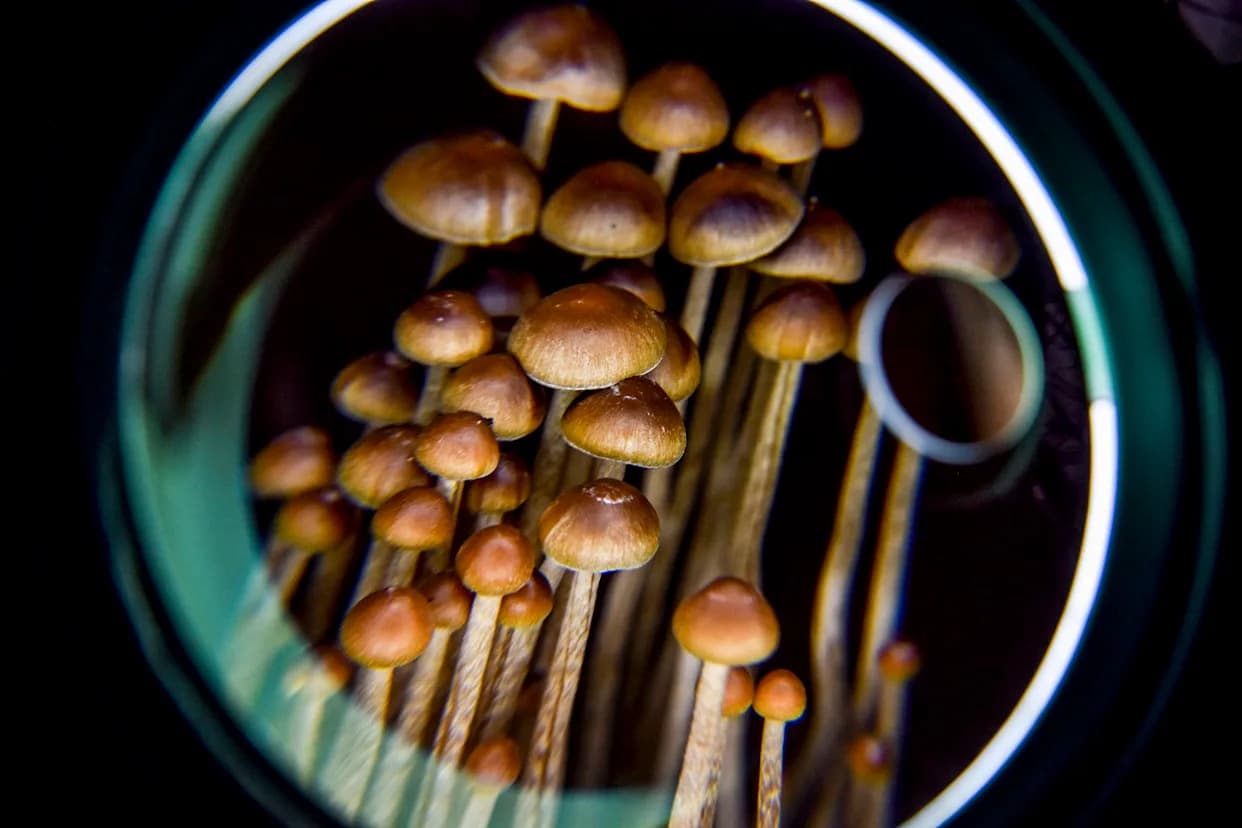
The study focused on psilocybin, the psychedelic compound found in so-called magic mushrooms. (The Washington Post / The Washington Post via Getty Images file)(The Washington Post)
A single high-dose psilocybin session may produce measurable changes in brain microstructure that help explain why some people report lasting psychological benefits, according to a small study published in Nature Communications.
Researchers studied 28 healthy adults in London (average age 41) who had never used psychedelics and had no diagnosed psychiatric disorders. Each participant first received a 1 mg dose of psilocybin — a dose considered too low to produce a psychedelic experience — while researchers recorded brain activity using electroencephalography (EEG). One month later every volunteer received a 25 mg dose, the amount commonly used in therapeutic trials. Brain activity was recorded at one hour and two hours after the 25 mg dose, and researchers performed diffusion tensor imaging (DTI) scans before treatment and again one month afterward.
The DTI scans, which track how water diffuses along neural fibers, showed altered water movement in several tracts connecting the prefrontal cortex (involved in emotional regulation and decision-making) with midbrain regions. In those tracts water movement appeared reduced one month after the 25 mg dose — a pattern the authors interpret as a possible microstructural change in white-matter pathways.
"The bigger the scores on psychological insight, the bigger the improvements in therapeutic response," said senior author Robin Carhart-Harris of UCSF. He added, "We don't really know what it means, but the tracts become denser."
Most participants (all but one) reported significant alterations in consciousness during the 25 mg session; none reported a trip after the 1 mg session. Those who reported stronger subjective experiences and greater psychological insight tended to show larger DTI changes one month later. About 70% of participants also reported improved wellbeing at two and four weeks after the high dose.
Experts urge caution in interpreting the results. The study is small and exploratory, and DTI provides indirect measures of tissue microstructure rather than direct measures of synapses or neurons. Albert Garcia-Romeu of Johns Hopkins noted some DTI changes can resemble patterns seen after traumatic brain injury (TBI), underscoring that microstructural change is not inherently "good" or "bad" without further context.
The study also discloses potential conflicts of interest: psilocybin for the trial was supplied by Compass Pathways, a U.K. company pursuing regulatory approval, and several study authors have served as scientific advisers to psychedelic research firms.
Overall, the findings add to growing evidence that a psychedelic session can be associated with lasting brain changes and subjective improvements in wellbeing, but larger, controlled studies are needed to confirm the results, determine clinical significance, and clarify whether the subjective experience itself drives structural change and therapeutic benefit.
Key caveats: small sample size, exploratory DTI findings, indirect measures of microstructure, and potential industry ties among authors.
Help us improve.