Thailand has unilaterally terminated a 25-year memorandum with Cambodia that aimed to create a framework for joint offshore energy exploration in overlapping parts of the Gulf of Thailand. The cabinet decision fulfills an election pledge by Prime Minister Anutin Charnvirakul and cancels the stalled "MOU 44" arrangement. Cambodia said it will pursue compulsory conciliation under UNCLOS, while Thailand says it will use UNCLOS as a reference in direct boundary talks. The move follows two rounds of deadly border clashes last year that killed about 150 people and displaced hundreds of thousands.
Thailand Unilaterally Cancels 25-Year Offshore Energy Pact With Cambodia, Citing No Progress
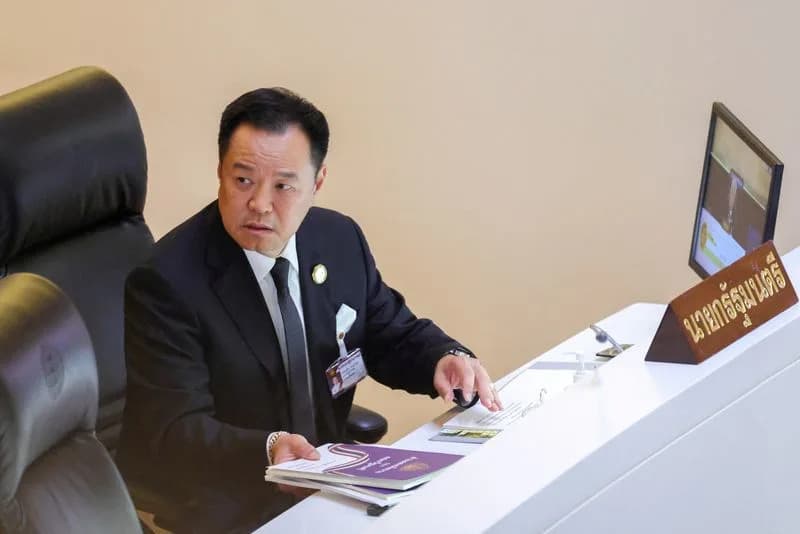
Thailand's Prime Minister Anutin Charnvirakul prepares ahead of a parliament session to deliver his government's policy proposal at the parliament in Bangkok, Thailand, April 9, 2026. REUTERS/Athit Perawongmetha
BANGKOK, May 5 — Thailand on Tuesday announced it had unilaterally terminated a 25-year-old memorandum of understanding with Cambodia that aimed to create a framework for joint offshore energy exploration in overlapping parts of the Gulf of Thailand. The cabinet decision, long expected after a year of bilateral tensions, fulfills an election pledge by Prime Minister Anutin Charnvirakul.
The agreement, commonly known as MOU 44, was intended to allow joint exploration of hydrocarbons in disputed waters while formal maritime boundary talks continued in parallel. Officials and analysts say the framework produced little concrete progress over the past quarter-century, hampered by political instability in Thailand, intermittent disputes between the neighbours and sustained opposition from Thai nationalist groups.
"Cancelling the deal is not related to the border conflict with Cambodia, but part of my policy. It has been 25 years and there has been no progress," Prime Minister Anutin told reporters, saying Cambodian officials would be informed of the cabinet's decision.
Cambodia Seeks UNCLOS Conciliation
Cambodian Foreign Minister Prak Sokhonn expressed regret and said Phnom Penh "has no option" but to pursue compulsory conciliation under the United Nations Convention on the Law of the Sea (UNCLOS). "Cambodia’s decision to pursue compulsory conciliation under UNCLOS reaffirms its commitment to resolving maritime disputes peacefully and in accordance with international law," he said in a statement.
Thai government spokesperson Rachada Dhanadirek said Thailand would use UNCLOS as a reference point in direct negotiations with Cambodia over maritime boundary demarcation. Historically, Thailand has preferred bilateral talks and has declined to submit such disputes to international courts or tribunals, including the International Court of Justice.
Background — Fighting and a Fragile Ceasefire
The cabinet move comes after two rounds of armed clashes along stretches of the 817-kilometre land border last year. A ceasefire has held since late December. Each side blamed the other for triggering the clashes, which together killed close to 150 people and displaced hundreds of thousands of civilians.
Observers say the cancellation of MOU 44 raises the risk of prolonged diplomatic friction over maritime rights and resource development, even as both capitals signal a willingness to continue direct talks. How Cambodia’s formal pursuit of UNCLOS conciliation will affect negotiations remains unclear.
(Reporting by Chayut Setboonsarng and Panarat Thepgumpanat in Bangkok and Chantha Lach in Phnom Penh. Editing by Martin Petty and John Mair.)
Help us improve.