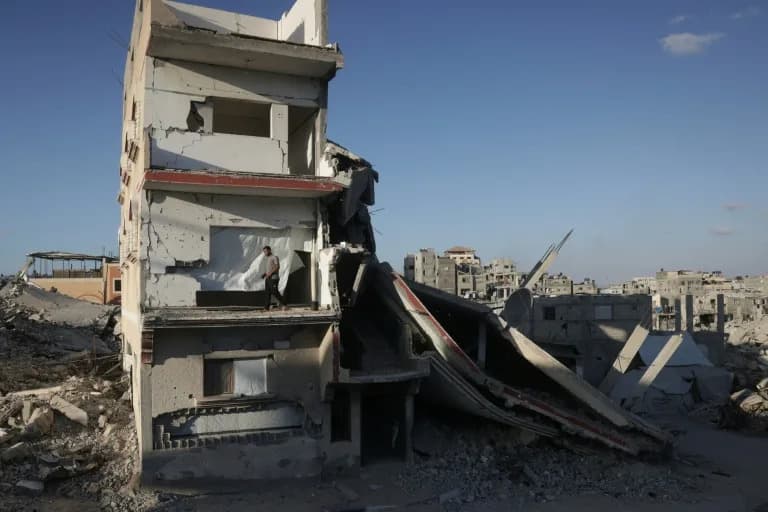
With supplies constrained by restrictions and rising costs, Gaza carpenters are repurposing shipping pallets and scrap wood to build affordable beds and basic furniture for families displaced by two years of conflict. Pallet furniture sells for roughly 4,000–5,000 shekels compared with about 18,000 for traditional sets, even as prices for nails and fittings have soared. Shortages of electricity and processed wood slow production, while tent camps face growing rodent and parasite problems that make raised beds essential.
Gaza Carpenters Turn Shipping Pallets Into Essential Beds As Wood Supplies Dry Up
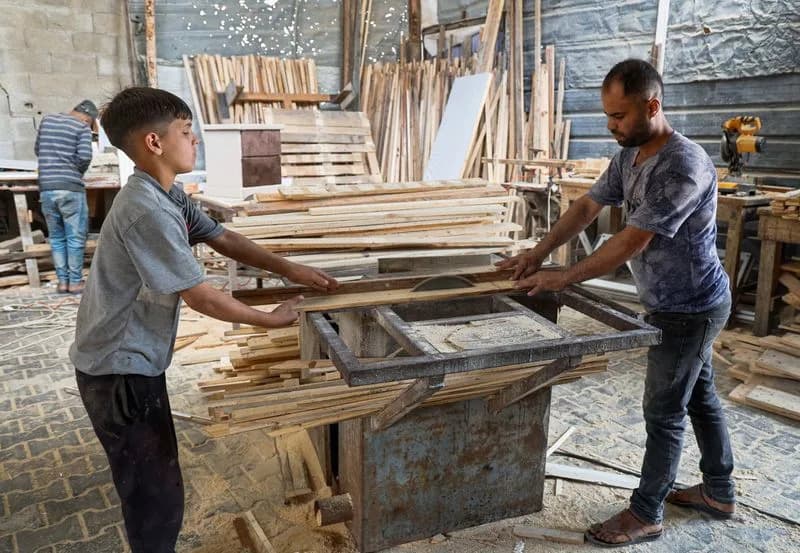
Palestinian carpenter Mohammed Wafi builds furniture from recycled wooden pallets in his workshop amid shortages of materials in Khan Younis, in the southern Gaza Strip, May 2, 2026. REUTERS/Haseeb Alwazeer
With many construction supplies blocked or prohibitively expensive, Gaza carpenters are dismantling shipping pallets and other scrap timber to build basic beds, closets and tables for families displaced by two years of fighting between Hamas and Israel.
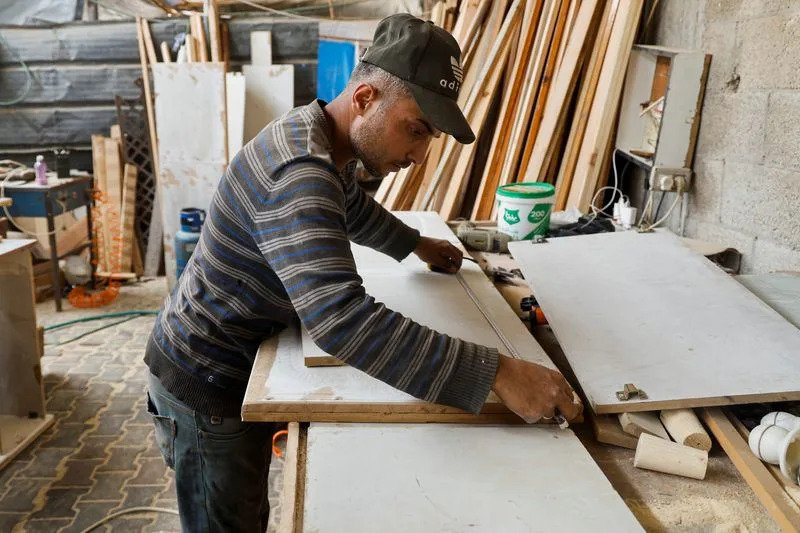
A Palestinian worker builds furniture from a recycled wooden pallet, amid shortages of materials, inside a workshop in Khan Younis, in the southern Gaza Strip, May 2, 2026. REUTERS/Haseeb Alwazeer
In a small workshop in southern Gaza, craftsmen convert used pallets into low-cost furniture for people living in tent camps, where conventional wood and processed materials are often unavailable. The work helps families protect their belongings and sleep off the ground amid growing rodent and parasite problems.
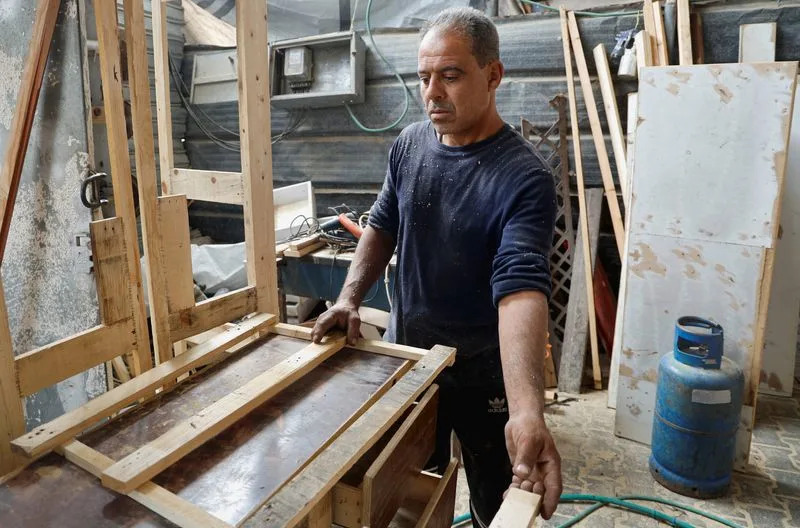
A Palestinian worker builds furniture from a recycled wooden pallet inside a workshop, amid shortages of materials, in Khan Younis in the southern Gaza Strip, May 2, 2026. REUTERS/Haseeb Alwazeer
From Pallets To Practical Furniture
Mohammed Wafi, 34, a carpenter in Khan Younis, said pallets became one of the few accessible sources of wood once limited aid convoys began arriving. "Today people say, 'I just need something to get by, something to get my clothes off the floor'... especially those living in tents," he said. Wafi has worked in carpentry for 16 years.
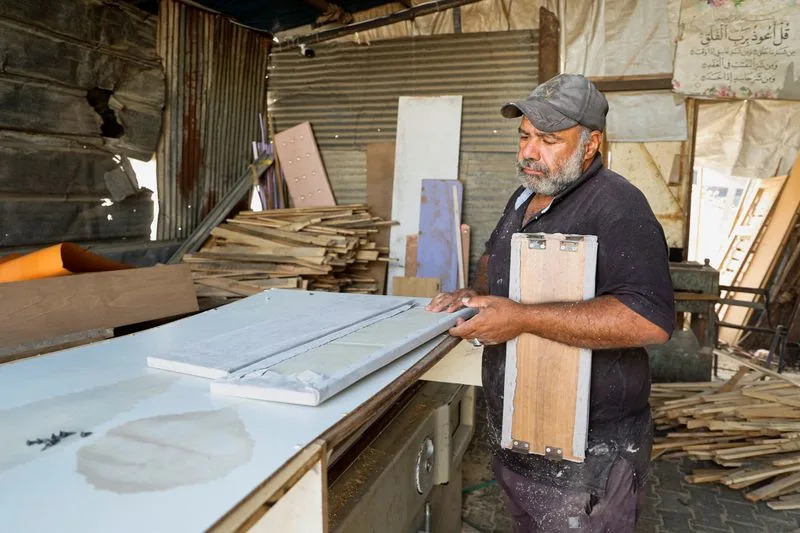
A Palestinian worker builds furniture from a recycled wooden pallet, amid shortages of materials, inside a workshop in Khan Younis, in the southern Gaza Strip, May 2, 2026. REUTERS/Haseeb Alwazeer
"Due to the rats and cockroaches, they need a tent or a bed to be lifted off the ground," Wafi said, adding that vermin bite sleepers, damage possessions and spread disease.
Rising Costs and Supply Constraints
Basic metal fittings have surged in price. "We used to get a kilo of nails for 5 shekels ($1.70). Today, a kilo of nails costs around 100 or 130 shekels," Wafi said, noting that hinges and other fittings have also become much more expensive. Despite this, pallet furniture remains far cheaper than conventional bedroom sets: a pallet-based set of bed, closet and dresser sells for about 4,000–5,000 shekels versus roughly 18,000 shekels for a traditional set.
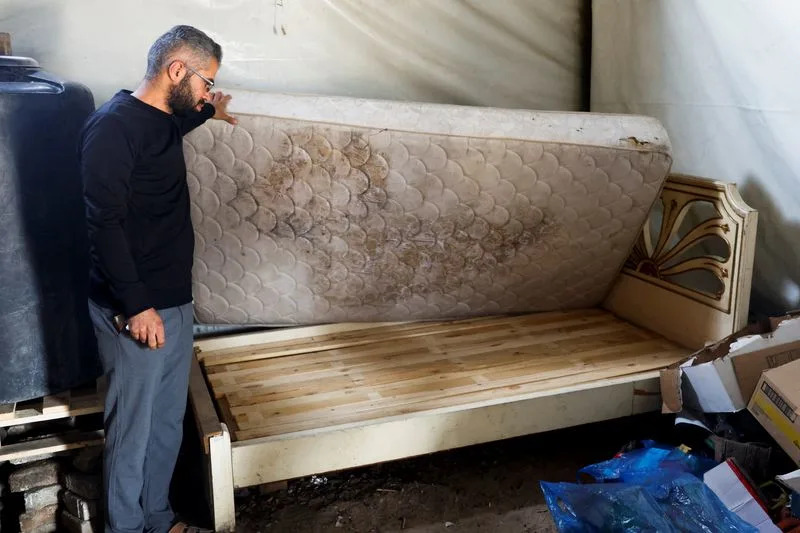
A Palestinian man looks at a wooden bed, amid shortages of materials, in Khan Younis, in the southern Gaza Strip, May 2, 2026. REUTERS/Haseeb Alwazeer
Production is further slowed by shortages of electricity and processed wood, making delivery times uncertain. Carpentry workshops are working with limited tools and intermittent power while demand continues to grow in tent encampments.
Access, Aid And Security Restrictions
Israel's Coordinator of Government Activities in the Territories (COGAT), the agency that coordinates aid into Gaza, did not respond to requests for comment. Israel bars shipments of wood into Gaza on the grounds that timber can be a "dual-use" material — items useful for civilian purposes that could also be repurposed for military use.
The broader ceasefire has been repeatedly violated since it began in October; Palestinian and Israeli tallies report that more than 830 Palestinians and four Israeli soldiers have been killed in that period.
In tent camps near Khan Younis, resident Mohammed Tayseer, who has lived in a tent for two years, said he slept on the ground until recently. "The ground is sandy and dirty, and as you can see, you find the clothes full of sand. There are rats and mice," he said. "One's back hurts and is stiff from sleeping on the floor… now we have a bed."
(Reporting by Haseeb Alwazeer in Gaza; Writing by Nidal al-Mughrabi; Editing by Alexandra Hudson)
Help us improve.