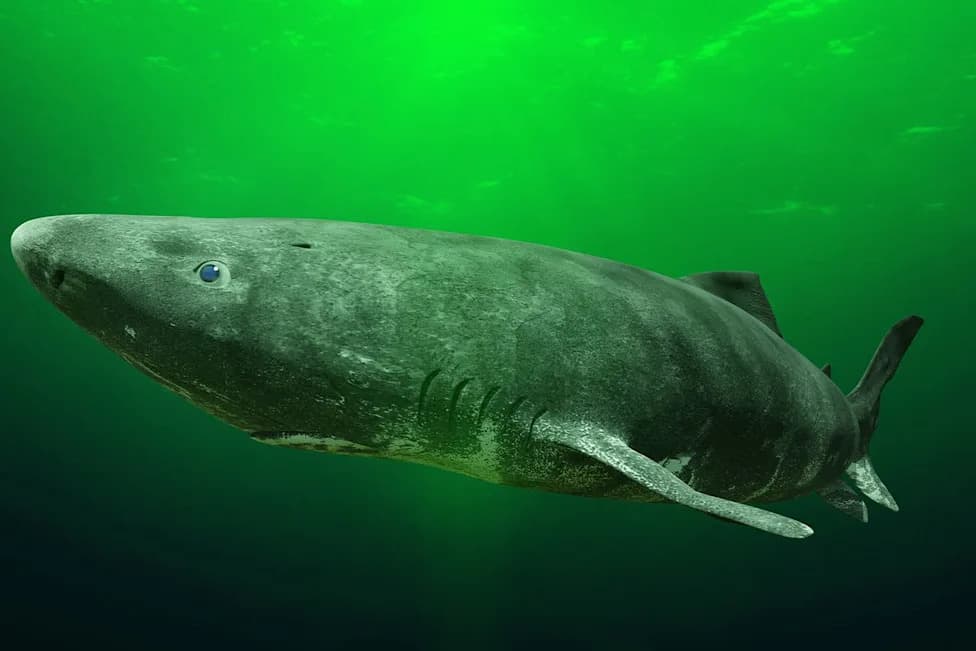
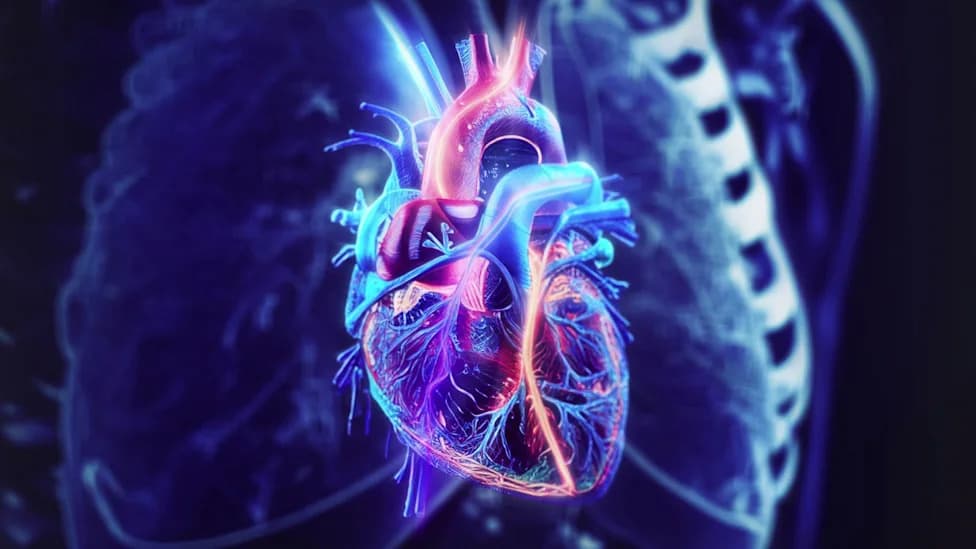
The Greenland shark lives extremely slowly and can survive for centuries. A new study examined hearts from sharks aged about 100–155 years and found pronounced signs of cardiac aging — fibrosis, lipofuscin accumulation, mitochondrial damage and enlarged lysosomes — despite continued functionality. Comparison species did not show these markers. Researchers propose that low blood pressure and distinctive vascular anatomy may help preserve heart function, and the results could inform research on aging in vertebrates and humans.
Ancient Heart: How Greenland Sharks Keep Beating for Centuries Despite Cardiac Aging
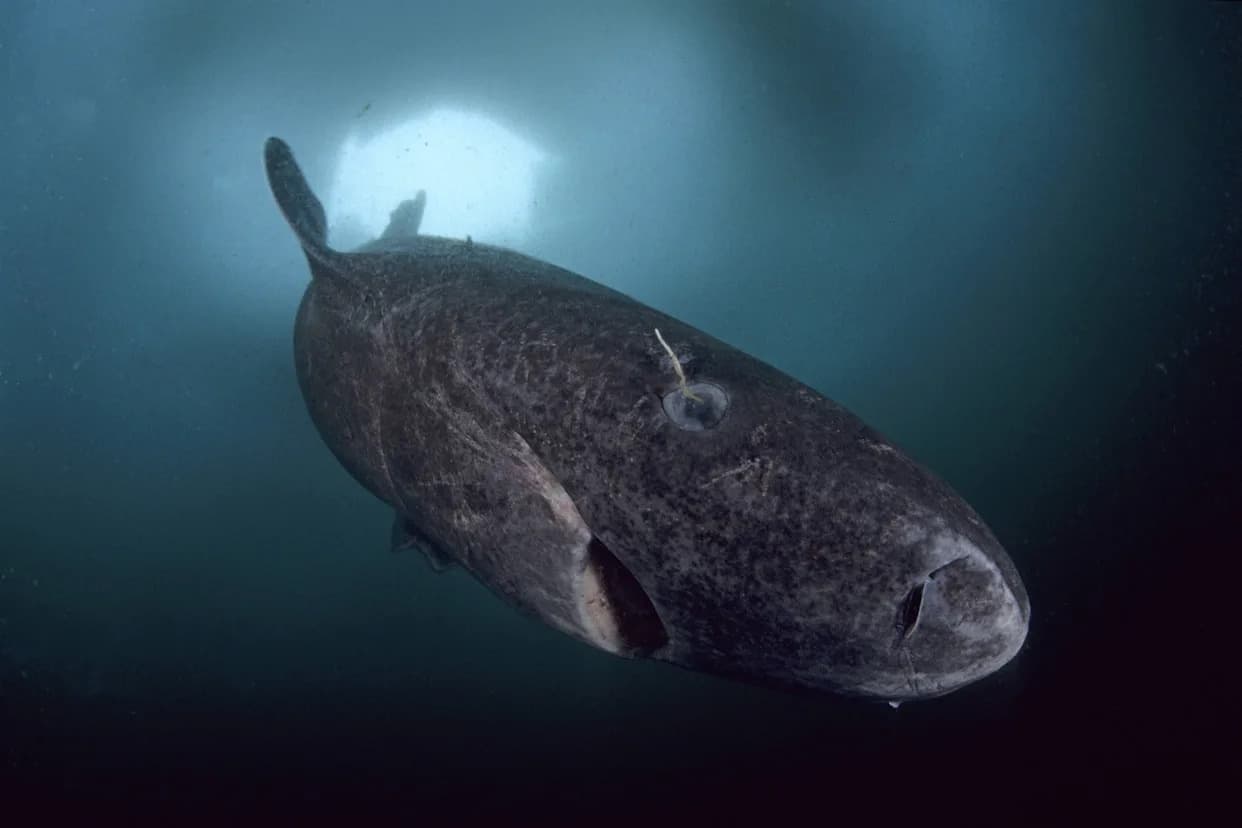
A Greenland shark is seen here off Baffin Island in the Canadian Arctic.(Avalon.red/Alamy)
Everything about the Greenland shark is paced at a glacier’s tempo: its heart pulses roughly once every 12 seconds, it cruises at about one foot per second, it grows only about one centimeter (0.4 inch) a year, and it may not reach sexual maturity until around its 150th birthday. These extremes of slow living help explain how the species commonly survives into its 200s and may live 400 years or more.
Scientists have recently shown that Greenland sharks retain useful low-light vision well into old age, and a new study now probes another mystery: how these animals keep their hearts beating for centuries. The research, led by Alessandro Cellerino of the Scuola Normale Superiore (SNS) in Italy, examined heart tissue from Greenland sharks and compared the findings with hearts from the much smaller velvet belly lantern shark and the short-lived African turquoise killifish.
Clear Signs of Cardiac Aging — Yet Continued Function
The study analyzed hearts from Greenland sharks estimated to be between about 100 and 155 years old. Contrary to the idea that their organs might be uniquely protected, the sharks’ hearts showed classic hallmarks of aging: severe fibrosis (scar tissue buildup that stiffens cardiac muscle), large deposits of lipofuscin in cardiomyocytes (an age-related pigment that accumulates when cells fail to clear damaged components), damaged mitochondria (the cell’s powerhouses), and oversized lysosomes (the cell’s recycling compartments).
These molecular and tissue-level aging markers were absent in the comparison species. Still, despite this pronounced cardiac deterioration, some of the Greenland sharks in the study were caught on longlines in Greenland waters, suggesting they retained the ability to find and capture prey.
“All in all, the analyzed Greenland shark samples showed clearly recognizable signs of classic aging at the molecular and tissue level,” Cellerino said in a statement. “This proves that aging processes also take place in the heart tissue of this species.”
How Do Damaged Hearts Still Work?
The researchers do not yet know exactly why these aged hearts remain functional. Greenland sharks are known to have relatively low blood pressure compared with many other species, and they have a distinctive ventral aorta structure. The team speculates that lower circulatory stress and special vascular anatomy could help maintain cardiac elasticity and functional output even when tissue shows age-related damage.
Why It Matters
Understanding how one of Earth’s longest-lived vertebrates copes with cellular and tissue aging in a vital organ may offer clues about vertebrate longevity more broadly. The authors note that insights from such studies could, over time, inform approaches to mitigate age-related cardiac decline in humans, although direct translational steps will require much more work.
The findings were published on April 23 in the journal Aging Cell.
Help us improve.