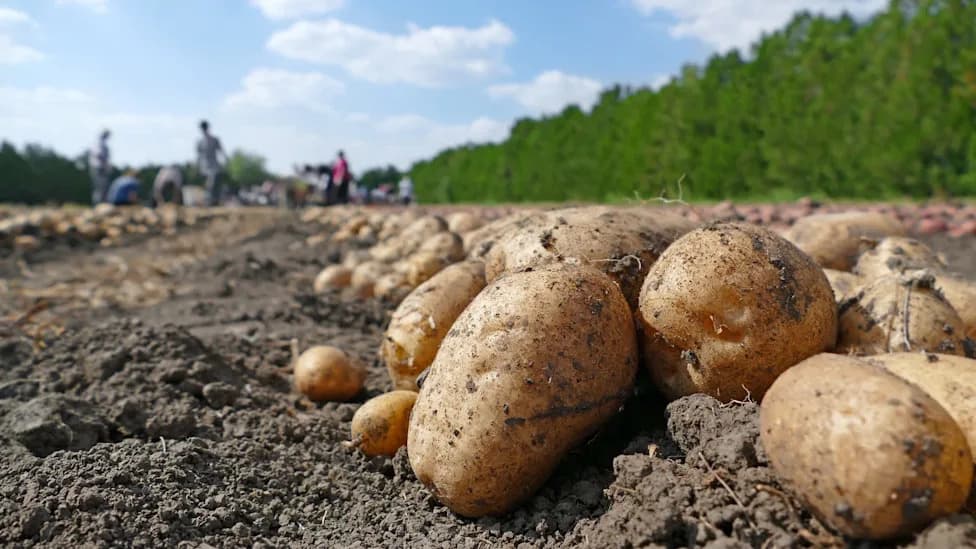
New research in Sustainable Cities and Society finds that converting rooftops, vacant lots and urban green spaces into low-tech, soil-based farms could supply up to 28% of fruit and vegetable needs for about 190 million Europeans. A GIS survey of 840 cities across 30 countries identified 4,500–7,500 sq km of potential cultivation, yielding an estimated 11.8–19.8 million tonnes annually. Benefits include lower transport emissions, cooler cities and closer access to fresh produce; key challenges are soil contamination and reduced recreational greenspace.
Urban Rooftops and Vacant Lots Could Supply Nearly 30% of Europe's Fruit and Vegetables, Study Finds
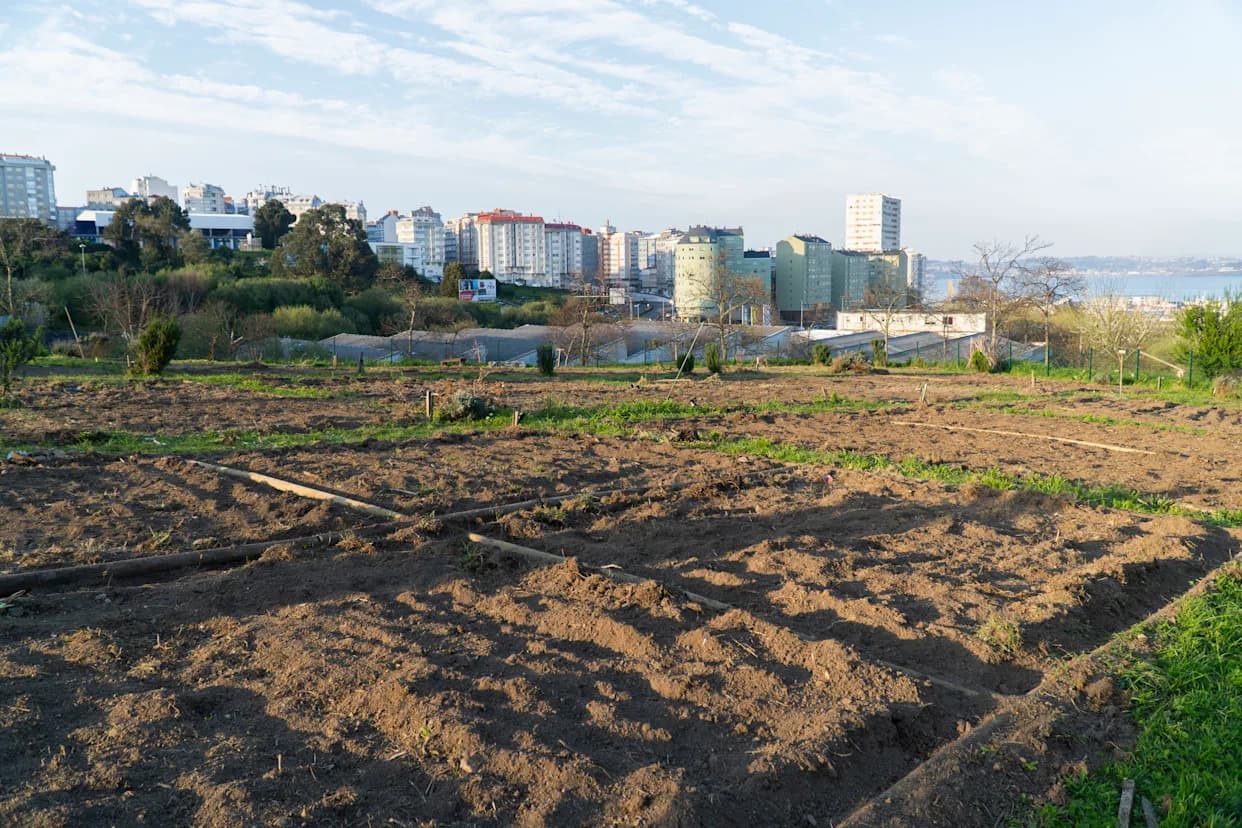
An urban garden in A Coruña, Galicia, Spain. —Gustavo de la Paz/Europa Press—Getty Images
Many city rooftops and vacant lots today are bleak—baked tar or concrete in summer, exposed and windswept in winter. A new study in the journal Sustainable Cities and Society suggests these same surfaces could be reclaimed as productive low-tech farms. With careful deployment and management, researchers estimate urban cultivation could supply up to 28% of the fruit and vegetable needs for roughly 190 million Europeans.
How the Study Was Done
The analysis, led by Stepan Svintsov at the Leibniz Institute of Ecological Urban and Regional Development in Dresden, used geographical information systems (GIS) to survey available rooftop and ground space in 840 cities across 30 European countries. The sample ranged from small towns such as Melun, France (about 9,000 residents) to major capitals like Paris (around 7 million) and covered cities from tiny footprints (Mislata, Spain, ~0.2 sq km) to larger urban areas (Paris, roughly 100 sq km).
Low-Tech, Soil-Based Focus
The team deliberately excluded high-tech systems such as vertical farms or hydroponics and focused on accessible, soil-based cultivation that ordinary residents and community groups could adopt. That approach lowers technical barriers but brings traditional agricultural challenges—erosion, nutrient runoff and soil management—that must be addressed. For safety and practicality, the researchers limited rooftop sites to slopes of no more than 2°.
“We need to level off the rooftop,” said Prajal Pradhan, associate professor at the University of Groningen and a co-author. “That’s why we use the two-degree rule.”
Potential, Region By Region
Climate and land-use differences shape how much urban farming is feasible. Southern Europe faces water scarcity and high evaporation; northern regions contend with shorter growing seasons because of lower temperatures and less daylight; and central and western European cities often face high population densities and competing land uses.
Scale and Yield
Accounting for these constraints, the researchers estimate between 4,500 and 7,500 sq km of urban rooftops and ground could be used for cultivation—equivalent to up to two islands the size of Mallorca. On average, up to 9% of a city's built footprint could support rooftop farming and about 7.2% could be used for ground cultivation. That capacity translates to an estimated 11.8–19.8 million tonnes of fruits and vegetables annually.
City Examples And Broader Impacts
Impacts would vary by city. For example, Berlin could potentially source as much as 45% of its produce internally, while Cerdanyola del Vallès (near Barcelona) could produce roughly 140% of its local demand and run a surplus. When extrapolated globally, related research suggests urban farming could supply 5–10% of the world's fruit and vegetable needs.
Local production reduces food miles and associated greenhouse-gas emissions from long-distance transport and storage. It can also help solve the “last mile” problem by putting fresh produce within walking distance—supporting the 15-minute city idea where basic needs are reachable within a short walk or bike ride. Vegetation on roofs and vacant lots also helps cool urban areas by reducing heat absorption from concrete and asphalt.
Risks and Trade-Offs
The authors note important caveats. Urban soils can be contaminated with heavy metals (lead, zinc, cadmium, nickel) from traffic, industry and old buildings, posing food-safety risks that require testing, remediation or raised beds with clean soil. Converting land to agriculture can also reduce recreational greenspace, which is vital for urban liveability. Effective policies, monitoring and design can mitigate many of these concerns.
Conclusion
While not a complete solution to food security, the study suggests urban agriculture—if implemented responsibly—could make a substantial contribution to local food supplies, reduce emissions, cool neighborhoods and improve wellbeing. As Prajal Pradhan puts it: “It’s not only about biodiversity or environment or food; it’s also part of a healthy lifestyle.”
Help us improve.