A TESS-based survey using eclipse-timing variations has identified 27 strong candidates for circumbinary planets — worlds that orbit two stars — upending the previously small sample of confirmed cases. From 1,590 binary systems examined, the team found a roughly 2% candidate rate, with possible masses ranging from Neptune-like to ten times Jupiter. These results, published in the Monthly Notices of the Royal Astronomical Society, require follow-up confirmation but suggest many more such planets may exist.
Survey Finds Nearly 30 Tatooine-Like Planet Candidates Orbiting Binary Stars
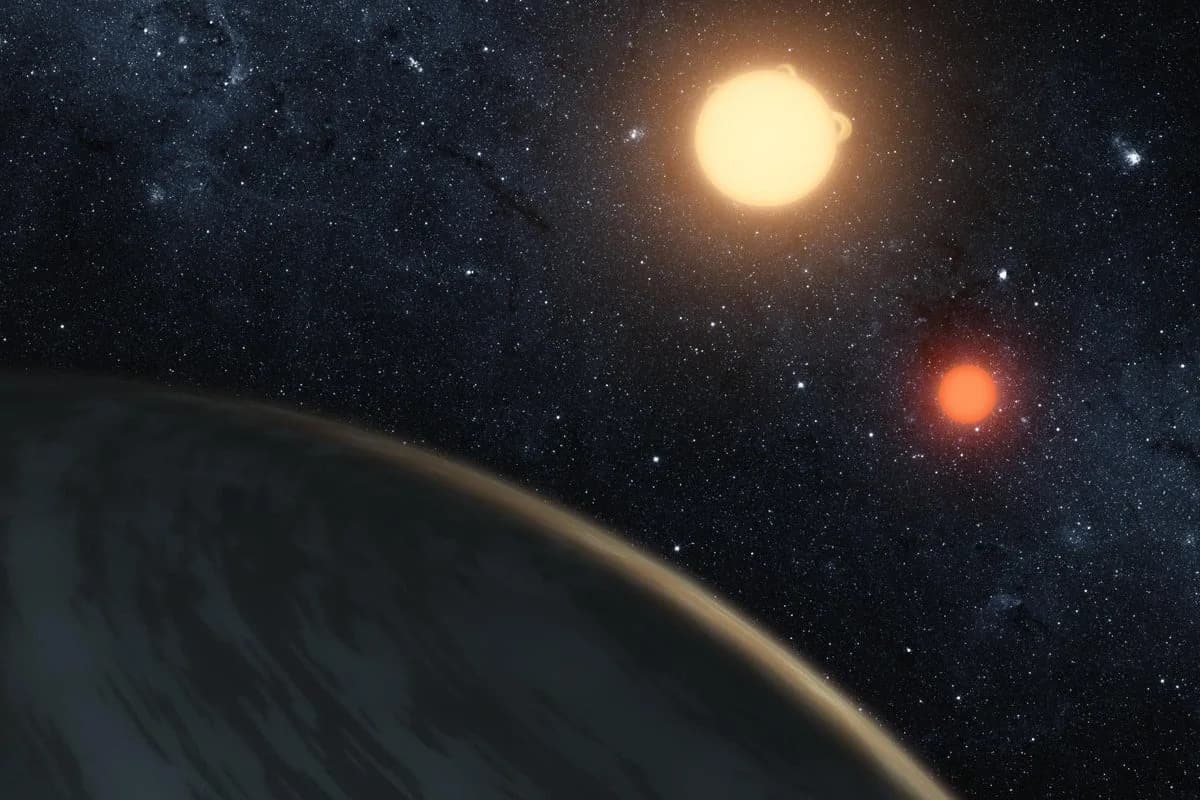
Dozens of Star Wars Tatooine-like planets discovered in new space survey
A new satellite-led survey has identified 27 strong candidates for circumbinary planets — worlds that orbit two stars — dramatically increasing the number of such prospects beyond the 18 previously confirmed cases.
What the team did: Using a different detection technique applied at scale for the first time, researchers mined data from NASA’s TESS space telescope to monitor long-term changes in the orbital behaviour of eclipsing binary stars. Small, steady changes in the timing of those eclipses can reveal the gravitational influence of a third object — most likely a planet — tugging on the pair.
How the method works: The team tracked eclipse-timing variations (ETVs): if the stars’ mutual eclipses occur slightly earlier or later than expected, the timing offsets can point to an additional body in the system. This approach had been used to characterise binaries before but not in a large-scale exoplanet search.
“Most of our current knowledge on planets is biased, based on how we’ve looked for them. We’ve mostly found the easiest ones to detect,” said Margo Thorton, a PhD candidate at the University of New South Wales and lead author of the study.
From a sample of 1,590 eclipsing binary systems, the survey identified 27 promising planet candidates — roughly a 2% occurrence rate. The candidates span a wide possible mass range, from objects as small as Neptune to bodies up to ten times the mass of Jupiter.
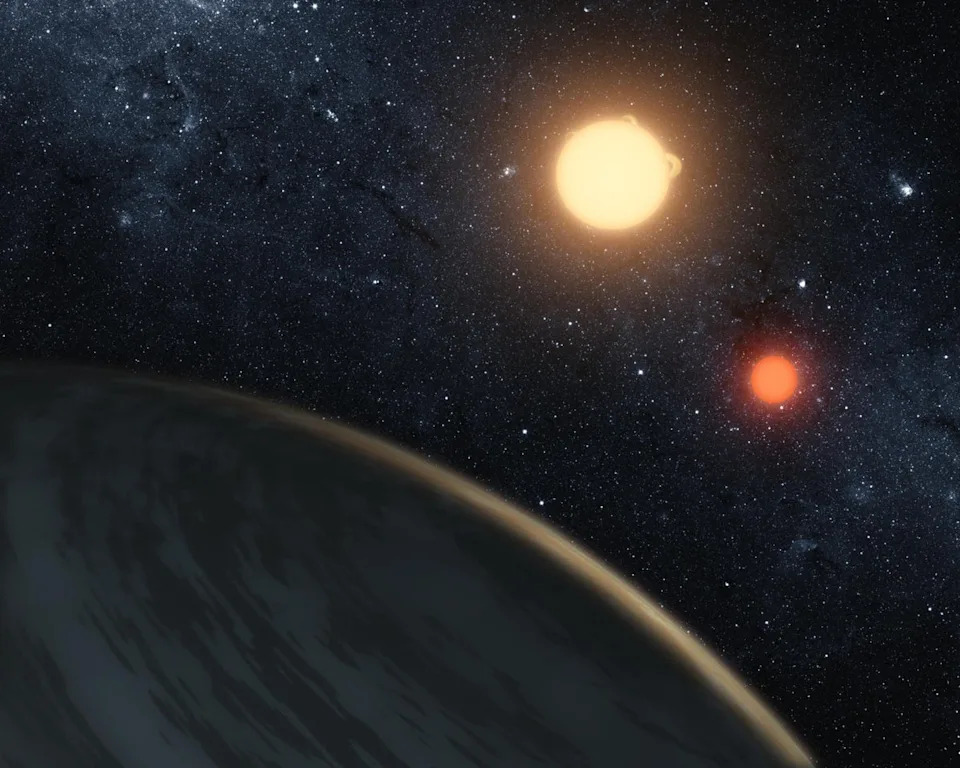
A circumbinary planet (Nasa)
“I’m excited about the potential for how many planets we could find with this method,” said Ben Montet of UNSW. “These 27 strong candidates sit in environments very different to our own solar system, and they illustrate how many systems may have been missed by conventional searches.”
Next steps and caveats: These detections are currently candidates. Follow-up observations — such as continued eclipse-timing monitoring, radial-velocity measurements, or other complementary techniques — will be needed to confirm which candidates are genuine planets and to rule out false positives. The method is sensitive to certain orbital configurations and masses, so understanding its selection biases will be essential for estimating the true population of circumbinary planets.
Why it matters: If the roughly 2% rate holds more broadly, thousands or even tens of thousands of circumbinary planets could await discovery, expanding our view of planetary system architectures and where potentially habitable worlds might exist.
Publication: The study and its candidate list are described in a paper published in the Monthly Notices of the Royal Astronomical Society.
Help us improve.