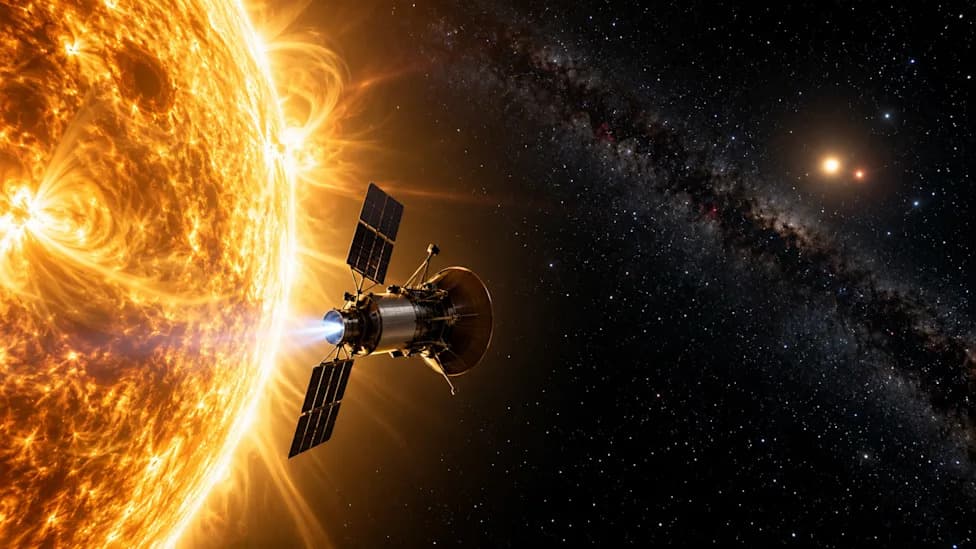
NASA will launch SR-1 Freedom (Skyfall) by the end of 2028 — the agency’s first nuclear-powered interplanetary spacecraft. A fission reactor will generate electricity for nuclear electric propulsion (NEP), allowing continuous, efficient thrust independent of sunlight. The mission will deliver three Ingenuity-style helicopters to scout and map a potential human landing site on Mars, including subsurface water ice. SR-1 Freedom is also intended to set regulatory and industrial precedent for future fission-powered missions.
NASA to Launch First Nuclear-Powered Interplanetary Spacecraft to Mars — Carrying Three Helicopters
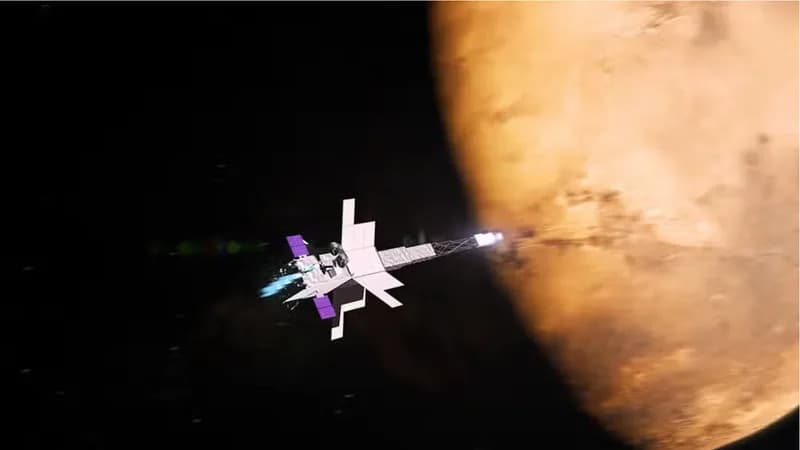
Artist’s impression of Space Reactor-1 Freedom, the nuclear-powered spaceship NASA says it is sending to Mars. (CREDIT: NASA)
NASA plans to launch Space Reactor-1 Freedom (SR-1 Freedom) on the Skyfall mission by the end of 2028. NASA describes it as the agency’s first nuclear-powered interplanetary spacecraft. The mission’s headline payload is three small helicopters meant to scout a potential human landing site on Mars, but the most consequential component may be the spacecraft’s fission reactor and its nuclear electric propulsion system.
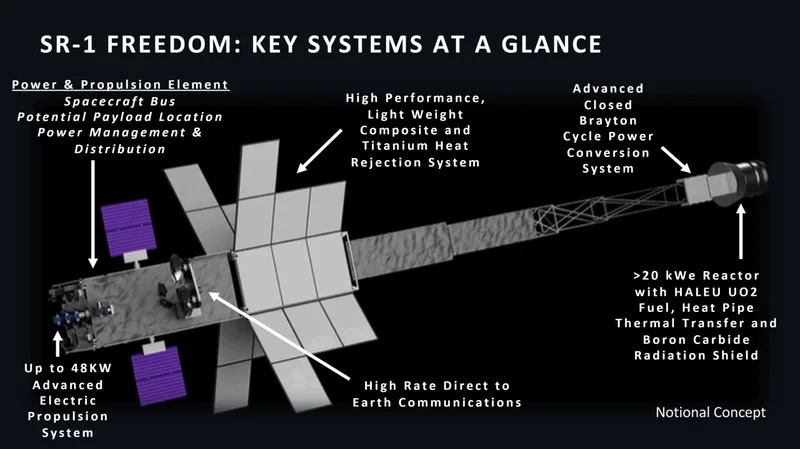
Space Reactor-1 Freedom key systems at a glance (notional concept). (CREDIT: NASA)
What SR-1 Freedom Will Do
At the heart of SR-1 Freedom is a compact fission reactor that produces heat converted into electricity. That electricity will power highly efficient electric thrusters in a system called nuclear electric propulsion (NEP). Unlike solar arrays, NEP provides continuous, high-efficiency thrust regardless of distance from the Sun, enabling longer, higher-power missions that would be impractical with sunlight alone.
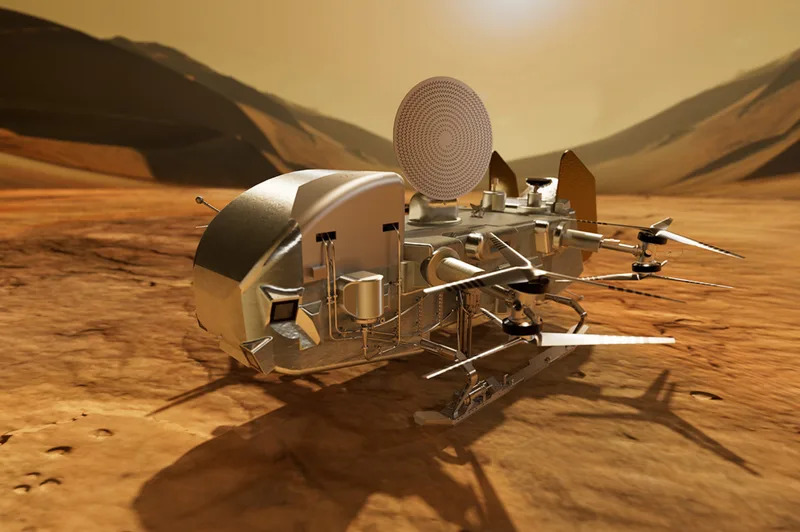
An updated render of the Dragonfly spacecraft. (CREDIT: NASA/Johns Hopkins APL/Steve Gribben)
Helicopters: Scouting a Future Landing Site
After arrival at Mars (planned roughly a year after a December 2028 launch), SR-1 Freedom will deploy three rotorcraft modeled on Ingenuity. These helicopters carry cameras and ground-penetrating radar to map surface hazards, survey terrain and characterize subsurface water ice — a critical resource for future human exploration for drinking water, fuel production and base operations.
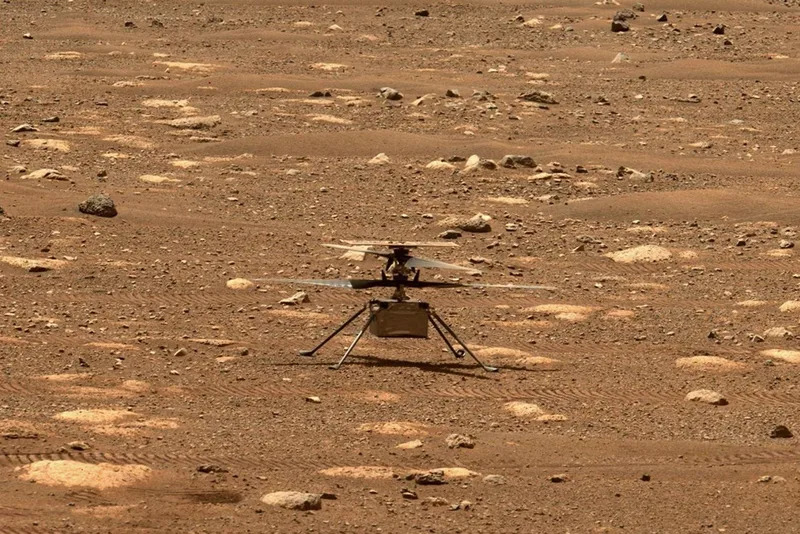
Mars Helicopter Ingenuity on Mars. (CREDIT: NASA)
“They will also map and characterize the subsurface water ice to find out where the water ice deposits are, along with the size, depth and other important characteristics,” said Steve Sinacore, program executive for NASA’s Space Reactors Office.
Why the Reactor Matters
Previous space nuclear systems like radioisotope thermoelectric generators (RTGs) provided steady low-power electricity for instruments but offered no propulsion. NEP is different: it is an active drive that can supply the power and thrust needed for deep-space cargo, high-power instruments and longer missions beyond Mars — for example to Jupiter, the outer planets or extended surface operations where solar power is ineffective.
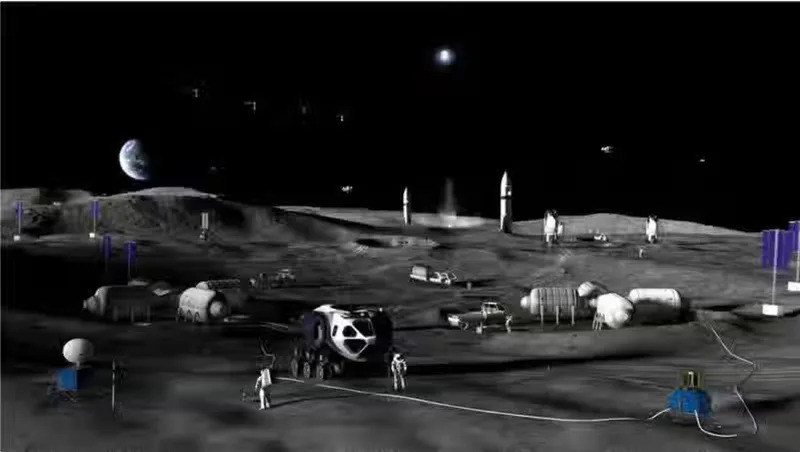
Artist’s concept of Phase 3 of NASA’s Moon Base. SR-1 Freedom will activate the industrial base for future fission power systems across propulsion, surface and long-duration missions. (CREDIT: NASA)
Strategic Shift at NASA
The Skyfall announcement came during NASA’s Ignition event, where the agency outlined a broader reprioritization: pausing development of the lunar-orbit Gateway station to focus on a phased permanent lunar surface base, new approaches for post-ISS low Earth orbit presence, and accelerated timelines across multiple programs. Administrator Jared Isaacman emphasized urgency:
“The clock is running in this great-power competition, and success or failure will be measured in months, not years.”
Other Missions Highlighted
- Dragonfly (Titan octocopter): Still on track for 2028 launch and 2034 arrival.
- Rosalind Franklin rover (ESA): Scheduled for delivery to Mars in 2028 with a mass spectrometer to search for organics.
- Nancy Grace Roman Space Telescope: Could launch as early as this fall to study dark energy.
- Commercial Lunar Payload Services (CLPS): Expanded plans for up to ~30 robotic lunar landings starting in 2027.
Program Goals Beyond Science
NASA frames SR-1 Freedom not only as a science mission but as a programmatic milestone: to establish flight-heritage nuclear hardware, set regulatory and launch precedent, and activate an industrial base for future fission power systems across propulsion, surface and long-duration missions. The spacecraft’s design leaves open the possibility of continuing beyond Mars, reflecting its intended role as a flexible demonstration platform.
If successful, the mission could remove a major transport and power constraint for ambitious deep-space exploration: enabling heavier payloads, sustained high-power systems, and routine use of fission-based technologies for future science and human missions.
Help us improve.