The authors argue that the 119th Congress has largely abdicated its legislative authority, allowing President Trump to expand executive power through orders, emergency declarations and statutory reinterpretations. Despite unified government, Republicans passed mainly the One Big Beautiful Bill Act and routine appropriations while Congress’s overall legislative output was historically low. The administration issued 256 executive orders, declared 10 national emergencies, and imposed contentious tariffs despite judicial pushback. The piece warns that congressional acquiescence threatens separation of powers and urges lawmakers to reclaim their constitutional role.
Worse Than a ‘Do‑Nothing’ Congress: How the 119th Abdicated Its Power
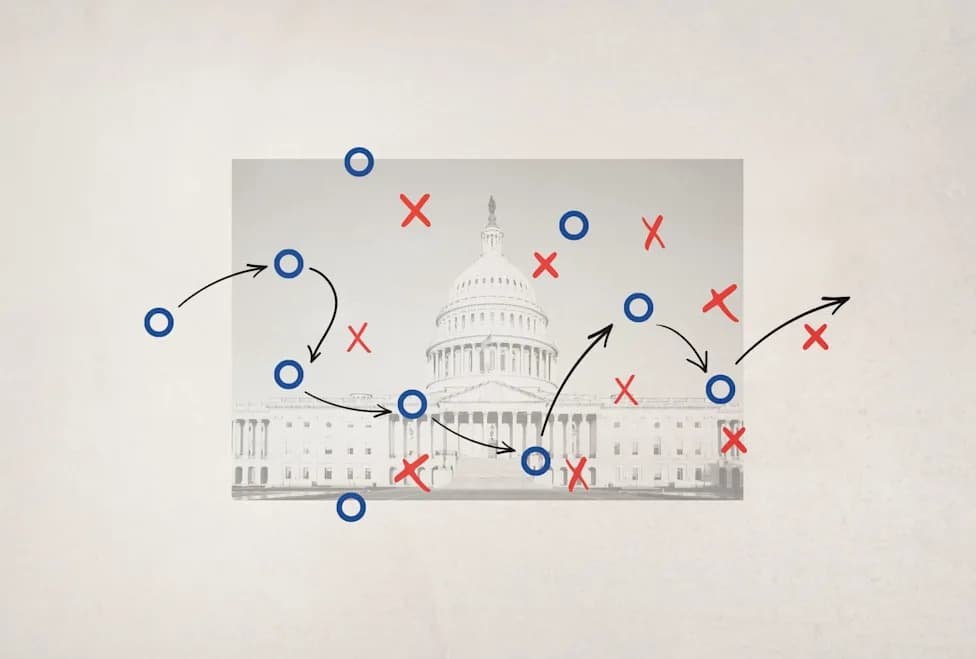
Historically, unified government has been an opportunity for presidents and Congress to pass sweeping reforms: Franklin D. Roosevelt reshaped banking and launched Social Security; Lyndon Johnson’s Great Society created Medicare, Medicaid and major civil‑rights measures; and Barack Obama secured the Affordable Care Act and an $800 billion stimulus. The 119th Congress, by contrast, has largely declined to use one‑party control to legislate and has instead ceded authority to a president who has aggressively expanded executive power.
Executive Expansion vs. Legislative Quiet
Both parties’ presidents have at times tested the limits of executive authority. But the breadth and ambition of President Trump’s actions — and the relative acquiescence of Republican majorities in both chambers — pose a clear challenge to the constitutional separation of powers.
Republicans’ principal legislative achievement this term was the so‑called One Big Beautiful Bill Act, a tax package that disproportionately benefits higher‑income households while pairing those cuts with reductions in Medicaid, fewer clean‑energy credits and scaled‑back federal food assistance. Outside that package, Congress has largely limited itself to routine appropriations, including the annual defense bill, and a handful of narrowly targeted partisan measures such as the Laken‑Riley Act.
Meanwhile, the president has governed heavily by executive action: issuing orders, declaring emergencies, directing agencies and relying on expansive readings of statutes to justify unilateral policy shifts. At this stage he has signed some 256 executive orders — more than any president since Franklin D. Roosevelt at the same point — and declared 10 national emergencies to underpin hundreds of actions from immigration restrictions to energy deregulation.
Tariffs, Courts and a Shrinking Legislative Role
Perhaps most strikingly, the administration used emergency authorities to impose sweeping tariffs on allies and rivals alike — a move critics say encroaches on Congress’s constitutional power “to lay and collect taxes.” When the Supreme Court found the administration’s reliance on the International Emergency Economic Powers Act unconstitutional, the president denounced the ruling and sought other statutory rationales for tariffs.
Congressional resistance has been limited. Although the Constitution charges Congress with declaring war and funding the military, lawmakers have played little role in what the president has described as military “excursions,” including actions involving Iran. In 2025 only 38 bills were signed into law in the president’s first year — the fewest in decades — and the House recorded the fewest roll‑call votes in a first session of a two‑year Congress this century.
Shutdowns, Staffing, and Procedure
The 119th oversaw the longest government shutdown in American history — 43 days — sparked by disputes over extending health‑care subsidies. During that shutdown more than 600,000 federal employees were furloughed, roughly 1 million worked without pay, and tens of millions of Americans missed critical food assistance.
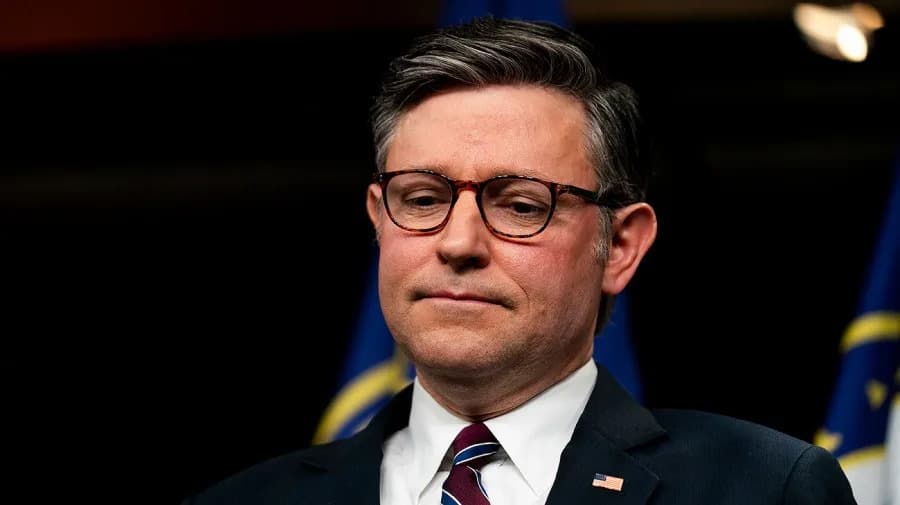
Rather than force votes that would expose the minority’s positions, House Speaker Mike Johnson (R‑La.) temporarily put the chamber in hiatus, a move critics said marginalized the institution. Johnson also used procedural tactics to block votes that could have curbed presidential tariffs and other priorities, prompting disgruntled members to file a record number of discharge petitions to force votes the Speaker would not bring to the floor.
Right‑wing strategist Steve Bannon has even likened this Congress to “the Duma,” a reference to Russia’s largely compliant legislature under Vladimir Putin — a sharp rebuke to lawmakers’ readiness to surrender authority to the executive.
Why It Matters
The Founders intended Congress — the “people’s branch” — to be the dominant policymaking body, a check on executive overreach. When lawmakers voluntarily cede power, they weaken the separation of powers and risk concentrating authority in the Oval Office. If congressional Republicans want to avoid validating the cynical quip attributed to John Adams about a useless or self‑serving legislature, they should act to reclaim their constitutional responsibilities.
About the Authors: David Wippman is emeritus president of Hamilton College. Glenn C. Altschuler is the Thomas and Dorothy Litwin Emeritus Professor of American Studies at Cornell University.
Copyright 2026 Nexstar Media, Inc. All rights reserved.
Help us improve.