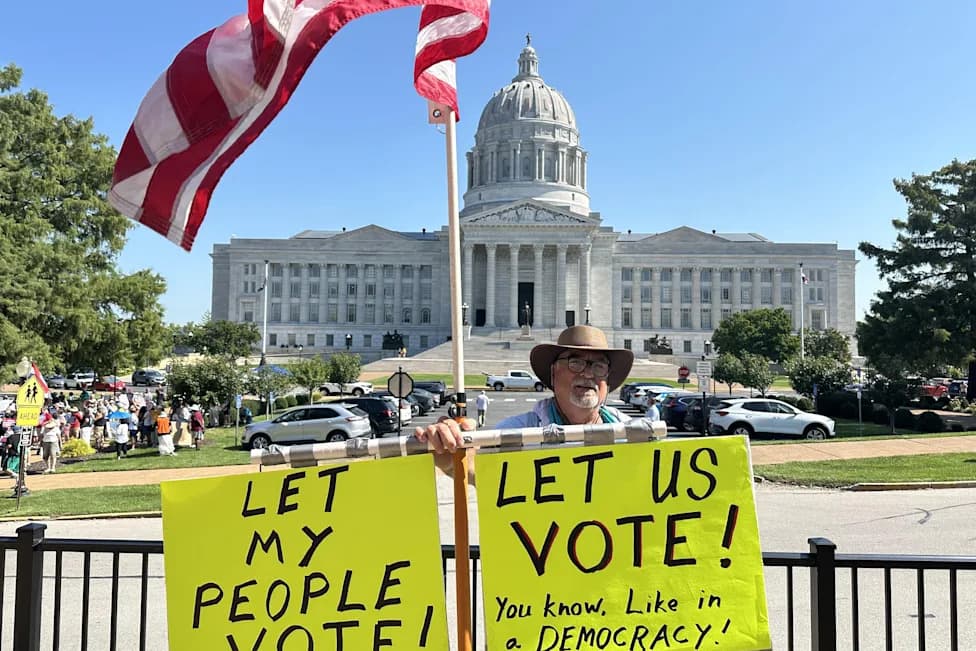
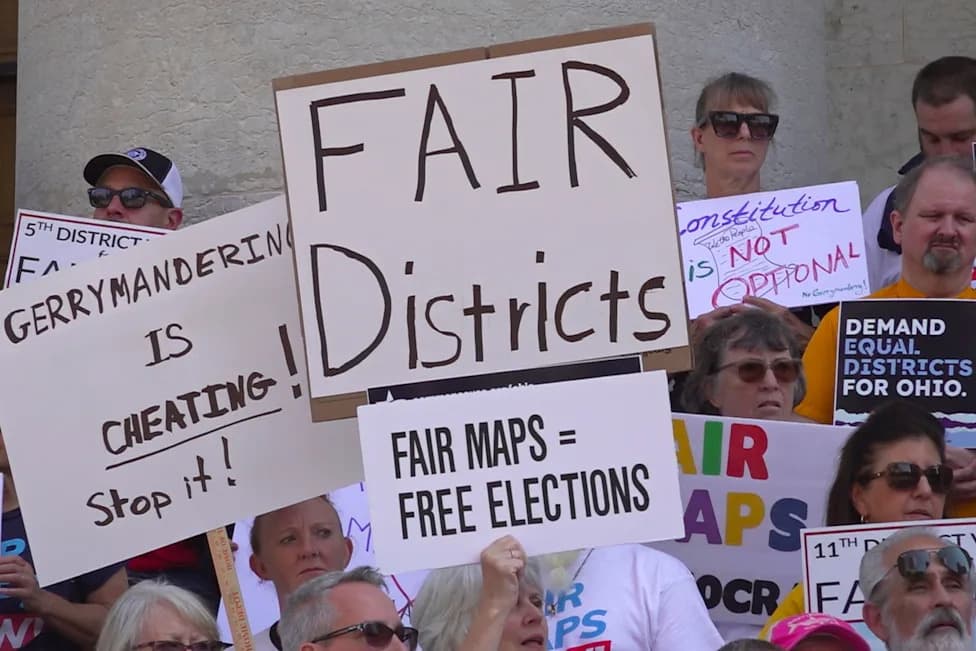
The Supreme Court's recent ruling, together with intensified partisan redistricting efforts, threatens to further shrink the number of competitive U.S. House races ahead of the midterms. A Reuters analysis shows just 32 of 435 seats are competitive, while Cook rates more than 85% of districts as solid for one party. Experts warn weakened Voting Rights Act protections, advanced mapping technology and recent mapmaking campaigns could let states target majority-Black and majority-Latino districts and push politics toward the extremes.
Supreme Court Ruling Spurs Partisan Redistricting — Only 32 Competitive House Seats Remain
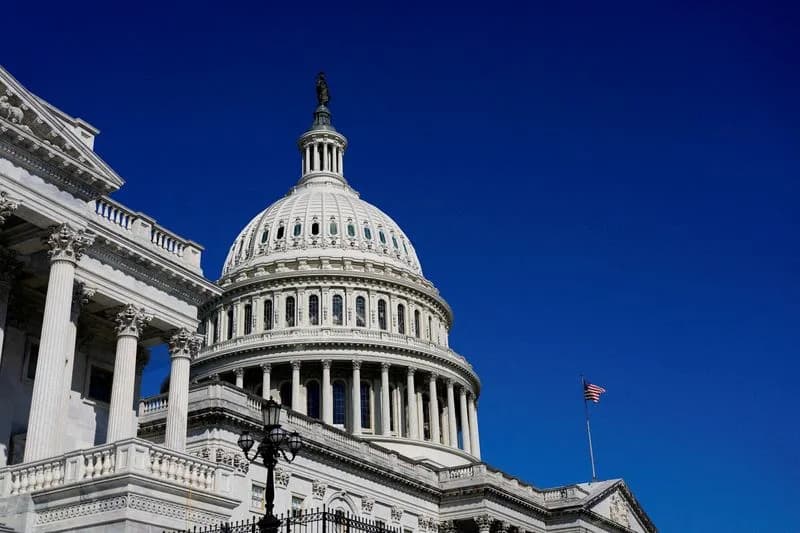
FILE PHOTO: A view of the dome of the U.S. Capitol building in Washington, D.C. U.S., September 19, 2025. REUTERS/Kent Nishimura/File Photo
May 3 (Reuters) - A recent U.S. Supreme Court decision has come amid an already intense nationwide fight over congressional maps and may accelerate partisan redistricting that further reduces competitive U.S. House races, experts warn.
A Reuters analysis found just 32 of 435 House seats are currently considered competitive — rated as toss-ups or leaning to one party by three independent forecasters (Cook Political Report, the University of Virginia’s Crystal Ball and Inside Elections). Cook currently lists 375 seats — more than 85% of the House — as either "Solid Republican" or "Solid Democrat," and another 28 as "Likely" for one party.
With Democrats needing only a net gain of three seats to claim a House majority, control of the chamber could be decided by voters in fewer than 10% of districts, according to the Reuters analysis. That concentrated battleground heightens the stakes of how district lines are drawn.
No Guardrails
Legal and political analysts say the Supreme Court ruling weakened protections tied to the federal Voting Rights Act that previously limited state legislators' ability to dismantle districts with majority racial minority populations. Observers expect some Republican-led states to target a dozen or more Democratic-held majority-Black and majority-Latino districts that had stronger safeguards.
"We are now in a cycle of gerrymandering wars," said Justin Levitt, a professor at Loyola Law School who runs All About Redistricting. "What used to be a cold war has gotten very hot."
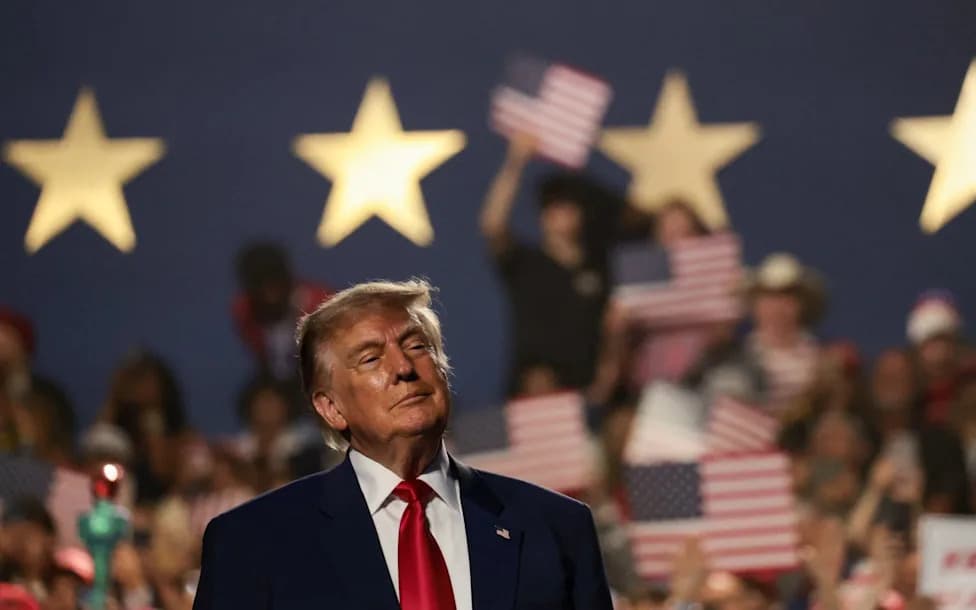
Gerrymandering’s impact has been amplified by recent legal decisions and political moves. In 2019, the Supreme Court ruled federal courts lack a role in policing partisan gerrymanders. Last year, former President Donald Trump pushed Texas Republicans to discard their congressional map and draw a new one aimed at unseating five Democratic incumbents — a move that helped spark similar efforts in nearly a dozen other states.
Those political developments are coupled with technological advances that allow mapmakers to identify likely Democratic and Republican voters down to the census block, making finely targeted district designs easier to produce.
"If there are no guardrails, there are no guardrails," Levitt said. "The constraint is now realpolitik and imagination, not, 'We just don't do that.'"
Consequences For Governance
Cook analyst Matthew Klein said fewer competitive districts can push members toward the partisan extremes because many incumbents only need to appeal to their base to win. "If you look at Congress and how it acted 20 years ago, 30 years ago, even farther back, you see a Congress that is both less acrimonious and also more productive," he said. "There used to be bills that passed with huge majorities on major issues. We just don't really see that anymore."
Other factors also reduce competitiveness: geographic sorting (rural areas trending conservative and many suburbs shifting left) and polarized voters. Split-ticket voting has declined sharply — research by Kyle Kondik of the Crystal Ball shows 86 House members elected in 2000 represented districts that favored the other party’s presidential candidate; in 2024 that number fell to 16.
The combined effect of weakened legal constraints, aggressive partisan mapping and modern microtargeting suggests the coming redistricting cycle could produce even fewer truly contested U.S. House races, further concentrating electoral influence and diminishing incentives for bipartisan compromise.
(Reporting by Joseph Ax; additional reporting by Jason Lange; edited by Paul Thomasch and Daniel Wallis)
Help us improve.