Historians generally agree the founders did not establish a Christian nation as a constitutional fact, but religion nevertheless influenced many people who shaped the early republic. The Declaration uses religious language, while the Constitution avoids endorsing a specific creed and protects religious liberty. Founders held varied beliefs — from devout Christianity to theistic rationalism — and religious ideas helped inform civic attitudes about dignity and checks on power.
Did the Founders Create a Christian Nation? Historians Say No — But Faith Shaped the Founding
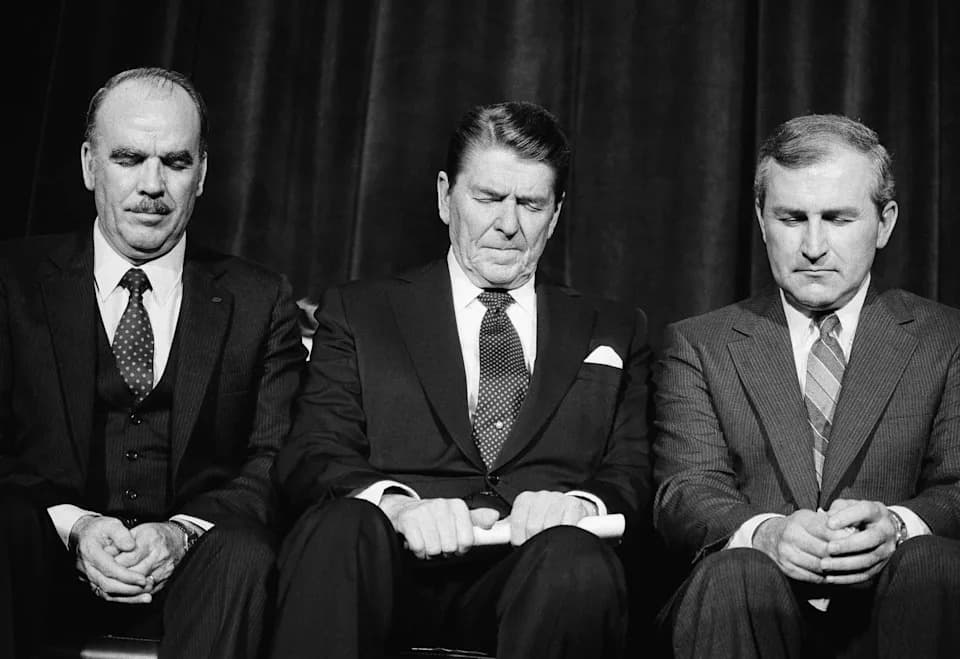
FILE - President Ronald Reagan prays with National Association of Evangelicals President Arthur Gay, left, following his address to the organization's convention asking for help in winning approval of a constitutional amendment permitting prayer in school in Columbus, Ohio, March 7, 1984. (AP Photo/Barry Thumma, File)(ASSOCIATED PRESS)
When historian Gregg Frazer discusses religion's role in America's founding, he often leaves listeners on both sides uneasy. Frazer, a professor of history and political studies at The Master’s University in California, argues that the founders did not establish a Christian republic in a legal or constitutional sense — yet religion nonetheless shaped many of their ideas.
Historians’ Consensus and the Public Debate
Most serious historians maintain that the United States was not founded as a Christian nation in any explicit constitutional or legal way. The Constitution contains no establishment of a national church, forbids religious tests for office, and the First Amendment guarantees religious freedom and restricts government establishment of religion. Still, public opinion differs: a 2022 Pew Research Center survey found that six in 10 U.S. adults believe the founders intended the U.S. to be a Christian nation.
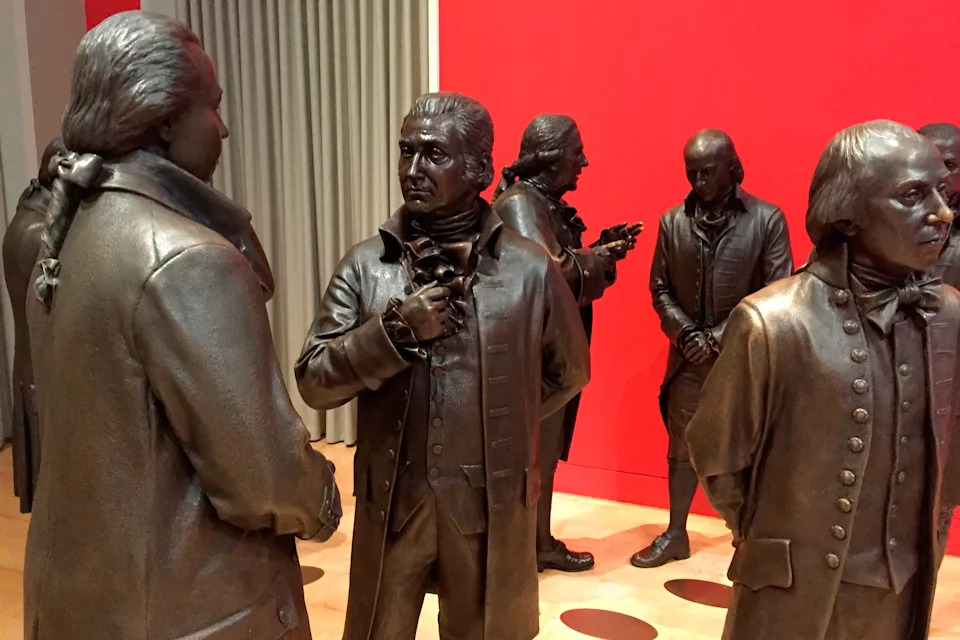
FILE - Life-size bronze sculptures of the signers of the U.S. Constitution stand in the Signers' Hall on July 7, 2016, at the National Constitution Center in Philadelphia. (AP Photo/Beth J. Harpaz, File)(ASSOCIATED PRESS)
Varied Beliefs Among the Founders
The founders were not a monolithic group. Some, like John Jay, Samuel Adams and Patrick Henry, were devout Christians. Others — including Thomas Jefferson, John Adams and Benjamin Franklin — believed in a God but rejected orthodox doctrines such as Jesus’ divinity. George Washington attended church and invoked divine Providence in public life while avoiding sacramental participation. Frazer describes many founders as "theistic rationalists": believers in an active God who combined reason with religion.
Where Religion Appears In Founding Documents
The Declaration of Independence includes religious language, asserting that rights come from the "Creator" and appealing to the "Laws of Nature and of Nature's God." By contrast, the Constitution largely avoids explicit religious references beyond the dating clause ("in the year of our Lord") and instead enshrines protections such as the ban on religious tests for public office and the First Amendment guarantee of religious freedom.
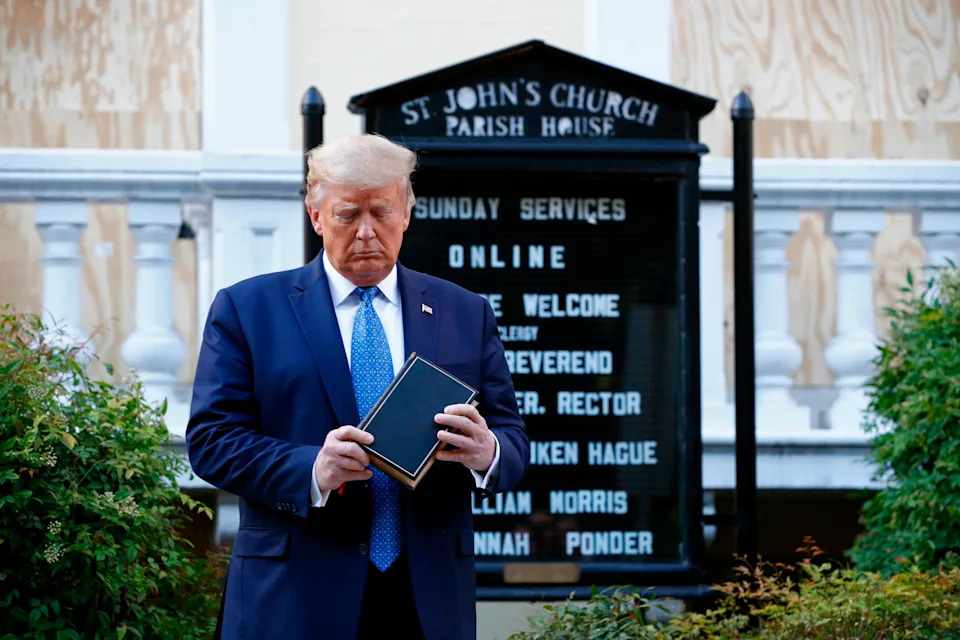
FILE - President Donald Trump holds a Bible as he stands outside St. John's Church, across Lafayette Park from the White House, on June 1, 2020, in Washington. (AP Photo/Patrick Semansky, File)(ASSOCIATED PRESS)
How Faith Influenced Civic Thought
Even if the founders did not write a constitution that endorses a specific creed, many scholars argue religion shaped civic ideas. Historian Mark David Hall notes that beliefs about human dignity and checks on power resonate with Protestant teachings about humanity and sin. Frazer and others point out that religion was widely regarded as important to forming virtuous, responsible citizens. Early public observances, proclamations of thanksgiving or prayer, and state-established churches in some places for decades after ratification illustrate religion's public presence in the early republic.
Intellectual Sources: Enlightenment, Religion, and Fraternal Orders
The framers drew on multiple influences. Enlightenment thought contributed concepts such as human equality, accountable government and freedom of conscience. Rationalist religious approaches and institutions like Freemasonry — which promoted belief in a universal God and moral conduct — also influenced many college-educated leaders who drafted foundational documents.
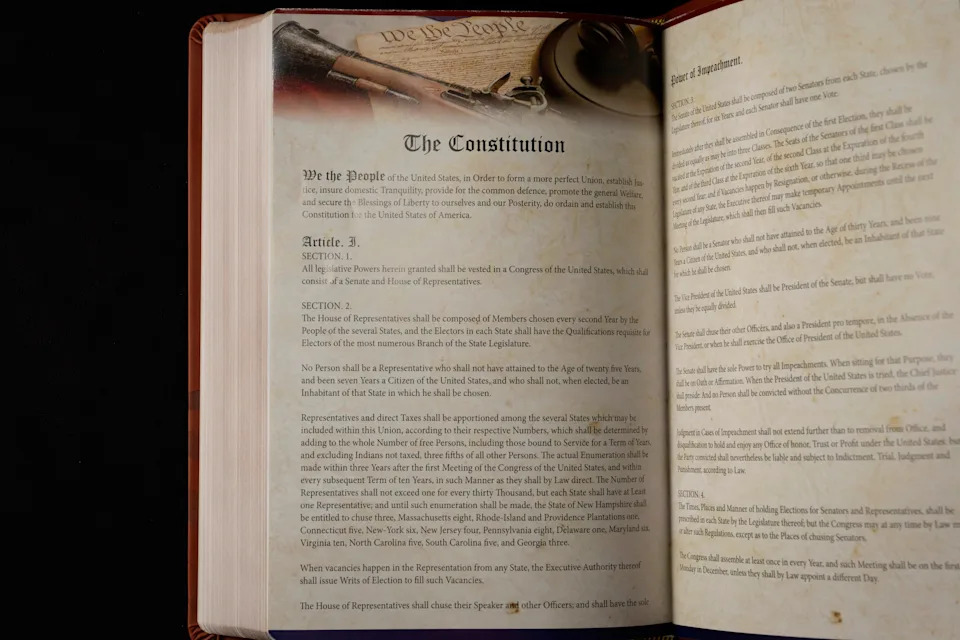
FILE - The Constitution of the United States is printed in Republican presidential nominee former President Donald Trump's "God Bless the USA" Bible in Washington, Oct. 8, 2024. (AP Photo/Ben Curtis, File)(ASSOCIATED PRESS)
Modern Politics and a “Usable Past”
As the nation marked the approaching 250th anniversary of the Declaration of Independence, the debate resurfaced. Some political leaders and activists have promoted the idea of a Christian founding. Critics and civil-liberties groups maintain that the legal and constitutional record does not support declaring America founded as a Christian nation. Historian John Fea warns that people often search the past for a "usable" narrative to support present agendas.
Conclusion
In short, the best summary of the historical evidence: the founders did not create a Christian nation in a constitutional or legal sense, yet many founders were religious or theistic rationalists whose beliefs helped shape public culture and civic assumptions. The result was a republic that protected religious liberty while leaving space for religion to influence public life.
Key takeaway: The constitutional record emphasizes freedom of religion and prohibits a national church, but religion — broadly defined — played a real role in informing the beliefs and institutions of the early United States.
Help us improve.