Bangkok's move to clear pavements and regulate street trading has cut mobile vendors by more than 60% since 2022 — about 10,000 fewer on the streets. The city has opened five hawker centres to formalise trading, but many vendors fear losing income, especially older traders with no backup plans. Officials say they offer time and communication to help relocations, yet tourists and sellers warn the changes could erode a vital part of Bangkok's culture.
Bangkok Cracks Down On Street Vendors — Is The City's Iconic Food Culture At Risk?
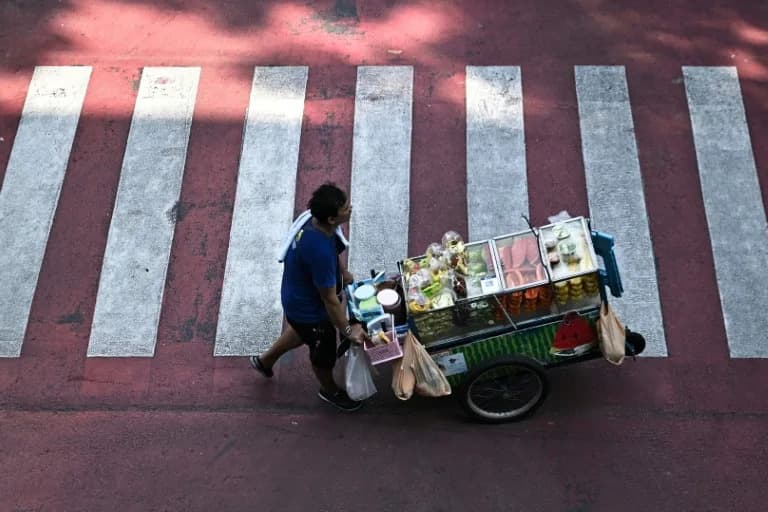
A street vendor pushes a cart of fresh fruit in Bangkok, where tighter controls on vendors threaten livelihoods and the street food culture that defines the Thai capital (Lillian SUWANRUMPHA)(Lillian SUWANRUMPHA/AFP/AFP)
The scents of garlic, chilli and charred meat still drift from carts and stalls across Bangkok, but a recent push by city authorities to clear pavements and regulate trading is putting many vendors' livelihoods — and the street-food scene that defines the Thai capital — under strain.
Beloved by locals and tourists for convenience, bold flavours and low prices, Bangkok's street food has long turned sidewalks and avenues into bustling open-air kitchens from dawn until late at night. But new enforcement measures have targeted vendors who crowd busy footpaths, prompting relocations, fines and closures.
Numbers And New Options
According to the Bangkok Metropolitan Administration (BMA), the number of mobile vendors in the city has fallen by more than 60% since 2022 — roughly 10,000 fewer sellers on the streets. The municipality has opened five hawker centres in recent years to offer formalised trading spaces; the latest opened in April beside Lumphini Park.
Hawker centres group food stalls under cover with basic utilities. Vendors at the new hub pay around 60 baht a day to rent a stall. Some traders say the move has improved working conditions: reliable water and electricity, shelter from the heat and a cleaner appearance that can attract more customers.
Vendors' Fears And Personal Stories
"I am worried because we are here illegally," said Looknam Sinwirakit, who was fined 1,000 baht (about $30) after selling 50-baht fried glutinous rice cakes in Chinatown. "Vendors need to earn a living. It's not fair just to evict us, but if they tell us to (leave) then we have to."
Durian seller Wong Jaidee, 56, who has sold the pungent fruit for more than two decades, said he has no backup plan. "Bangkok is a high-priced city and we may not be able to cope," he said. Thitisakulthip Sang-uamsap, 67, who has sold fried vegetable balls near Chinatown for more than 40 years, also appealed for compassion for older vendors with small incomes.
Others who moved into hawker centres report mixed experiences: improved infrastructure and cleanliness but worries about higher costs, reduced foot traffic compared with prime curbside spots, and losing the familiarity of longtime pitches.
City Perspective And The Balancing Act
BMA official Kunanop Lertpraiwan said the municipality has focused on traders who block main roads with heavy pedestrian traffic while allowing more flexibility for sellers on side streets and areas frequented by backpackers. "We give them time and communicate with them clearly," he said, adding that some vendors were given several months to find new locations.
The debate highlights a wider tension: improving pedestrian safety, sanitation and order versus preserving an informal food economy that is central to Bangkok's identity and tourism appeal. Visitors and food lovers warn that heavy-handed enforcement could erode a cultural asset — and drive small traders out of work.
What’s at stake: livelihoods for thousands of small-scale vendors, the character of Bangkok’s street-food culture, and the city’s ongoing effort to balance public order with informal economies that feed millions every day.
Help us improve.