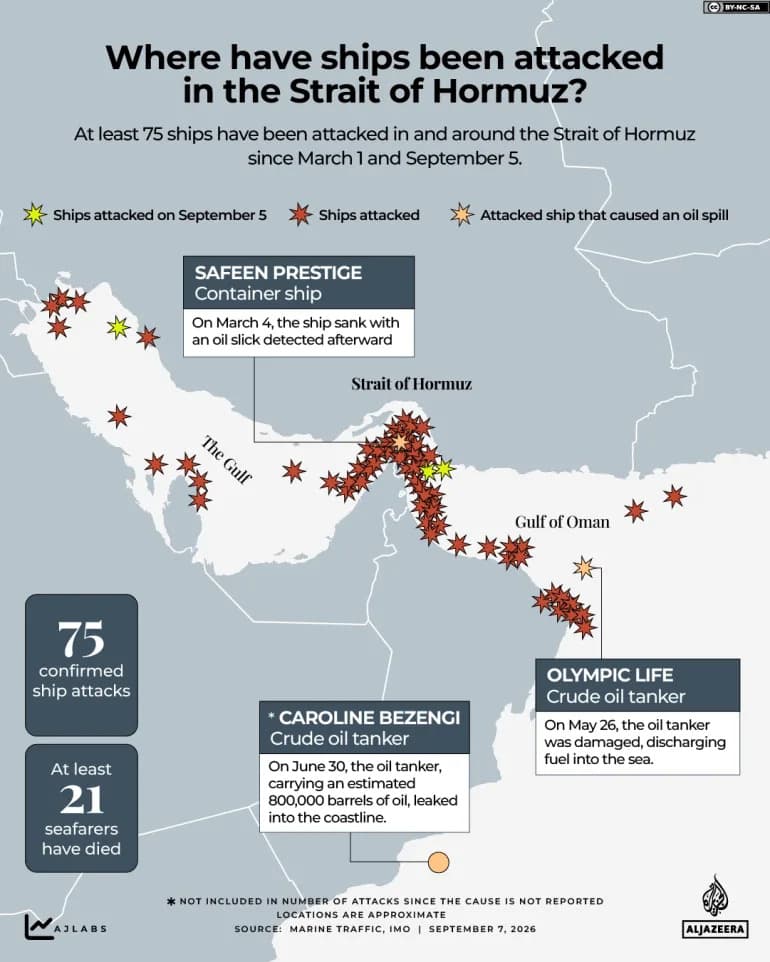
The US naval blockade of Iranian ports and the Strait of Hormuz since April 13 has driven a rapid buildup of Iran's onshore crude stocks and could fill Kharg Island within about 12–22 days, analysts say. Satellite and industry data show tanks at Kharg were roughly 74% full by April 20 and onshore capacity now covers about 20 days of production. Tehran can use floating storage and oil already at sea as a temporary buffer, but sustained restrictions may force gradual or voluntary production cuts — a step that risks reservoir damage and costly restarts.
Could Iran’s Oil Storage Fill Up in Days — And Will Tehran Be Forced To Cut Production?
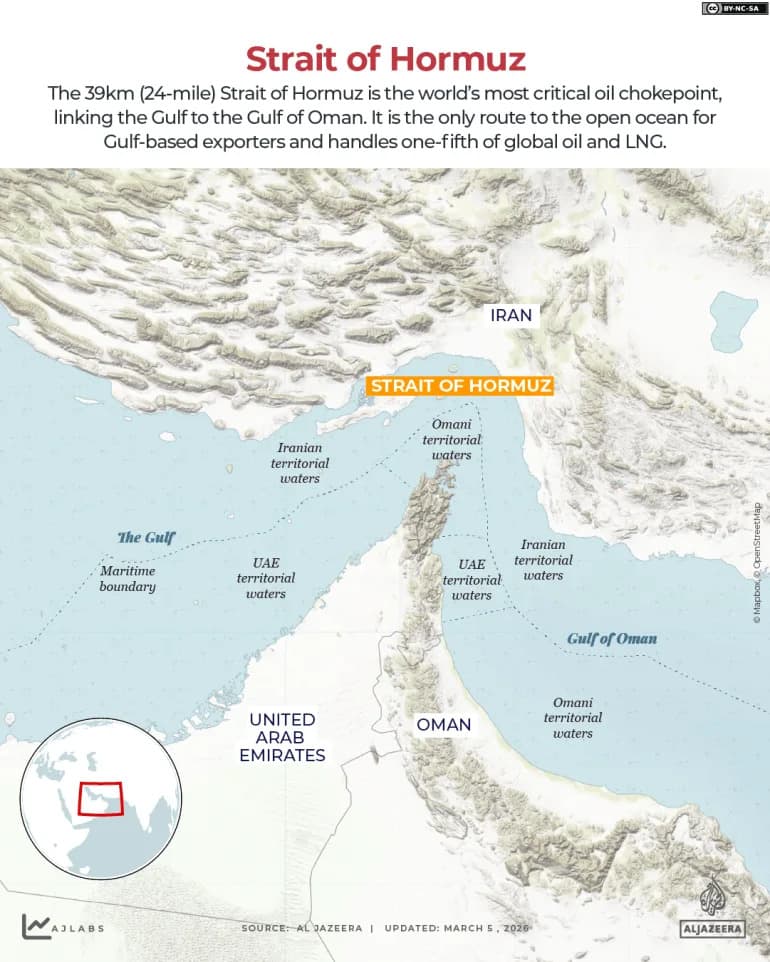
INTERACTIVE - Strait of Hormuz - March 2, 2026-1772714221
The US naval blockade of Iranian ports and the Strait of Hormuz, in place since April 13, has sharply increased Iran's onshore oil inventories and raised the prospect that Kharg Island — the country’s main export hub — could reach full capacity within days. Analysts and satellite data show a rapid buildup of crude stocks that may force Tehran to decide between storing ever more oil, using floating storage, or curbing production.
What’s Happening
Since the blockade began, satellite imagery and industry data show Iran has been unable to export most of the crude it produces. Bloomberg reported Kpler analysis on April 22 suggesting that, if the blockade continues, Iran could exhaust onshore storage in roughly 12–22 days. US Treasury Secretary Scott Bessent warned Kharg Island could be full "in a matter of days." Washington says interdiction aims to limit Tehran's oil revenues; Iran calls the moves illegal and has at times declared the Strait of Hormuz closed.
How Much Storage Is Left?
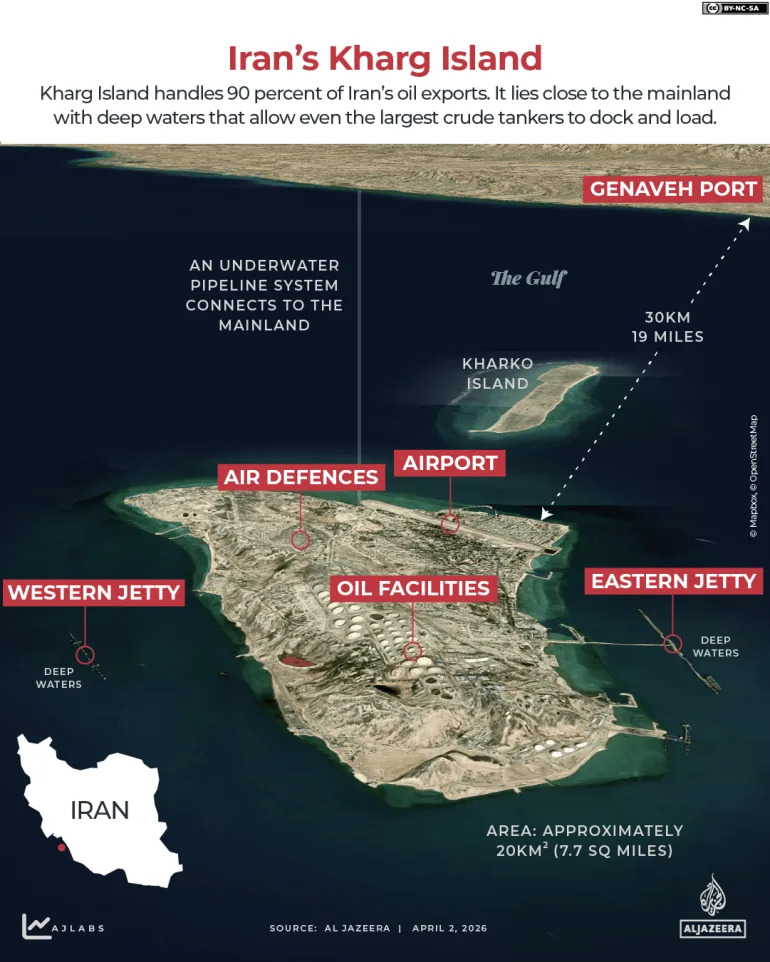
Data from the Columbia Center on Global Energy Policy (CGEP) indicate onshore stocks rose by more than 6 million barrels from April 13 to April 21, with the buildup accelerating between April 17 and April 21 at roughly 1.7 million barrels per day. As of April 20 the storage tanks on Kharg Island were about 74% full after taking on roughly 3 million extra barrels, CGEP reported.
Operators generally avoid filling tanks beyond ~80% capacity to maintain safety and operational flexibility, though producers have exceeded that threshold before: Kharg approached 90% in April 2020 during the Covid-19 demand collapse.
INTERACTIVE - Kharg Island Iran map oil coastline-1775116731
Iran also uses floating storage (tankers parked at sea). Frederic Schneider, a nonresident senior fellow at the Middle East Council on Global Affairs, told Al Jazeera that roughly 127 million barrels can be held in floating tanks. Separately, analysts estimate about 160–170 million barrels of Iranian oil are already on ships worldwide, which can temporarily soften the economic impact of halted exports.
Production, Refining And Export Figures
Kpler data show Iran exported 1.84 million barrels per day (bpd) in March and about 1.71 million bpd in April, compared with a 2025 average near 1.68 million bpd. Domestic refining capacity is roughly 2.6 million bpd, according to Facts Global Energy, meaning Iran could redirect some crude to domestic refineries but not all of its output.
Will Iran Cut Production?
Analysts say production cuts are possible but not inevitable. Muyu Xu, a senior crude analyst at Kpler, told Al Jazeera that remaining onshore capacity covers about 20 days of current production and that any reductions would likely begin gradually, with a higher risk of accelerating into May if the blockade persists. Antoine Halff of CGEP argued Iran might choose to voluntarily shut in wells to create spare storage capacity and smooth future restarts.
However, shutting wells carries technical risks: reducing reservoir pressure can let water or gas encroach on producing layers, changing flow patterns and making some reserves harder or more costly to recover. Restarting production can be slow and expensive due to corrosion, clogged pipelines and other maintenance needs. A shutdown would also cut export revenue, though oil already at sea could provide income for several months.
Why It Matters
The Strait of Hormuz is a critical global energy chokepoint: in peacetime about 20% of the world’s oil and liquefied natural gas (LNG) flows through the corridor. Any sustained disruption that forces Iran to cut production or that constrains exports more broadly could tighten global supply and push fuel prices higher. Policymakers, traders and refiners will be watching storage levels, satellite imagery, and on-the-ground developments closely in the coming weeks.
Key sources: Kpler, Columbia Center on Global Energy Policy (CGEP), Facts Global Energy, Al Jazeera, commentary from industry analysts.
Help us improve.