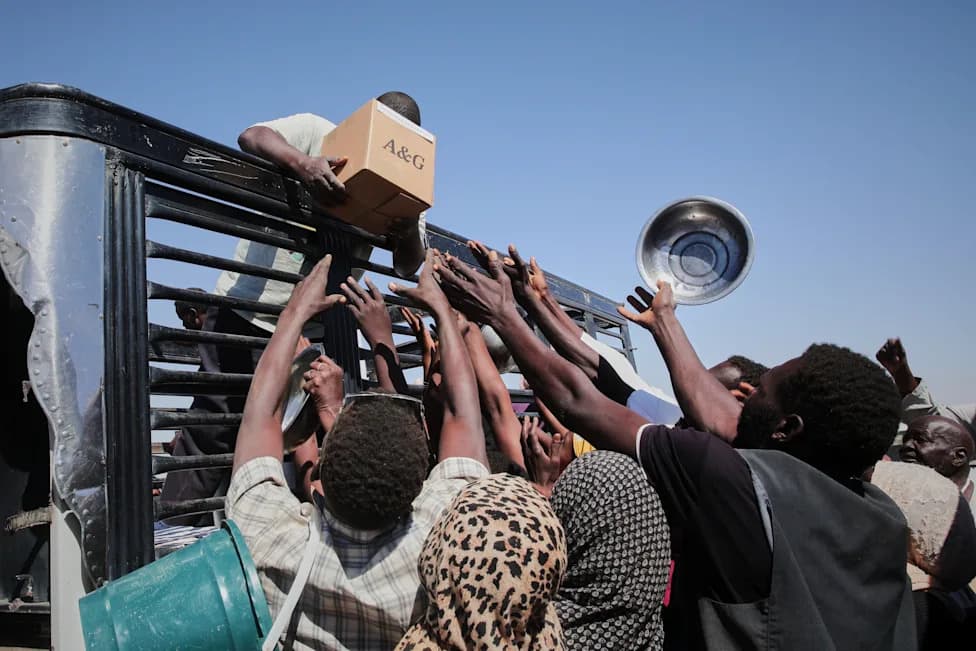
Prolonged sieges and fighting in Darfur and Kordofan have created famine-level conditions in parts of western and central Sudan. The Integrated Food Security Phase Classification declared a famine in November, and the 2026 Global Report on Food Crises documented severe access constraints and around 375,000 people in the most extreme hunger phase by September. By the end of 2025 nearly 12 million people were internally displaced and the UN estimated almost 25 million faced crisis-level food shortages. Persistent violence and funding shortfalls are limiting lifesaving aid.
Famine and Siege Force Thousands From Their Homes in Sudan's Darfur and Kordofan
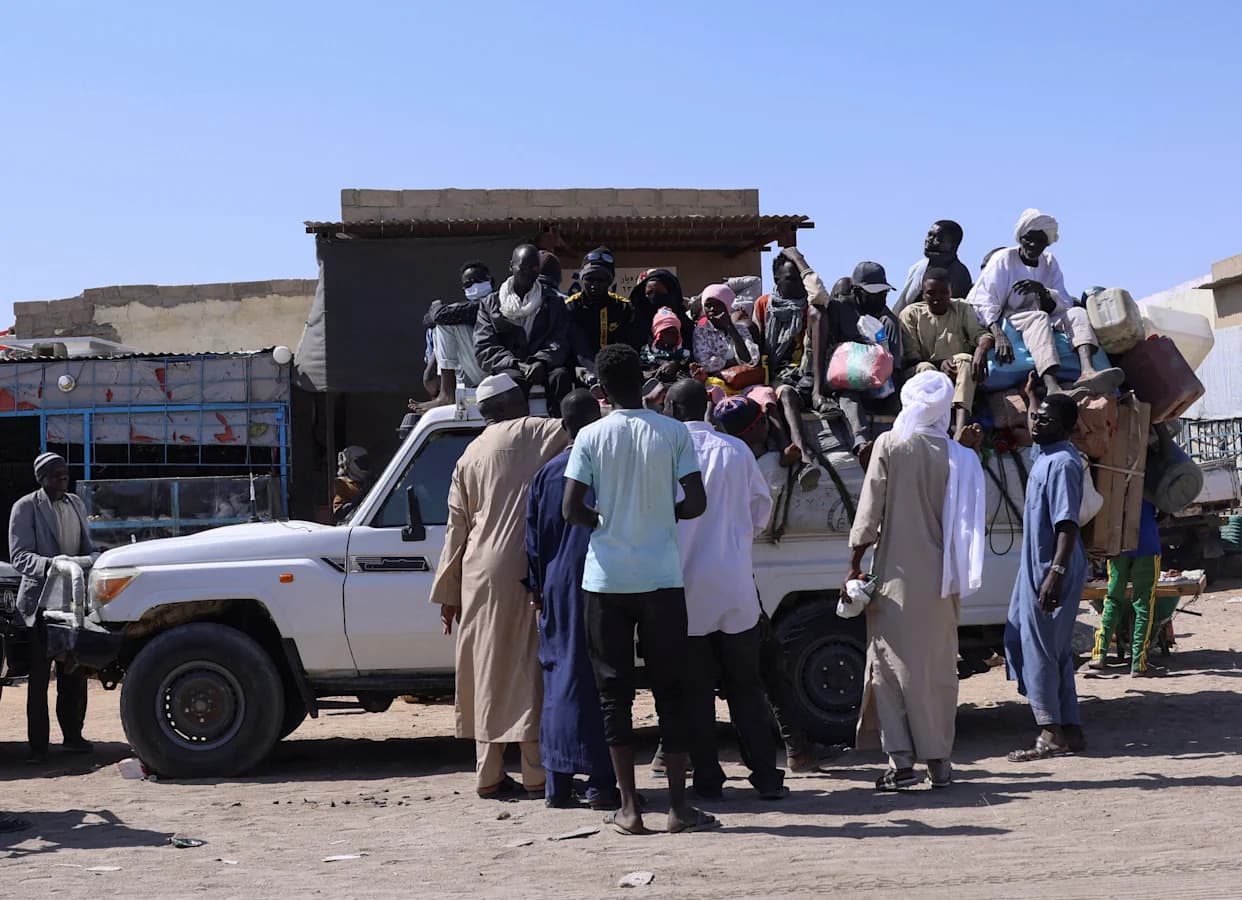
Displaced people from Darfur prepare to travel about 250km (155 miles) south to Adre on the Chad-Sudan border at a transport station in Tine in eastern Chad [File: Amr Abdallah Dalsh/Reuters]
Omdurman, Sudan — When Marasi Alfadil arrived in Omdurman with her children, she found almost nothing waiting for them. The family took shelter in a partly built structure inside a compound: unfinished walls, no services and only meagre food. For Marasi, however, it was still safer than the city she had fled.
Sieges, Violence and a Growing Hunger Crisis
About six months earlier, she fled el-Fasher in North Darfur days before fighters from the Rapid Support Forces (RSF) secured full control after an 18-month siege. At the time, the city had been contested between the RSF and the Sudanese Armed Forces (SAF) during Sudan's three-year civil war. Thousands were killed during the RSF takeover, an operation a United Nations investigation said bore the 'hallmarks of genocide'.
'The siege made life hard,' Marasi told Al Jazeera. 'Goods could not come in. Anyone who tried to bring food was detained or killed.'
Hundreds of thousands remain in el-Fasher where food shortages and ongoing violence persist under RSF control. Prolonged blockades in el-Fasher and other towns have severed supplies of food, fuel and medicine, wrecked markets and driven prices beyond the reach of most families.
Data and International Findings
The Integrated Food Security Phase Classification (IPC) declared a famine in November after mounting evidence of mass food insecurity. The 2026 Global Report on Food Crises, produced by the EU-funded Global Network Against Food Crises, found that conflict in Darfur and Kordofan has gravely limited humanitarian access and had 'devastating effects on food security'. By September, roughly 375,000 people were classified at the most extreme level of hunger, concentrated in North Darfur, South Kordofan and West Kordofan.
Displacement and Daily Survival
Marasi is not alone in seeking shelter in Omdurman, part of the Khartoum metropolitan region under SAF control. In the same compound lives Taqwa, who fled Heglig in West Kordofan with newborn twins. 'Feeding two infants is hard,' she said. 'I don't have money to buy meat. I don't have money to buy flour and make porridge. And I can't work because the babies are still very young.'
Displacement has stripped millions of livelihoods and incomes. By the end of 2025, almost 12 million people were internally displaced, making Sudan home to the world's largest internal displacement crisis. The UN estimated nearly 25 million people — more than half of Sudan's population — faced crisis-level food shortages or worse by 2025, including about 4.2 million children under five.
Aid agencies report persistent funding shortfalls and repeated access constraints as violence continues to block humanitarian deliveries. For families who depend on aid, inconsistent assistance means daily life is a struggle to survive.
What This Means
Communities across Darfur and Kordofan are confronting famine-level conditions: food is scarce, markets have collapsed or become unaffordable, and medical and fuel supplies are limited. Humanitarian organizations warn that without sustained access and funding, conditions will deteriorate further and more lives will be at risk.
Names and localities in this report reflect accounts collected by international media and humanitarian monitors. The situation remains fluid and access to affected areas is intermittent.
Help us improve.