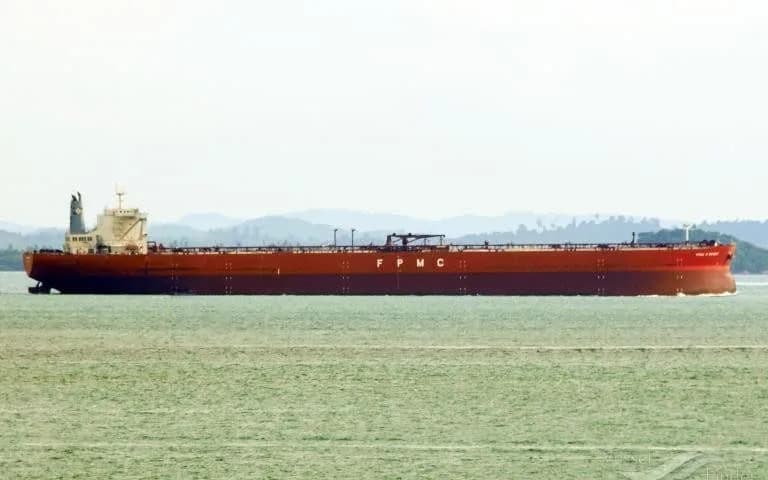
The MT Tifani, carrying about 1.9 million barrels of Iranian crude, was seized by US forces after a pattern of voyages between Iran and an anchorage off Malaysia known as the Eastern Outer Port Limits (EOPL). The EOPL, located near the Singapore Strait, functions as a de facto floating hub where Iran’s shadow fleet conducts ship-to-ship transfers, stores oil, and obscures cargo origins. Satellite analysis and tracker data show transfers there have risen sharply, sustaining sanctioned Iranian exports and generating tens of millions in revenue per transfer. The seizure underscores how the Iran conflict’s economic dynamics have spread into the Indo-Pacific.
Inside the Offshore 'Gas Station': How the EOPL Fuels Iran's Shadow Oil Trade
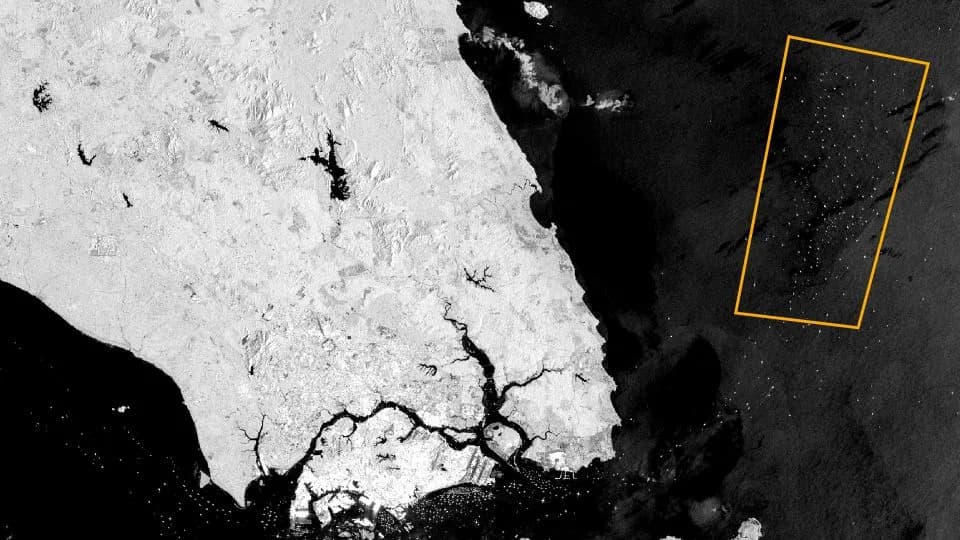
Synthetic Aperture Radar (SAR) satellite imagery shows ships inside the Eastern Outer Port Limit off Malaysia’s coast on April 18th, 2026. - Sentinel 1/European Space Agency
The MT Tifani, an oil tanker tracked by IMO 9273337 and carrying an estimated 1.9 million barrels of Iranian crude, was seized by US forces in the Indian Ocean after a series of voyages between Iran and an anchorage off Malaysia. Satellite imagery and vessel-tracking data show the ship frequently loitered in a compact zone near the entrance to the Singapore Strait, dropping anchor and disabling its automatic identification system (AIS) before reappearing hours or days later.
What Is the EOPL and Why It Matters
The area, commonly called the Eastern Outer Port Limits (EOPL), sits near the eastern approach to the Singapore Strait — one of the world’s busiest shipping corridors — roughly 43 miles off peninsular Malaysia and about 60 miles from Singapore’s skyline, inside Malaysia’s exclusive economic zone (EEZ). On clear satellite passes the anchorage can appear crowded, with hundreds of vessels visible at times. Analysts and nonprofit trackers say the EOPL effectively functions as a floating fuel depot and transfer hub for Iran’s so-called shadow fleet.
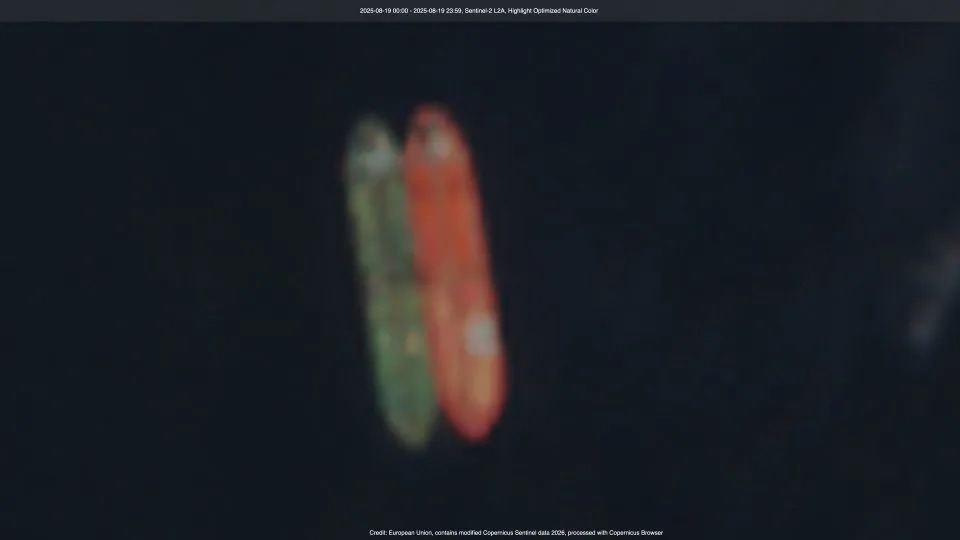
Satellite imagery appears to show the MT Tifani conducting a ship-to-ship transfer with the Macho Queen off Malaysia's east coast in August 2025. - European Space Agency
How The Shadow Trade Works
Sanctions have pushed Tehran to rely on an aging, opaque fleet of tankers — many Very Large Crude Carriers (VLCCs) capable of carrying up to about 2 million barrels — that frequently operate with spotty insurance and inconsistent records. These vessels use ship-to-ship (STS) transfers to obscure cargo provenance: a VLCC will deliver crude across the Indian Ocean and anchor near Malaysia, then transfer oil to other vessels that carry it onward, often to Chinese refiners.
Ship-to-ship transfers are legitimate when documented and conducted in approved areas. But shadow operators often conduct transfers at night, switch off or spoof AIS, alter documents, change flags of convenience, and even repaint ship names to create a new paper trail — practices observers describe as "cargo laundering."
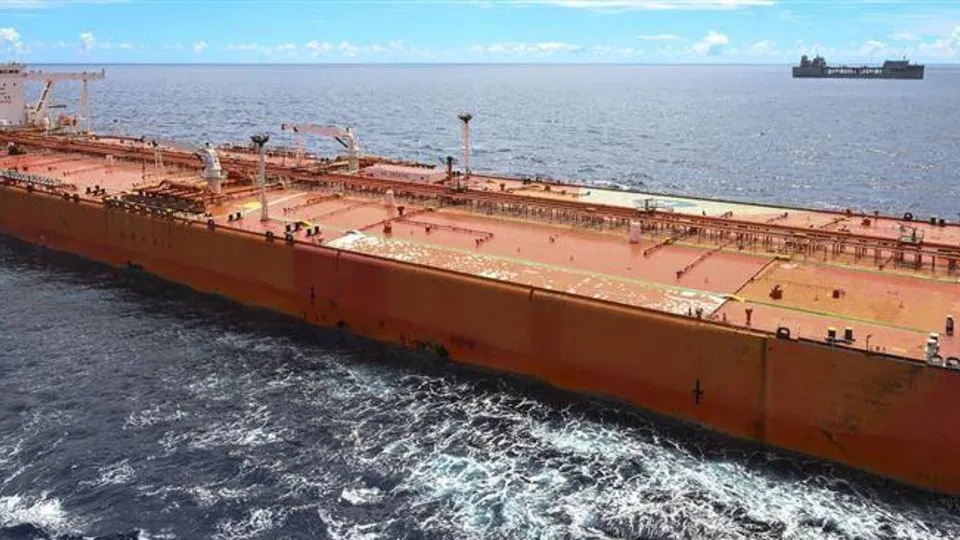
US troops boarding the M/T Tifani on April 21, 2026. - @DeptofWar/X
“It’s a very convenient place for hiding activities. Malaysian authorities basically look elsewhere,” said Farzin Nadimi, a senior fellow at the Washington Institute.
Scale And Impact
Nonprofit United Against Nuclear Iran (UANI) counted at least 679 STS transfers in the EOPL in 2025, up from 471 in 2024 and 280 in 2023; UANI notes satellite passes undercount activity because imagery is not continuous and weather can obscure vessels. Energy analytics firm Kpler estimates Iran exported an average of 1.69 million barrels per day in 2025, with U.S. authorities estimating roughly 90% of that moving to China. Kpler also reported Iran had a record 191 million barrels stored at sea in February — a floating buffer largely concentrated in East Asia.
Because sanctioned Iranian crude typically trades at a discount (reported around $10 per barrel below Brent), each successful STS transfer can generate tens of millions of dollars for Tehran — revenue that helps sustain the regime amid the conflict and the global oil shock that followed strikes earlier in the year.
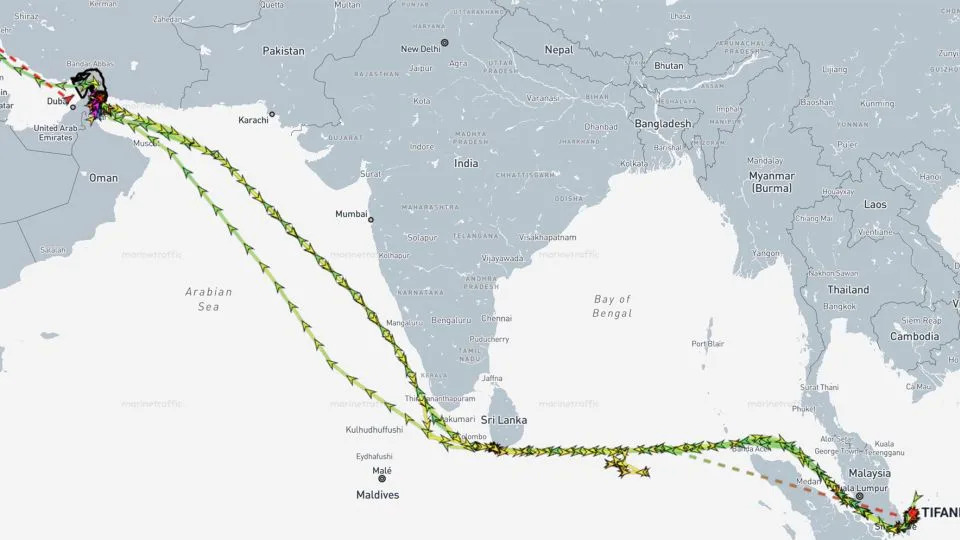
MarineTraffic data shows multiple journeys the MT Tifani took between the Persian Gulf and the EOPL from April 2025 until its seizure by US forces in April 2026. - Marine Traffic
The MT Tifani Seizure
MarineTraffic and satellite data show the MT Tifani loitering near the Strait of Hormuz and in the Persian Gulf in the month before its seizure; satellite imagery placed it at Iran’s Kharg Island on April 6, even while its AIS was turned off. The tanker reappeared on AIS on April 10 in the Gulf of Oman, heading toward Singapore. After passing Sri Lanka on April 21, the vessel made abrupt course changes shortly before U.S. officials announced the boarding. Video released by the U.S. Department of Defense shows personnel aboard the Tifani with helicopters overhead. The vessel has remained in the area since the operation.
Another tanker, the MT Majestic X, was also boarded and seized by U.S. forces after similar voyages between the Middle East and the Singapore Strait, according to vessel-tracking data.
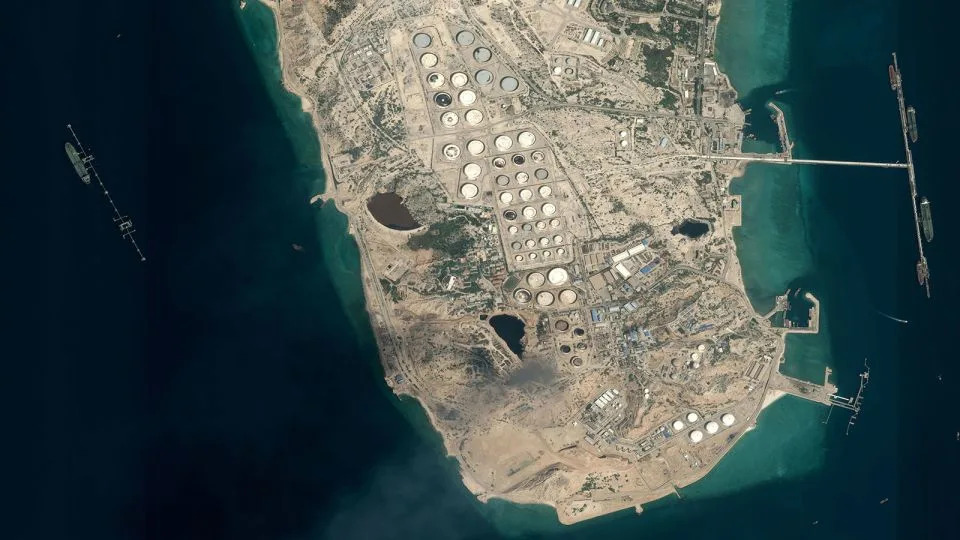
This satellite image shows Iran's Kharg Island on March 11th, 2026, prior to US strikes on the island. - Airbus
Regional Response And Risks
Malaysian authorities acknowledged the problem publicly last July, with Foreign Minister Mohamad Hasan calling unauthorized transfers “a thorn in our side” and pledging tougher enforcement and detention for vessels caught conducting illicit STS operations. Still, analysts say enforcement has been inconsistent and the EOPL remains attractive to smugglers because of its location and the challenge of policing thousands of square miles of busy sea lanes.
Observers warn the EOPL not only facilitates smuggling but also creates strategic resilience for Iran: by storing and staging cargo at sea, Tehran can keep exports flowing even if the Persian Gulf becomes more volatile. That dynamic has helped sustain shipments — particularly toward China — despite military strikes and tighter sanctions.
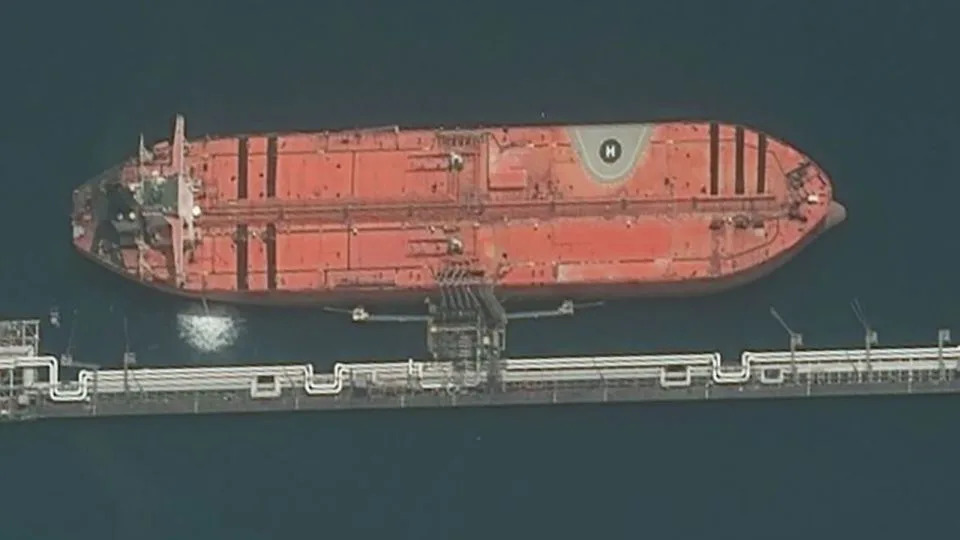
Recently intercepted tanker vessel MT Tifani seen docked at Iran's Kharg Island terminal on April 6, 2026. - Airbus
Key Takeaway
The MT Tifani seizure highlights how a relatively small, crowded anchorage far from the Gulf can be central to a sanctioned oil trade network. The EOPL operates at the intersection of commercial shipping, weak enforcement, and deliberate obfuscation tactics that together enable high-value transfers and generate significant revenue for Iran in a time of conflict.
This article incorporates reporting from satellite imagery and vessel-tracking databases, and includes analysis from Kpler, UANI, Vortexa, and experts cited in original reporting. Updated to correct analyst attribution.
Help us improve.