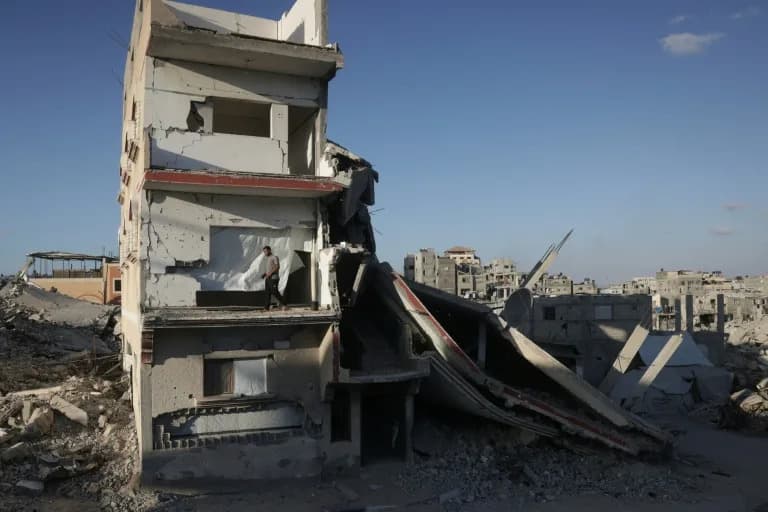
Palestinians and UNDP crews are crushing and reusing war rubble to repave streets and prepare sites for shelters and community kitchens across Gaza. An estimated 61 million tons of debris remain; about 287,000 tons have been removed so far. Clearance could take up to seven years if access to heavy machinery and fuel improves, and full reconstruction is estimated to cost $71.4 billion. Workers face hazards from unexploded ordnance and stray fire near the armistice line.
From Rubble to Roads: Palestinians Rebuild Gaza Streets as U.S. Reconstruction Plan Falters
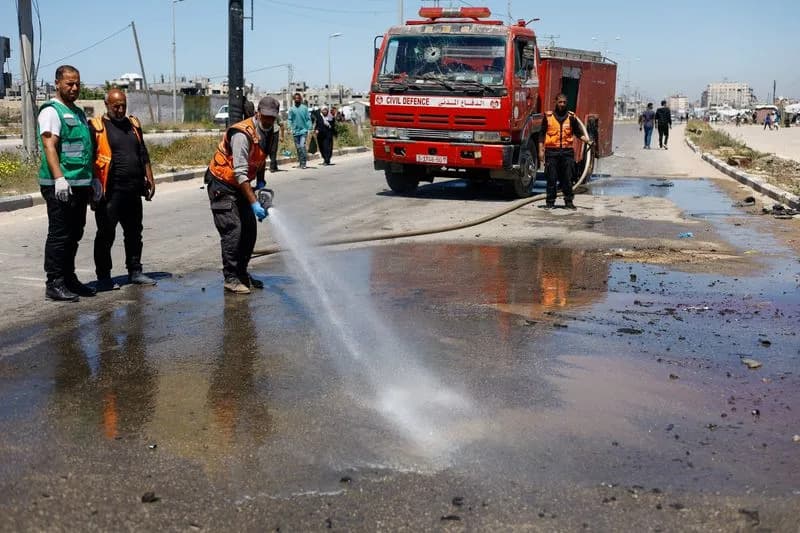
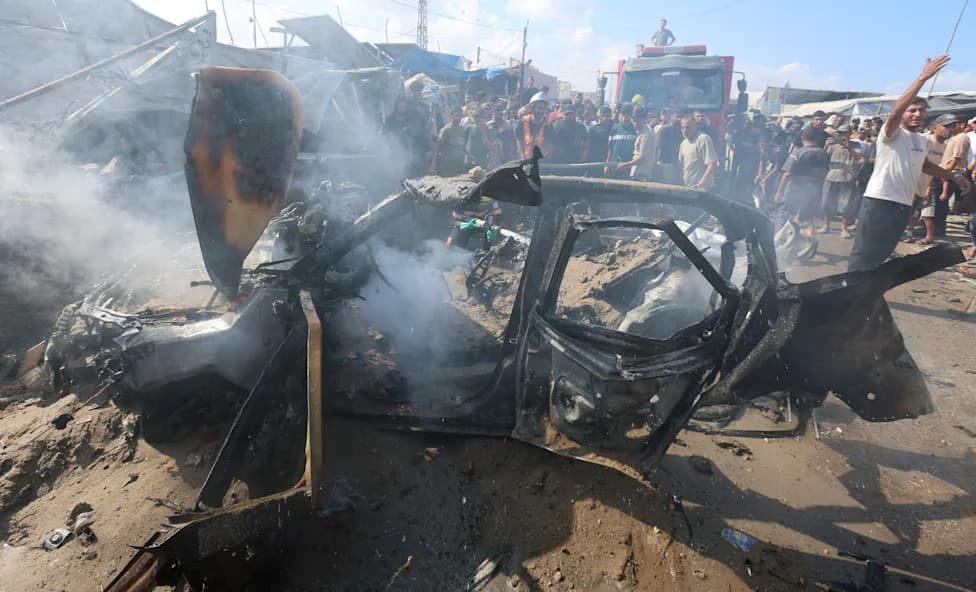
Members of civil defence personnel use a fire hose at the site of an Israeli airstrike on a car in the central Gaza Strip, April 23, 2026. REUTERS/Mahmoud Issa
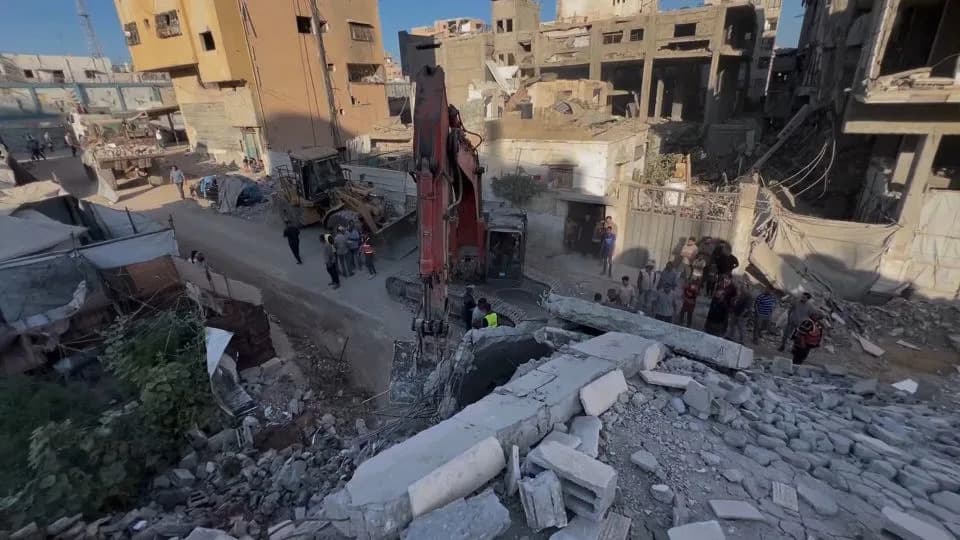
GAZA, April 27 (Reuters) - Palestinians are crushing war-damaged concrete and twisted metal to repave streets and prepare sites for shelters and community kitchens under a United Nations Development Programme (UNDP) initiative. The effort aims to restore basic access and mobility across Gaza even as a U.S.-backed reconstruction plan tied to an October ceasefire has stalled.
UNDP Initiative Uses Local Resources To Clear Debris
The UNDP-run project relies on locally available heavy machinery and Palestinian crews to sort, crush and reuse building rubble. Officials say clearing the debris is essential to reopening access to water wells, hospitals and markets and to jump-starting economic activity.
Crushing And Reusing Rubble
Alessandro Mrakic, head of UNDP's Gaza office, warned the territory faces one of the largest post-war clearance challenges in recent memory, with an estimated 61 million tons of rubble. UNDP teams have so far removed roughly 287,000 tons and are reusing much of what they collect to repair roads and lay surfaces for temporary shelters and community kitchens.
'Beyond the collection, we have started sorting, we have started crushing, and, as such, reusing it,' Mrakic said, calling the removed material only 'the tip of the iceberg.'
Risks, Delays And Logistical Constraints
Progress is slowed by hazards hidden under the debris: every site must be checked for unexploded ordnance in coordination with the U.N.'s mine action service before removal can proceed. Workers also face the danger of stray fire near the armistice line and limited income options that push many into risky labor.
'I can't find any other source of income, that is why I do this work. You could get hurt,' said Ibrahim al-Sarsawi, 32, who works on clearance sites around Khan Younis. Fuel shortages and restricted access for heavy machinery under Israeli security rules further complicate and lengthen the effort.
Long Road To Reconstruction
UNDP estimates that complete rubble clearance could take up to seven years if heavy machinery access and fuel supplies are accelerated and unimpeded. A joint Gaza Rapid Damage and Needs Assessment by the European Union, U.N. and World Bank put recovery and reconstruction needs at about $71.4 billion over the next decade.
Displaced residents describe the aftermath as a new phase of struggle. 'The war is over, but this is the beginning of a new war,' said Sobhi Dawoud, 60, referring to the long process of removing rubble and repairing infrastructure including electricity, water, sewage systems, schools and streets.
What This Means: Reusing rubble provides a rapid, low-cost way to restore access and basic services in the short term, but large-scale reconstruction will require sustained funding, secure access for machinery and coordinated demining to protect workers and civilians.
Help us improve.