NASA's Curiosity rover has detected a broad suite of organic molecules in a rock sample from the Mary Anning 3 borehole, including seven compounds not previously seen on Mars. Scientists used SAM's rare "wet chemistry" TMAH test and compared results to Earth lab experiments on the Murchison meteorite, finding similar breakdown products. Notable detections include a nitrogen heterocycle and benzothiophene, which strengthen the idea that ancient Mars had chemistry favorable to prebiotic processes—though these findings are not direct evidence of life.
Curiosity Uncovers Seven New Organic Compounds on Mars — New Evidence That Ancient Mars Had Life-Friendly Chemistry
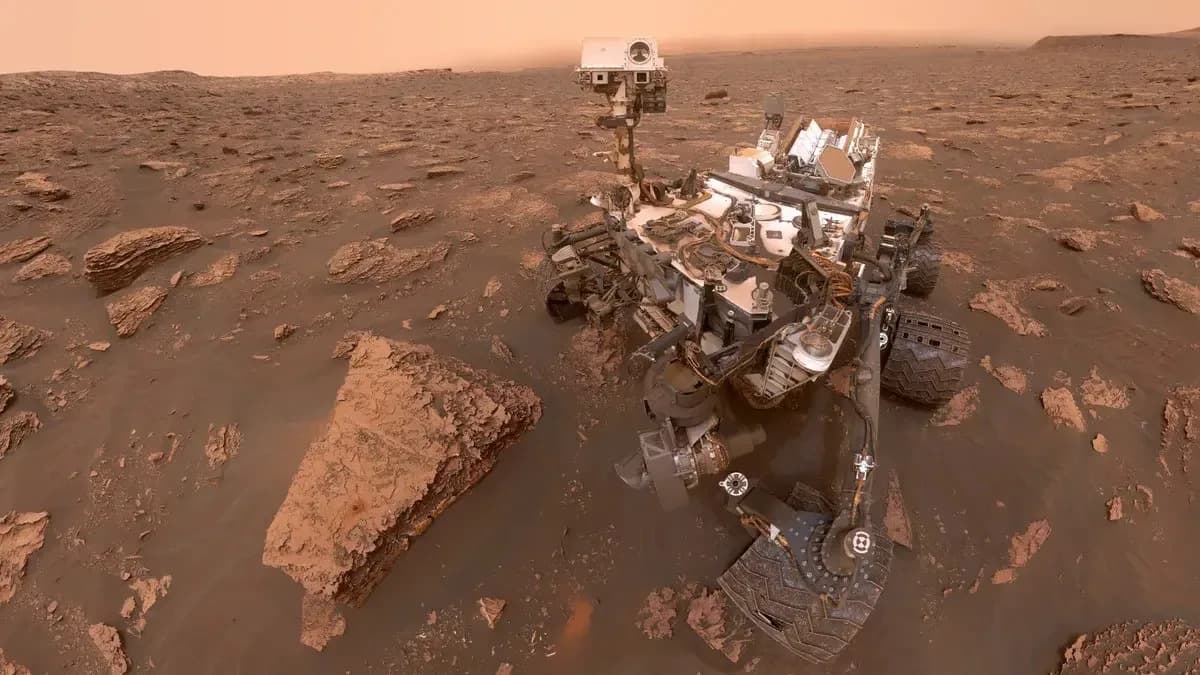
The discovery not only offers insight into the likelihood of life on early Mars, but hope that we could actually find signs of that life, today. (Credit: NASA)
NASA's Curiosity rover has identified a large and diverse suite of organic molecules in Martian rock, including seven compounds not previously reported, according to new results published in Nature Communications. While "organic" simply means carbon-based and is not proof of life, the diversity and nature of these molecules strengthen the case that ancient Mars had chemistry conducive to prebiotic processes.
Key Findings
The analysis—focused on a sample drilled from the borehole known as Mary Anning 3—revealed a rich catalogue of organics. Of particular interest were a nitrogen heterocycle (a ring-shaped carbon structure that includes nitrogen and is relevant to RNA/DNA precursors) and benzothiophene, a sulfur-containing compound that has been linked to early solar system chemistry.
Why This Matters
Scientists compared Curiosity's TMAH-assisted results with laboratory tests on the well-studied Murchison meteorite. When exposed to tetramethylammonium hydroxide (TMAH) in the lab, larger organic macromolecules in the meteorite broke down into many of the same smaller compounds detected by Curiosity. This correspondence suggests some Martian organics could originate from the decomposition of larger precursor molecules—a route that is relevant to prebiotic chemistry on early Earth and potentially on Mars.
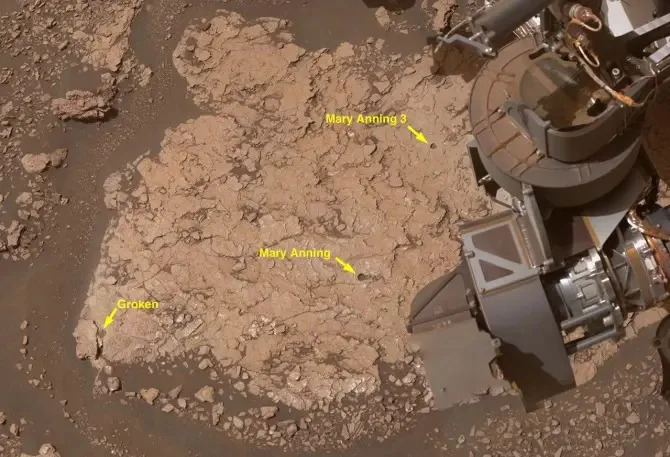
Curiosity organic molecules in rock photo
How Curiosity Detected the Molecules
Curiosity's Sample Analysis at Mars (SAM) suite carries instruments that can heat powdered rock samples (pyrolysis) and analyze the gases released using spectroscopic and mass-spectrometric techniques. SAM also carries a limited "wet chemistry" capability: a finite supply of liquid reagents used only for high-priority samples. For this campaign, the powdered Mary Anning 3 sample was treated with TMAH—the first time this particular sample was selected for that special test.
Context and Next Steps
Curiosity is one of several missions mapping Mars' chemical history. The European Space Agency's upcoming Rosalind Franklin rover will carry a mass spectrometer supplied by NASA to conduct more detailed in-situ chemical analyses. While scientists had hoped for comprehensive Earth-based tests from a Mars Sample Return, that possibility is not proceeding to provide full-scale laboratory analysis at present, so researchers must continue to rely on compact, highly capable instruments flown on rovers and aerial drones.
Bottom Line: The discovery of seven previously unreported organics and a broader inventory of carbon-bearing molecules strengthens the view that ancient Martian environments had the raw chemical ingredients for prebiotic chemistry—though it does not constitute direct evidence of past life.
Image credit: NASA/JPL-Caltech
Help us improve.