Ticklishness splits into two distinct sensations: knismesis (a light, insect-like itch) and gargalesis (the laughter-inducing social tickle). Animal and human studies link gargalesis to the somatosensory cortex and the periaqueductal gray (PAG), and show that anxiety suppresses the response. Sensory attenuation explains why self-tickling fails, but five core mysteries remain: body-region sensitivity, emotional valence, self-tickling mechanisms, individual differences, and evolutionary function.
Why Are Humans Ticklish? The Science Behind Knismesis, Gargalesis, and Laughter

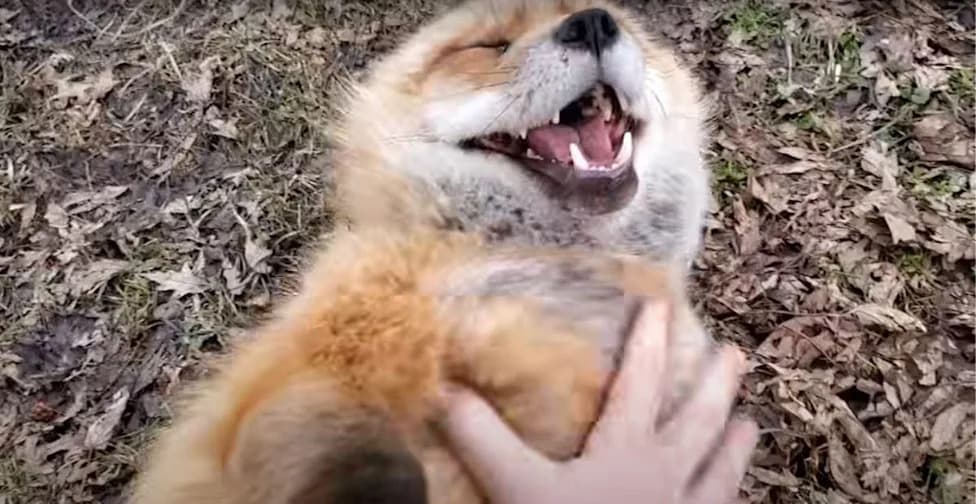
Ticklish laughter predates language, appears across primates, and triggers ancient brain circuits, yet after two millennia of inquiry, its evolutionary function remains genuinely unresolved.getty
If you try to tickle yourself right now, you will likely feel little or nothing. Ask someone else to repeat the same motion and you may squirm, gasp and laugh involuntarily — sometimes pleading for them to stop while also not wanting it to end. That paradox — a sensation that is pleasurable and threatening, socially tuned and impossible to self-produce — has puzzled thinkers from Socrates to Darwin and remains an active puzzle in modern neuroscience.
Two Different Sensations: Knismesis and Gargalesis
Knismesis describes a light, feather-like itch: the feeling of a hair on your arm or a fly on your neck. It tends to be irritating rather than funny, can be self-induced, and makes clear evolutionary sense as an early-warning system against parasites and small threats.
Gargalesis is the deep, laughter-inducing tickle produced by rhythmic, forceful pressure on vulnerable areas such as the armpits, ribs or soles of the feet. It triggers involuntary laughter, writhing and that mixed sensation of delight and alarm. Gargalesis is context- and mood-dependent, cannot be self-elicited, and is the far more mysterious phenomenon.
What Neuroscience Has Learned
Recent animal and human studies have begun to uncover the neural machinery behind gargalesis. A landmark 2016 study in Science showed that rats respond to human tickling with enthusiastic "joy jumps" (Freudensprünge) and that neurons in deep layers of the somatosensory cortex fire strongly during tickling. Those same neurons were active during play, linking ticklishness and play behavior.
A 2023 Neuron study pushed the circuitry deeper into the midbrain, implicating the periaqueductal gray (PAG). Blocking the PAG abolished both ticklish responses and play, while the lateral columns of the PAG were especially active during tickling and fell silent under anxious conditions. Because the PAG is evolutionarily ancient, these findings suggest gargalesis is a conserved mammalian feature.
These studies also clarified why you can’t tickle yourself: when the brain issues a motor command it generates an efference copy — a prediction of the expected sensory feedback — which the nervous system uses to dampen incoming sensation (sensory attenuation). Self-generated touch is therefore largely canceled, whereas another person’s unpredictable touch gets through. Experiments that introduce slight delays between movement and touch show that small disruptions of prediction can restore some ticklishness, further supporting this mechanism.
Five Big Remaining Questions
Despite identifying some of the hardware (somatosensory cortex, PAG, cerebellar prediction systems), researchers still lack a coherent answer to why gargalesis exists. A 2025 review in Science Advances distilled the core unknowns into five questions:
- Why Are Some Body Parts More Ticklish Than Others? The pattern (armpits, ribs, soles) is clear, but the peripheral receptors and pathways mediating gargalesis remain unidentified.
- Do People Actually Enjoy Being Tickled? Tickling mixes pleasure with a mild sense of threat and unpredictability; this emotional ambivalence may be central to its function in play.
- Why Can’t We Tickle Ourselves? Sensory attenuation explains much, but the detailed neural implementation and why it varies between people are still unclear.
- Why Are There Large Individual Differences? Sensitivity to tickling varies widely, likely with genetic and developmental components, but the mechanisms are unknown.
- What Is Tickling For? Theories include mock combat training, parent–infant bonding, and sociosexual signaling. Gargalesis appears early in life — among the first triggers of laughter — which supports a bonding role, but tickling’s flexibility suggests multiple functions.
Why It Matters
Ticklishness sits at the intersection of perception, motor prediction, emotion and social behavior. It reveals how the brain distinguishes self from other, how ancient brain circuits shape modern social interactions, and how play and emotion are integrated at neural and behavioral levels. Because gargalesis is so sensitive to emotional state — disappearing under anxiety — it also offers a window into how affect modulates basic sensory and social responses.
Bottom line: Scientists have mapped parts of the circuitry and uncovered important principles like sensory attenuation, but the evolutionary "software" that explains why gargalesis exists and what adaptive role it plays remains unresolved.
Note: This article synthesizes findings from key studies (Science 2016; Neuron 2023) and recent reviews (Science Advances 2025; Neuroscience Research 2025).
This article was originally published on Forbes.com and has been edited for clarity, structure and readability.
Help us improve.