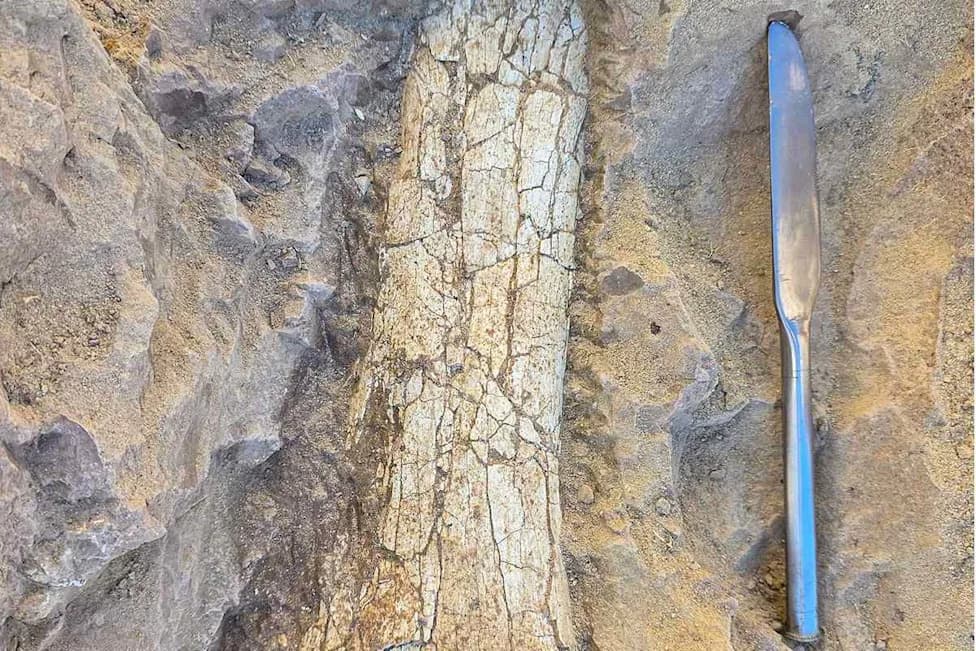
Epiaceratherium itjilik, a hornless rhino discovered in Haughton Crater on Devon Island, lived about 23 million years ago at roughly 75°N — the northernmost rhinoceros on record. Ancient protein sequencing from tooth enamel and advanced evolutionary modeling placed the species closer to Western European rhinos, suggesting migration across the North Atlantic Land Bridge. The specimen is unusually complete (75–80% preserved in 3D), offering rare anatomical and molecular insight into a cool-temperate Miocene Arctic.
Frosty Rhino at 75°N: 23-Million-Year-Old Fossil Rewrites Arctic Migration Routes
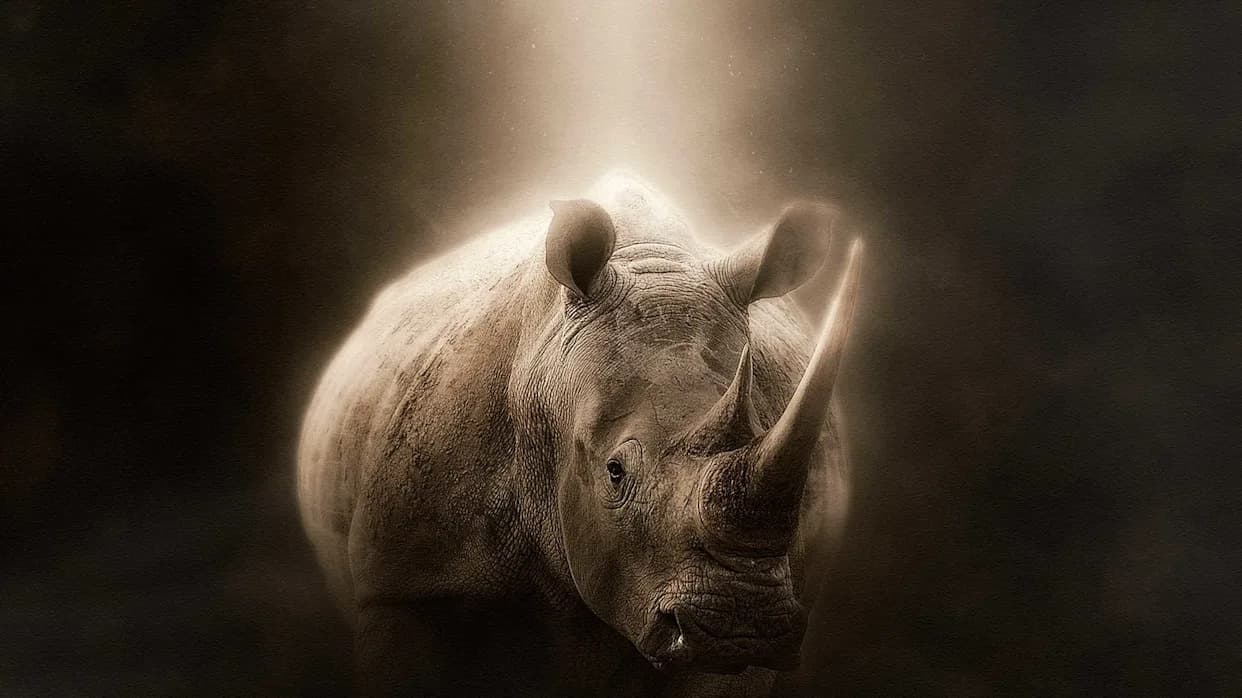
Large rhino© Pornchanok Anukoolprasert/Shutterstock.com
For nearly four decades a set of fossil fragments collected on Devon Island sat unresolved in museum drawers. Modern techniques have now identified those remains as a new extinct rhinoceros species, Epiaceratherium itjilik — the northernmost rhino ever documented, recovered from the Haughton Crater at about 75° north latitude.
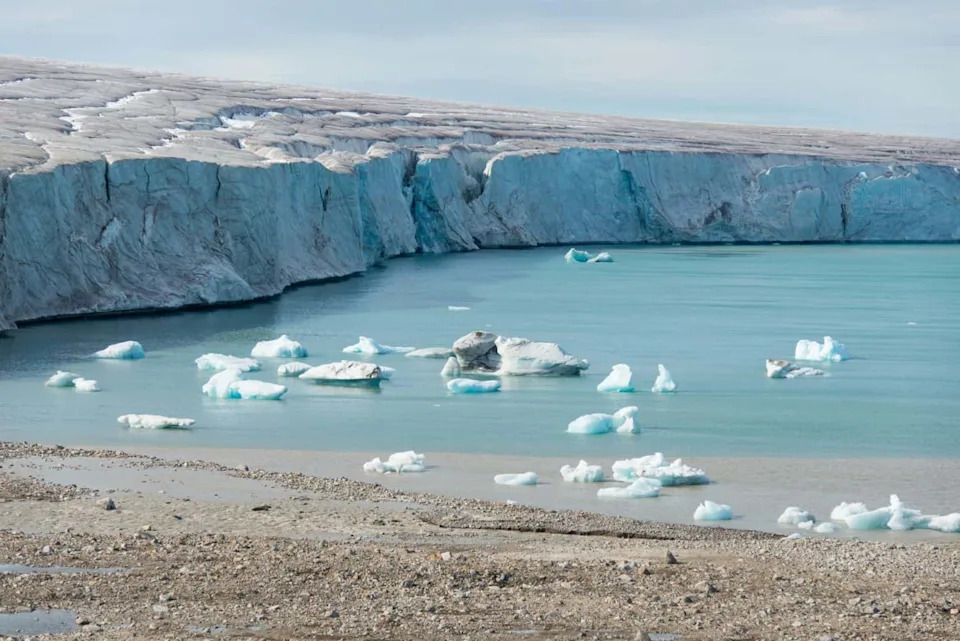
Devon Island is one of the largest uninhabited islands in the world.©Bart Figas/Shutterstock.com
Discovery and Historical Context
The fossils were first collected in 1986 by Dr. Mary Dawson and remained enigmatic until a 2025 study led by Dr. Danielle Fraser of the Canadian Museum of Nature combined new laboratory methods with computational models. The species name itjilik (pronounced eet-jee-look) was chosen in consultation with Inuk Elder Jarloo Kiguktak and means “frost” or “frosty,” honoring the specimen’s High Arctic origins.

These rhinos did not have any horns.©Michael Tripoli / CC BY 4.0 / PhyloPic –Original/License
What the Animal Was Like
Epiaceratherium itjilik was a hornless rhinoceros about 3.3 feet (1 meter) tall at the shoulder. Roughly the size of a modern Indian rhinoceros but noticeably leaner, it had four toes on its front feet (compared with three in most living rhinos). Tooth-wear patterns indicate the recovered individual was a young-to-middle-aged adult when it died.
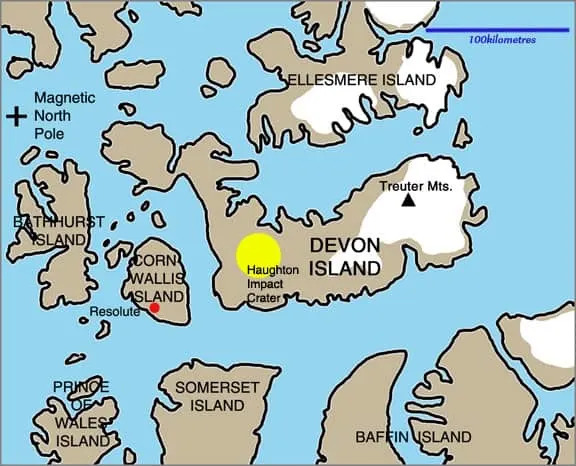
The Haughton impact crater is in the Canadian High Arctic.©Denni / CC BY-SA 3.0 / Wikimedia Commons –Original/License
Exceptional Preservation
The specimen is unusually complete for an Arctic fossil: an estimated 75–80% of the skeleton was preserved in three dimensions, thanks to burial in soft lake sediments within the 14-mile (23-kilometer) Haughton impact basin. Those sediments shielded the bones from glacial destruction and limited mineral replacement, enabling detailed anatomical and molecular study.
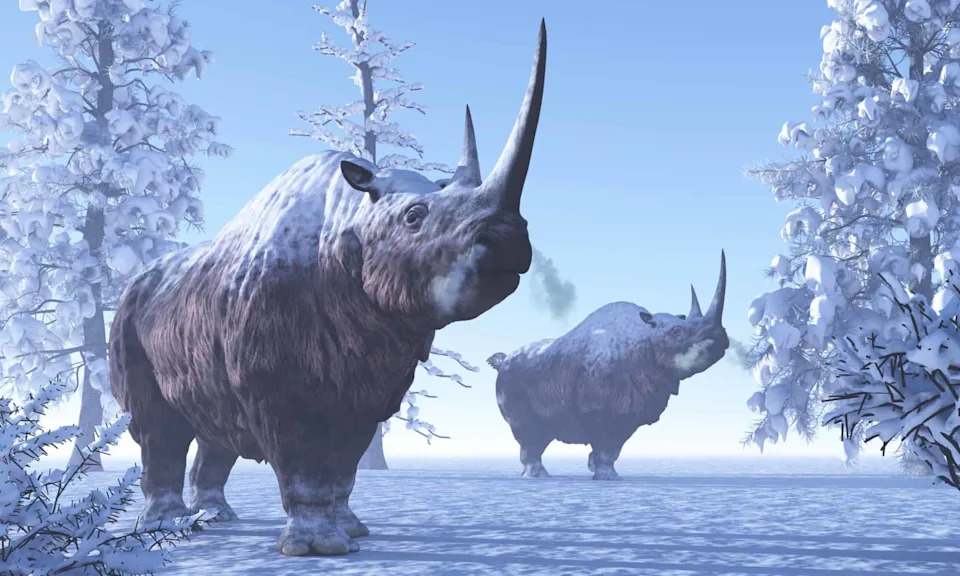
The “Frosty” rhino is more closely related to European species like woolly rhinoceros.©Catmando/Shutterstock.com
How Researchers Solved the Puzzle
Because DNA rarely survives over tens of millions of years, scientists extracted and sequenced ancient proteins from tooth enamel. These molecular fingerprints — among the oldest proteins analyzed from fossils — helped place the specimen on the rhinoceros family tree. The team also used sophisticated mathematical and evolutionary modeling across 57 rhinoceros species and five global regions to reconstruct 40 million years of rhino evolution and migration.
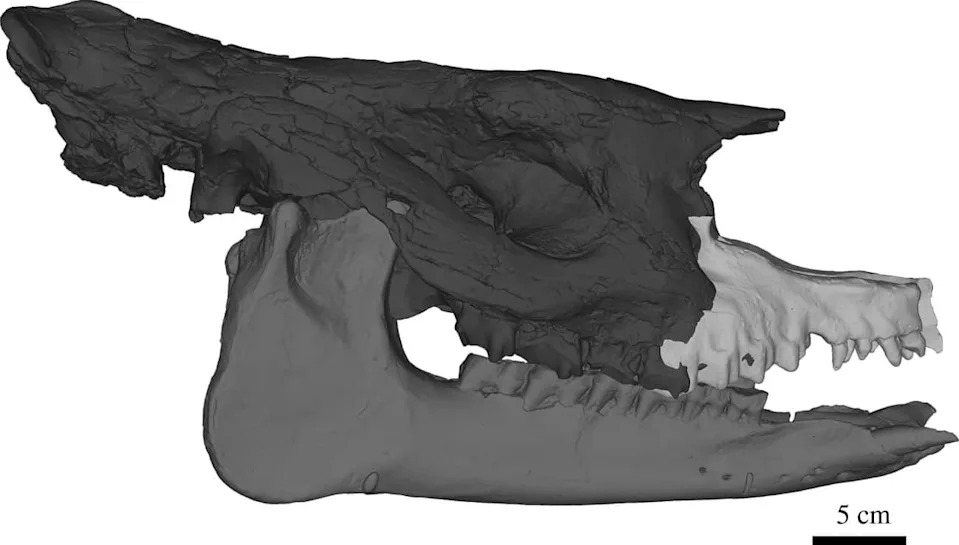
Fossils from the Epiaceratherium genus are typically found in Europe.©Manon Hullot, Céline Martin, Cécile Blondel, Damien Becker and Gertrud E. Rössne / CC BY 4.0 / Wikimedia Commons –Original/License
Paleoenvironments and Biogeographic Implications
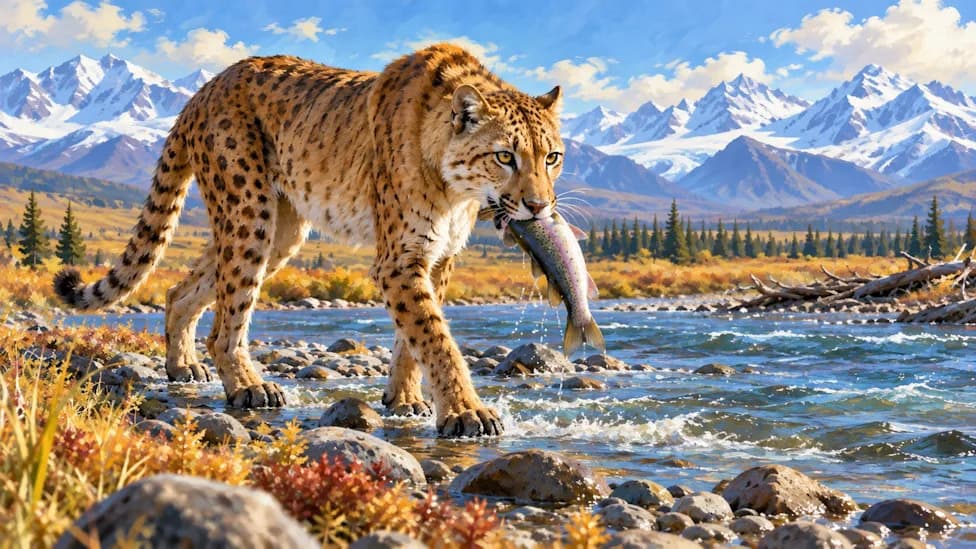
Fossil evidence from Haughton Crater paints a picture of a cool-temperate, forested Arctic during the Early Miocene — with pines, birch, larch and alder surrounding a deep crater lake. This sheltered microclimate would have moderated extremes and supported a diverse fauna, including waterfowl, rabbits, shrews and early transitional seals like Puijila darwini. The presence of E. itjilik at such high latitude demonstrates remarkable ecological flexibility and the ability to endure prolonged winter darkness.
Crucially, molecular and morphological data show E. itjilik is more closely related to Western European rhinoceroses than to previously known North American species. That relationship points to migration across the North Atlantic Land Bridge (via Greenland and Iceland) during the Early Miocene, implying the route remained passable far later than some earlier estimates.
Collaboration and Legacy
The work was a collaboration between the Canadian Museum of Nature, Carleton University and the University of Colorado Boulder. The study honors Dr. Mary Dawson by listing her as a co-author and closing a scientific investigation that began with her 1986 fieldwork. By combining field paleontology with cutting-edge protein chemistry and large-scale computational modeling, researchers have given the Arctic rhino its long-awaited place in Earth’s history.
Why It Matters: This discovery reshapes our understanding of ancient mammal migration, Arctic ecosystems, and how molecular techniques can illuminate deep-time evolutionary relationships.
Image credits: Haughton Crater and specimen illustrations as credited in original reporting.
Help us improve.