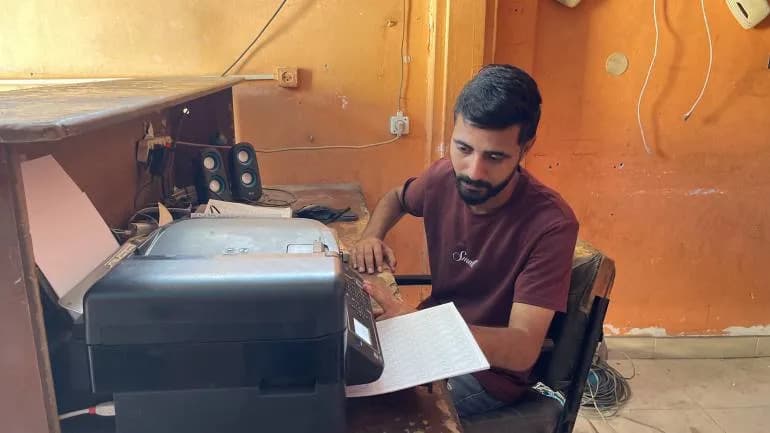
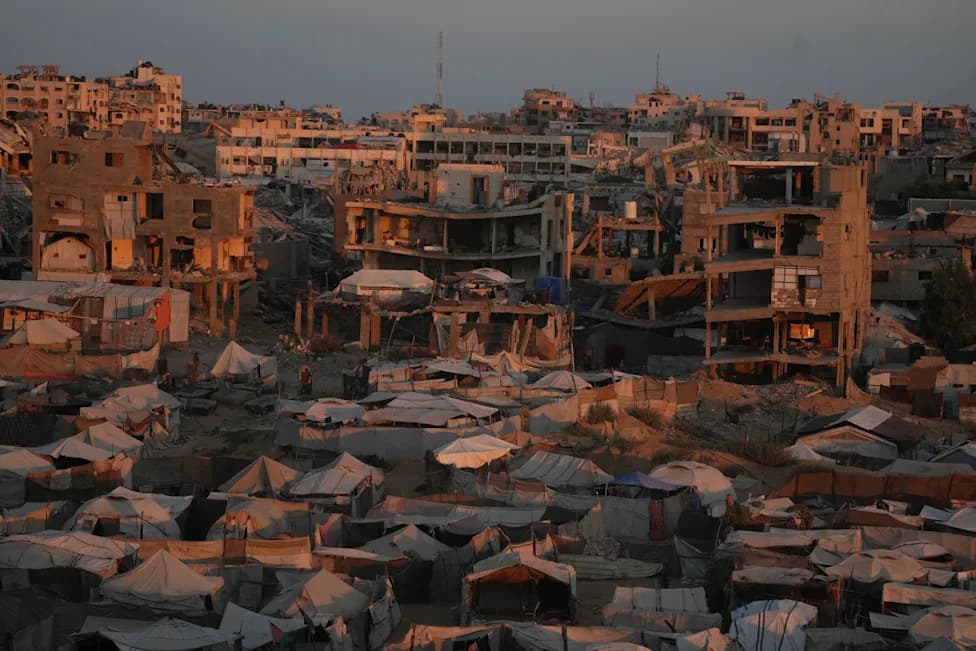
Residents of Deir al-Balah in central Gaza will vote Saturday in the first municipal elections in about 20 years, a development supporters call a return to local governance but critics fear could strengthen Hamas. Experts including Jonathan Schanzer and Ahmed Fouad Alkhatib warn that holding polls while disarmament remains incomplete risks legitimizing Hamas and undermining negotiated ceasefire goals. Reports suggest Hamas may hand over some police weapons, but it is unclear whether arms from its military wing would be included. Observers say verified disarmament and reduced patronage from actors like Iran are key to weakening Hamas’s influence.
Gaza’s First Local Vote In 20 Years Raises Fears Of Cementing Hamas Influence
Hamas influence looms over Gaza elections as experts warn vote could backfire
Residents of Deir al-Balah in central Gaza will go to the polls Saturday to elect local leaders for the first time in two decades — a step supporters say restores local governance but that critics warn could unintentionally reinforce Hamas’s political hold if the enclave’s wider disarmament conditions are not met.
Stakes and Warnings
Jonathan Schanzer, executive director of the Foundation for Defense of Democracies, told Fox News Digital that holding elections in Gaza while the situation remains unstable "often produces Hamas victories." He cited the 2006 U.S.-supported elections as an example of how poorly timed polls can produce unintended, long-term consequences.
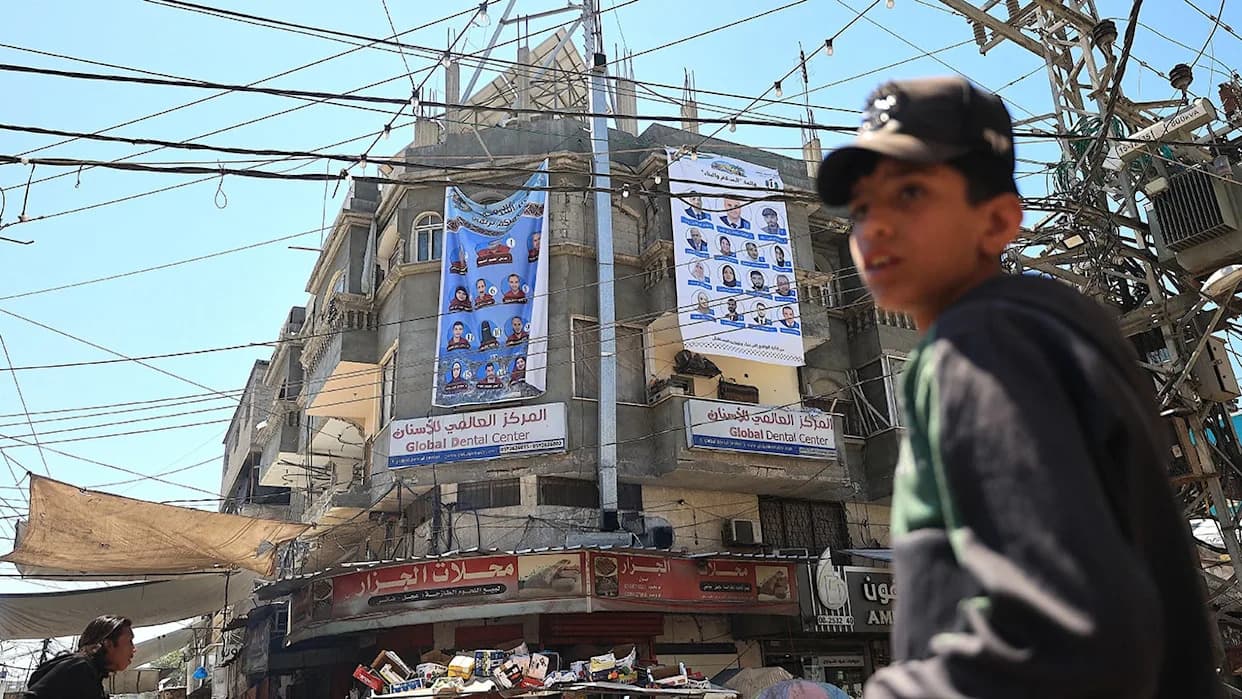
Election campaign banners showing candidates for the upcoming municipal elections hang on a building in Deir al-Balah in the central Gaza Strip April 21, 2026.(Getty Images)
"The Bush administration’s 2006 decision to advocate for elections led to Hamas winning, and it led to a standoff which led to a civil war," Schanzer said.
Concerns About Legitimacy And Safety
Four lists are contesting the Deir al-Balah municipal vote. Candidates were required to accept the Palestine Liberation Organization and previous agreements it has made, including recognition of the State of Israel and endorsement of a two-state solution, according to the Center for Peace Communications.
Nonetheless, observers have raised concerns about one list, "Deir al-Balah Unites Us," saying two of its candidates were photographed with Hamas officials or officers associated with the group. Analysts worry such ties could allow Hamas to retain de facto influence even if it does not hold formal power.
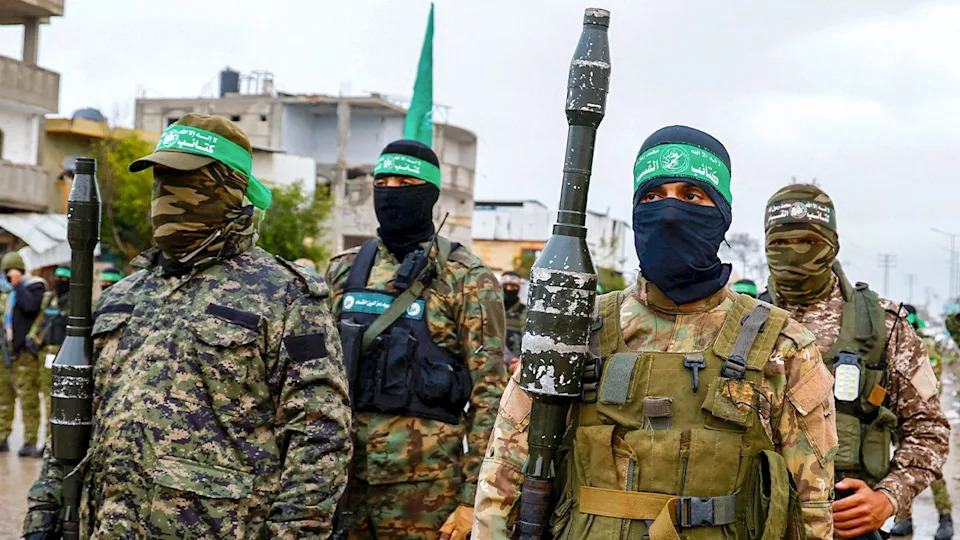
Hamas terrorists stand guard in Rafah in the southern Gaza Strip Feb. 22, 2025, during the handover of hostages as part of a ceasefire and hostage-prisoner swap deal with Israel.
Ahmed Fouad Alkhatib, a resident senior fellow at the Atlantic Council, wrote on X that "holding elections in Gaza at this time is extremely reckless and irresponsible," and warned that Gazans face daily repression for statements critical of Hamas: "They are being arrested, jailed, tortured, shot, and killed daily for social media posts and anything perceived as critical of Hamas," he said.
Disarmament Questions
Disarmament of Hamas is a central demand of the second phase of the ceasefire agreement negotiated under President Donald Trump’s framework. That process remains incomplete. Reports through March suggested Hamas has maintained or increased control in parts of Gaza by collecting taxes, operating schools and deploying police where it holds sway.
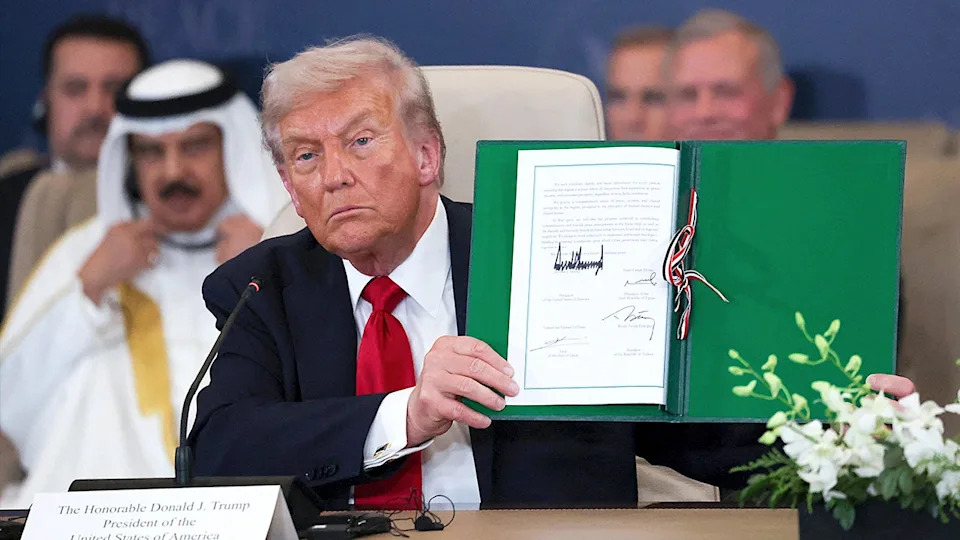
President Donald Trump holds up a signed agreement during a world leaders summit focused on ending the Gaza war in Sharm el-Sheikh, Egypt, on Oct. 13.
The New York Times reported on April 19 that two Hamas officials said they would relinquish thousands of weapons held by police and other security institutions, but they did not clarify whether weapons from Hamas’s military wing would be included. Schanzer cautioned that any partial surrender might be limited to heavier weapons while allowing large numbers of automatic arms to remain in circulation.
On The Separation Between Political And Military Wings
Schanzer dismissed the notion that Hamas’s political and military wings operate as independent entities. "That is a fiction," he said, arguing that treating the wings as separate has been a Western construct used to justify political engagement or to rationalize holding elections in Gaza.
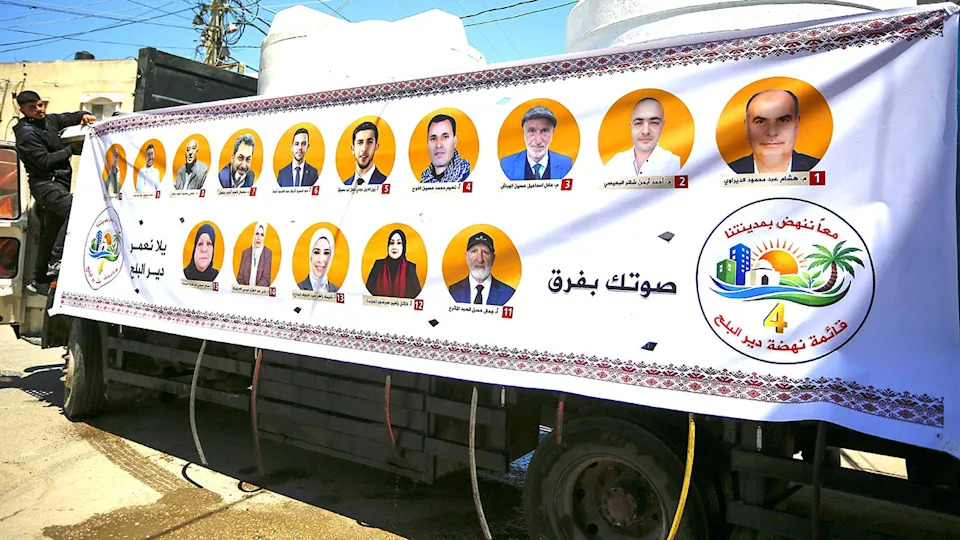
An election campaign starts in the city of Deir al-Balah, Gaza on April 12, 2026, as part of the local elections scheduled for April 25.
Regional Factors And The Path Forward
Analysts note that weakening outside patrons such as Iran could undercut Hamas’s capabilities and morale. "The psychological impact of their top patron being defeated on the battlefield, I can’t overstate how important that event could be," Schanzer said.
With control on the ground divided and the ceasefire’s disarmament steps unfinished, many experts urge caution about proceeding with elections now. The Trump administration did not respond to Fox News Digital’s inquiries about whether a partial handover of weapons would satisfy ceasefire conditions or whether Washington would seek to delay the vote until there is greater stability in Gaza.
Implications: Local elections may restore civic processes at the municipal level, but without verified disarmament and clearer safeguards, they risk legitimizing actors who continue to exercise coercive power. Observers say international actors should carefully weigh timing, verification and safeguards before endorsing governance steps in Gaza.
Help us improve.