Researchers have resolved the long-standing “dolomite problem” by combining computational modeling with transmission electron microscopy to reproduce dolomite growth under lab conditions. Simulations showed that periodic, mild undersaturation helps dissolve high-energy defects that normally arrest crystal growth. The team then used pulsed TEM electron beams to accelerate defect removal and produced roughly 300 atomic layers (~100 nm)—far beyond the previous limit of five layers. This approach could enable faster, controlled dolomite synthesis with potential applications in batteries, semiconductors, and solar technology.
Researchers Crack a 200-Year-Old Dolomite Mystery — 300 Atomic Layers Grown in the Lab
Scientists Solved a 200-Year-Old Mineral MysteryUCG - Getty Images
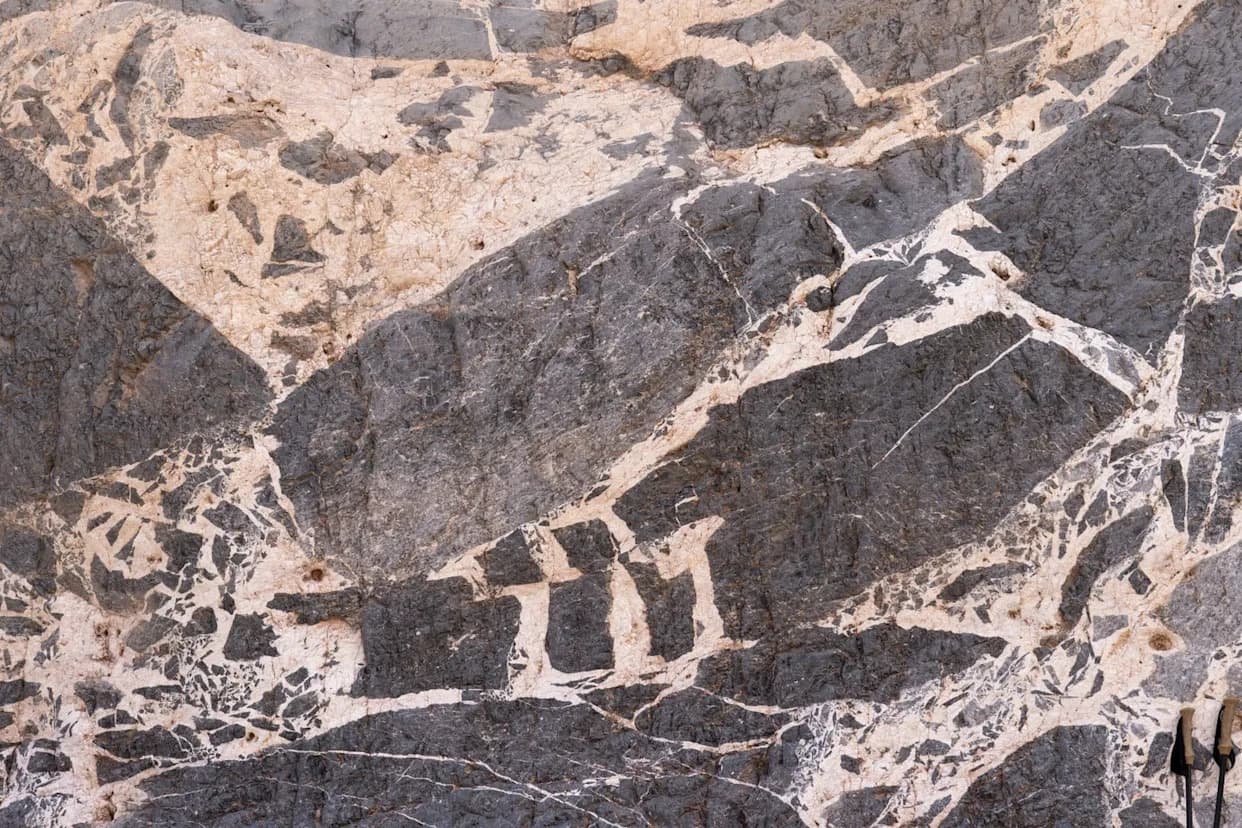
Dolomite, a calcium–magnesium carbonate that forms when magnesium-rich waters alter limestone, has long been abundant in the rock record but famously resisted synthesis in laboratory settings. For about two centuries scientists have struggled to reproduce its crystal growth under ambient conditions because calcium and magnesium atoms tend to incorporate in a disordered way, producing high-energy defects that halt further growth.
From Ancient Seas to a Modern Puzzle
Hundreds of millions of years ago, the remains of marine organisms — tiny skeletal fragments and shells — accumulated on shallow seabeds and, after burial and compaction, became limestone. Later, magnesium-rich waters percolating through that limestone could recrystallize it as dolomite. Most natural dolomite is found in rocks older than roughly 100 million years; fresh growth is rare because adding each crystal layer requires atoms to attach in a precise, ordered pattern.
Why Dolomite Won't Grow Easily
When magnesium and calcium are present together during growth, they often occupy lattice sites randomly, creating structural defects. These defective regions are higher in energy and impede further crystal formation. In nature, intermittent processes such as tides and rainfall can selectively dissolve unstable atoms and remove defects, enabling slow, long-term growth. Without such periodic flushing, adding even one layer could take millions of years — which helps explain why laboratory attempts historically failed.
Modeling + Microscopy: The Breakthrough
To solve the problem, Wenhao Sun and colleagues at the University of Michigan’s PRISMS Center trained computational models to predict the energetics of specific atomic arrangements during dolomite formation. Their simulations showed that constant high supersaturation reproduces the familiar defective structures, while fluctuating conditions — brief periods of mild undersaturation followed by re-supersaturation — can promote the selective dissolution of high-energy defects.
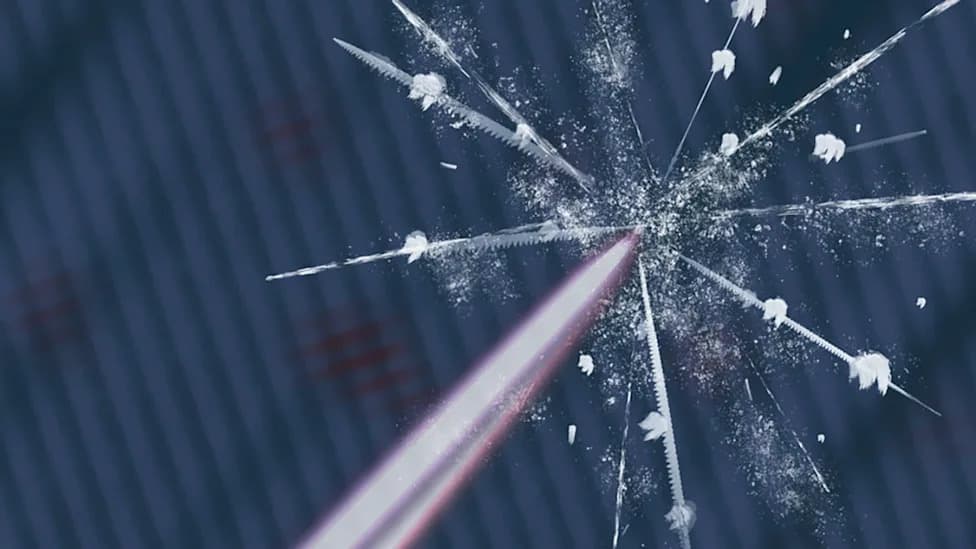
To test the idea experimentally, the PRISMS team collaborated with Yuki Kimura and Tomoya Yamazaki at Hokkaido University. The researchers exploited an unintended side effect of transmission electron microscopy (TEM): electron beams can split water molecules (radiolysis), creating reactive species that make the local environment temporarily corrosive. By pulsing the electron beam over the growing crystal for roughly two hours, they accelerated the removal of misplaced atoms and slowed defect growth, effectively mimicking natural cycles of dilution and evaporation.
“The apparent contradiction between the massive deposits of dolomite in nature and its inability to grow from supersaturated solutions near ambient conditions is a long-standing mystery known as the ‘dolomite problem,’” Sun said. “By deliberately introducing periods of mild undersaturation, one can facilitate the dissolution of defects, whose dissolution would otherwise proceed very slowly under constant high supersaturation.”
Results and Significance
Using the combined approach of predictive modeling, intermittent undersaturation, and TEM-driven defect removal, the teams produced roughly 300 atomic layers of dolomite in the lab — a film about 100 nanometers thick, which is invisible to the naked eye but dramatically exceeds previous lab attempts that could not surpass five layers. This acceleration of dolomite formation suggests researchers can bypass geological timescales and produce controlled dolomite films on practical timescales.
Faster, controllable dolomite synthesis could enable new or improved uses for the mineral in industries such as batteries, semiconductors, and solar technologies, where finely tuned calcium–magnesium carbonate structures might be beneficial.
“Defective regions are higher in energy than pristine regions and thus will dissolve faster and grow slower, which over time results in a net flux of atoms from defective to pristine sites,” Sun added, summarizing the physical principle behind the technique.
By combining theory and experiment, the teams have substantially narrowed the gap between geological processes and laboratory synthesis, turning a centuries-old curiosity into a practical materials science advance.
Help us improve.