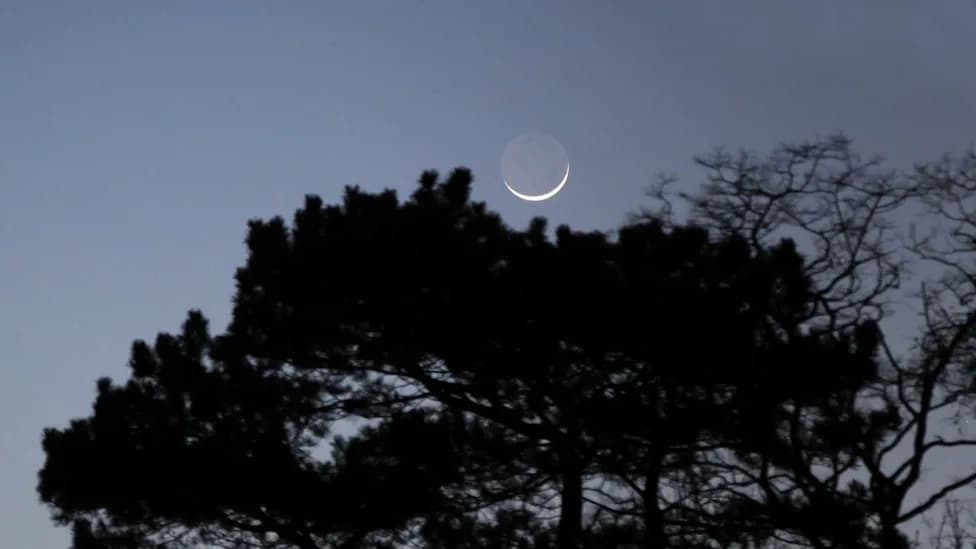
The Moon will be visible in daylight from April 22 until the full Moon on May 1 and will appear near Jupiter on April 22 at midday. The Moon rises and sets about 50 minutes later each night, so different phases appear in daytime or nighttime skies depending on where you are. U.S. observers can watch it arc high overhead by day and move into the southwestern sky at sunset, setting around midnight. Daytime observation with binoculars or a telescope is safe if you avoid pointing optics at the Sun and keep instruments shaded.
How to See the Moon in Daylight This Week — Look Near Jupiter on April 22
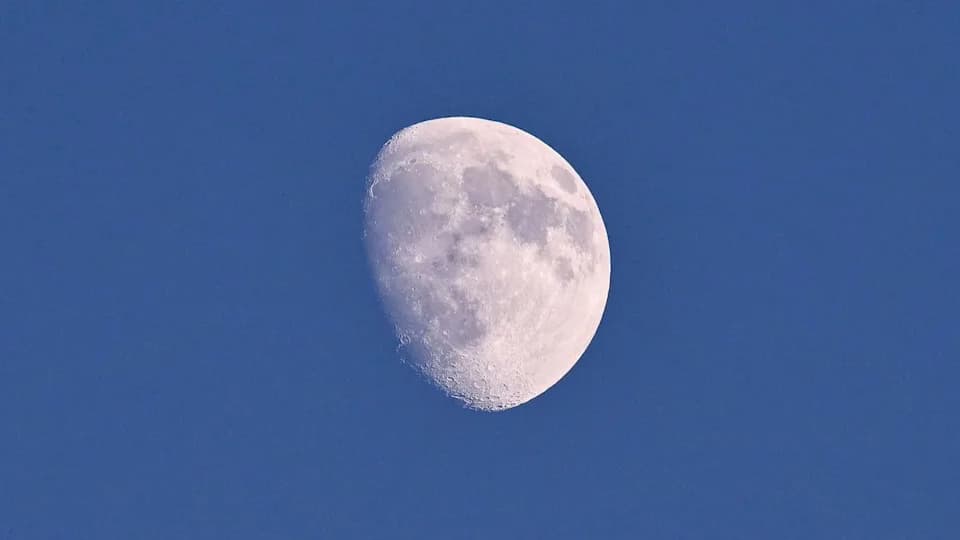
A waxing moon shines in the daytime sky over Italy. | Credit: Photo by Domenico Cippitelli/NurPhoto via Getty Images
Don't miss the Moon lighting up the daytime sky this week — it will be especially easy to spot near Jupiter on April 22.
When and Where to Look
The Moon will be visible in daylight from April 22 through the next full moon phase on May 1. On April 22 at midday, look toward the eastern sky to find a waxing crescent Moon about 30% illuminated and low on the horizon, with its lower limb still in shadow. Jupiter will sit roughly 5° beneath the lunar crescent — about the width of three middle fingers held at arm's length — though binoculars can help you pick it out against daytime glare.
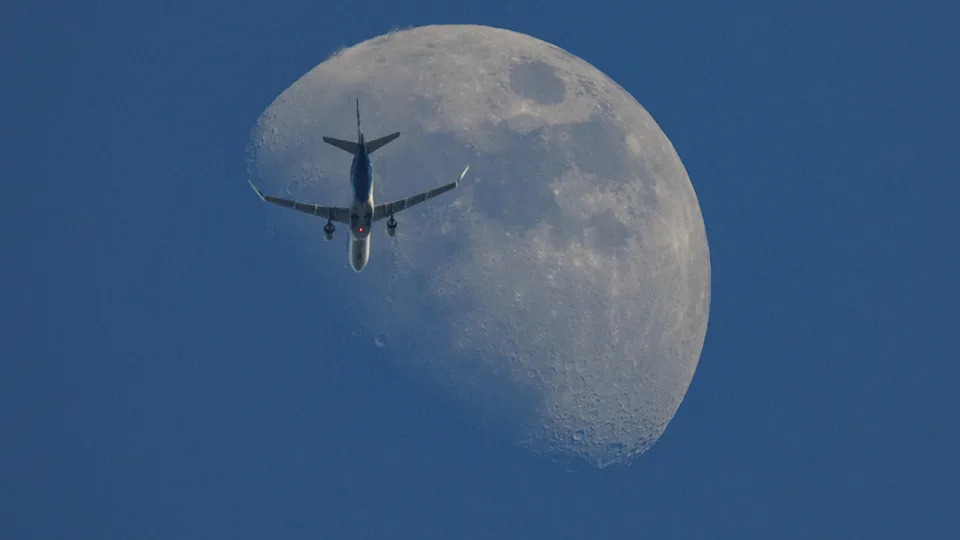
A commercial jet soars in front of a waxing lunar disk in the skies over California. | Credit: Photo by Kevin Carter/Getty Images
The Moon rises and sets roughly 50 minutes later each night (local times vary by location), so its presence in daytime or nighttime skies depends on its phase. For example, a first-quarter Moon tends to rise near midday and set near midnight, making it easy to spot in the afternoon, while a last-quarter Moon rises around midnight and can remain visible after sunrise.
What U.S. Observers Will See
Observers across the United States can watch the Moon trace a gentle arc high overhead during daytime hours before moving into the southwestern sky at sunset and setting around midnight. Exact appearance and times depend on your latitude and longitude, so check local moonrise and moonset times for precise viewing windows.
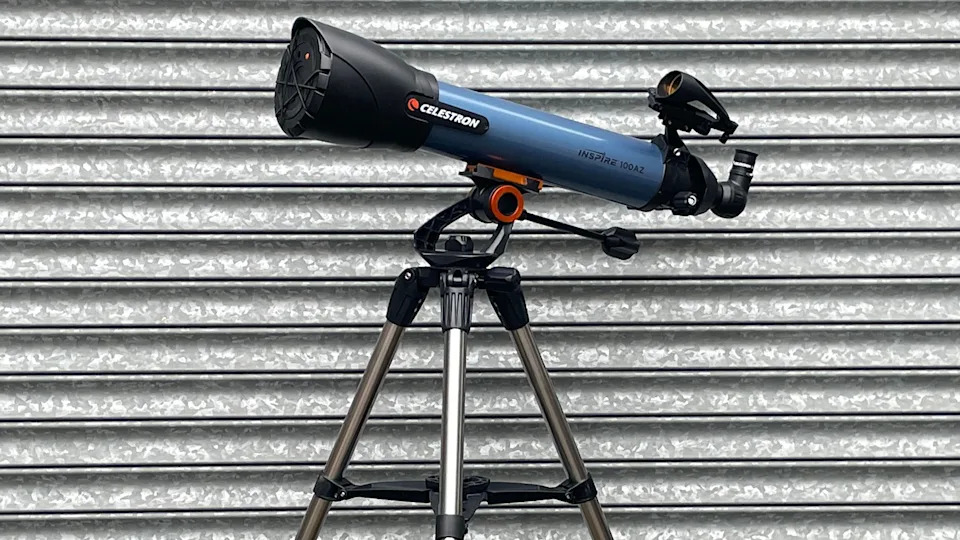
A side profile view of the telescope against a corrugated iron backdrop
Using Binoculars or a Telescope — Safety First
Viewing the Moon with binoculars or a telescope during daylight is safe as long as you never point optics toward the Sun. Looking at or through instruments aimed near the Sun can cause immediate, permanent eye damage. Put your telescope or binoculars in the shade, keep a large object (a building, wall, or tree) between your optics and the Sun, and constantly monitor the Sun's position as it moves westward.
What You'll See
Even with the naked eye you can make out the dark lunar maria — broad basaltic plains formed when ancient lava flooded impact basins. Through binoculars or a small telescope you can see more detail: craters, rilles, and dramatic shadows along the terminator (the day/night boundary) that highlight the Moon's topography.
Equipment Suggestions
The Celestron Inspire 100AZ is a budget-friendly beginner scope that delivers crisp lunar and planetary views and can serve as a first step into basic astrophotography. If you want to explore further, consider our guides to the best telescopes and binoculars for beginners, plus tips on photographing the Moon and recommended cameras and lenses for astrophotography.
Editor's Note: If you capture an image of the Moon in the daytime sky and want to share it with Space.com readers, send your lunar photo(s), comments, name and location to [email protected].
Help us improve.