The bombardier beetle defends itself by ejecting a near‑boiling, benzoquinone‑rich spray produced in paired abdominal glands. A 2025 Royal Society Open Science study of Brachinus crepitans shows hydrogen peroxide, hydroquinone and gland‑specific enzymes (catalases and peroxidases) are stored separately and mixed only when needed; glucose is the stable precursor. A 2022 PeerJ experiment found 96.3% of bullfrogs rejected beetles after being bombed, while 77.8% ate beetles that could not discharge. The evidence supports a gradual evolutionary pathway from simple chemical defenses to the controlled explosive mechanism observed today.
How the Bombardier Beetle Built a Near‑Boiling Chemical Defense — Step by Step
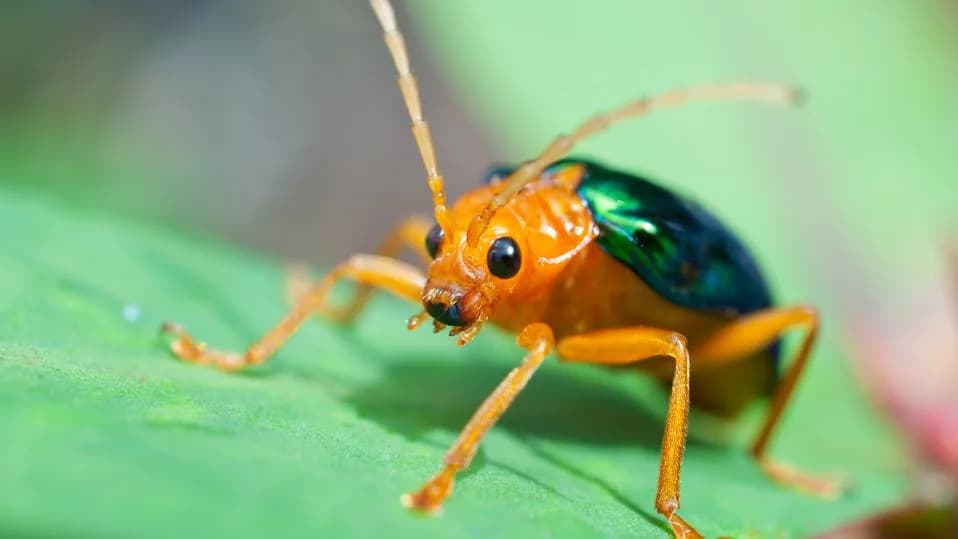
The beetle that ‘shouldn’t exist’ turns out to be a case study in how complex traits actually evolve. Here’s how it came to be, step by meticulous step.getty
Bombardier beetles (family Carabidae) hide one of nature’s most dramatic defense systems beneath an unassuming exterior: when threatened, they eject a near‑boiling, benzoquinone‑rich spray from the tip of the abdomen with an audible pop. That externally directed, chemically reactive discharge is produced by a controlled internal reaction rather than a simple “acid blast.”
How the System Works
Recent molecular work (a 2025 study in Royal Society Open Science) mapped the paired abdominal glands of Brachinus crepitans using transcriptomics and proteomics and revealed a precise design principle: reactive precursors and the enzymes that activate them are stored separately and only mixed when the beetle is threatened.
Key reactants include hydrogen peroxide and hydroquinone. Gland‑specific enzymes—primarily catalases and peroxidases—catalyze rapid oxidation when compartments are combined. That conversion turns hydroquinones into irritant benzoquinones while hydrogen peroxide decomposes, releasing oxygen and heat. The combined effect is a pressurized, short‑duration reaction that expels a hot spray often reaching about 100 °C (212 °F), delivered with remarkable aim from the abdomen’s tip.
Biochemical Safety And Efficiency
One elegant finding from the 2025 study is metabolic economy: glucose serves as a stable precursor for producing both hydrogen peroxide and hydroquinone. By synthesizing unstable reactants from a safer stored molecule, the beetle avoids the risks of hoarding volatile chemicals. Safety is further ensured by strict anatomical compartmentalization: precursor compounds and enzymes occupy separate glandular regions and are only forced into a dedicated reaction chamber by muscular action during an attack.
The reaction chamber is specialized to tolerate heat and pressure, and the brief discharge is vented outward in a directional jet that protects internal tissues. Enzyme localization within glands minimizes the chance of accidental activation elsewhere in the body.
Real‑World Effectiveness
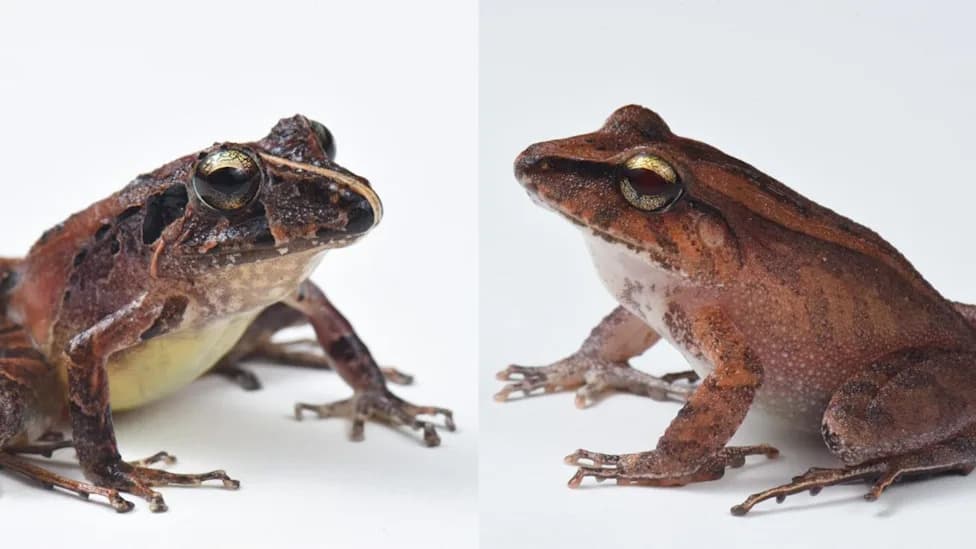
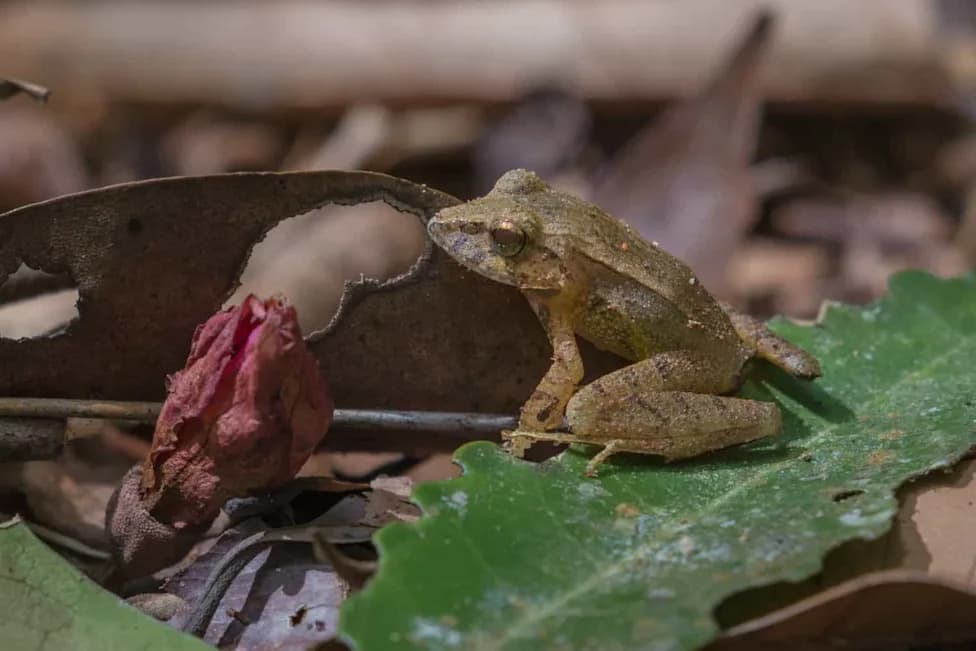
Field‑style experiments illustrate how effective this defense is. A 2022 PeerJ study examined encounters between invasive juvenile bullfrogs (Lithobates catesbeianus) and Pheropsophus occipitalis jessoensis in Japan. Of 27 bullfrogs presented with live beetles, 26 (96.3%) rejected them before swallowing, and 88.9% of those rejections occurred after being bombed. When beetles were experimentally prevented from discharging, 77.8% of frogs successfully ate them. Those outcomes show how a reliable chemical deterrent quickly teaches predators to avoid the beetles, conferring a clear survival advantage.
Evolutionary Pathways: From Simple Secretions To Controlled Explosions
Some critics have argued that the bombardier beetle’s mechanism is an example of “irreducible complexity,” claiming intermediate stages would be useless or self‑destructive. That argument misunderstands both the chemistry and evolutionary processes. Hydrogen peroxide and hydroquinone do not spontaneously detonate when mixed, and many beetles already use quinone‑based or irritant secretions as defenses.
Evolutionary biologists propose a gradual pathway: simple chemical secretions provided some protection; separating storage compartments increased safety; incremental enzymatic improvements sped and strengthened quinone production; and adaptive changes in peroxidase and related genes further enhanced the reaction. The 2025 molecular data supports such adaptive modifications in otherwise conserved enzyme domains, consistent with repurposing existing proteins rather than inventing entirely new ones.
Why This Matters
The bombardier beetle is a vivid case study in evolutionary tinkering: ordinary molecules and glandular structures can be refined over time into an extraordinary, targeted defense. Understanding the anatomy, chemistry and evolutionary history of this system not only answers a longstanding natural history question, it also illustrates broader principles about adaptation, constraint and innovation in biology.
Takeaway
What looks like a marvel of sudden design is better explained as a stepwise refinement of commonplace biological materials—safe storage of precursors, localized enzymes, and mechanical control—ultimately producing one of evolution’s most memorable defensive solutions.
Help us improve.