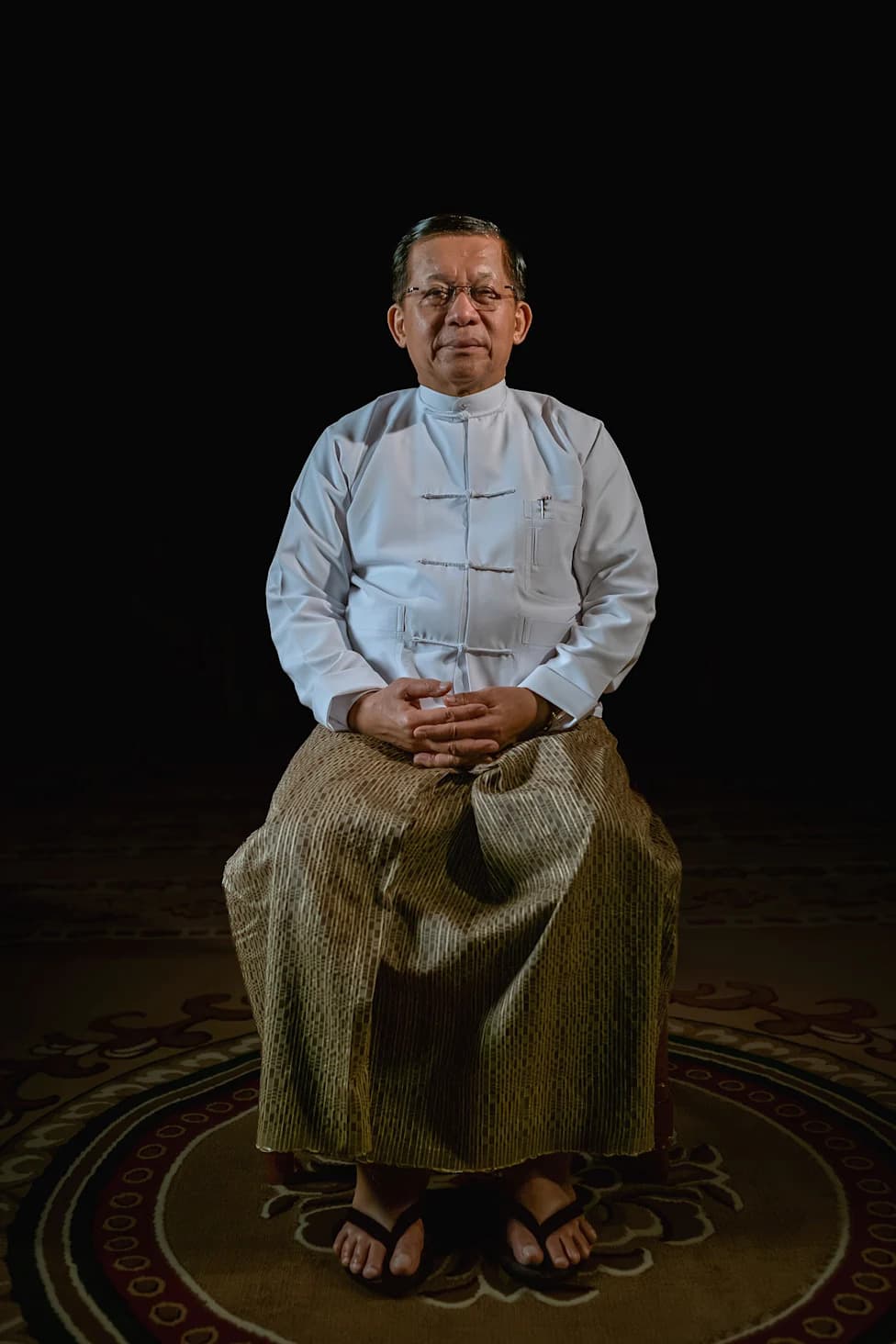
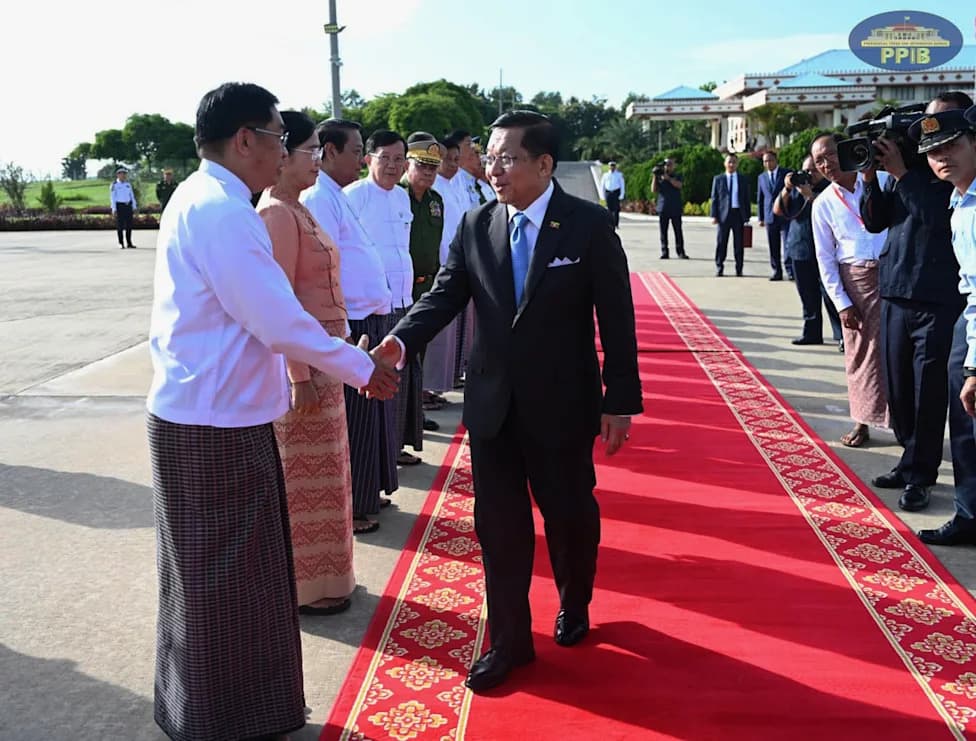
Myanmar's junta leader-turned-president, Min Aung Hlaing, has invited armed groups not party to the pre-coup ceasefire to peace talks by July 31, saying discussions should begin within 100 days. Key insurgent groups including the Karen National Union and the Chin National Front swiftly rejected the offer, citing the KNU's withdrawal from the Nationwide Ceasefire Agreement after the 2021 coup and the CNF's demand for a federal democratic system free of military control. The outreach comes as Myanmar remains mired in a multi-year civil conflict and the new administration struggles for international legitimacy.
Myanmar Junta Invites Rebels To Talks By July 31 — Key Groups Reject Offer
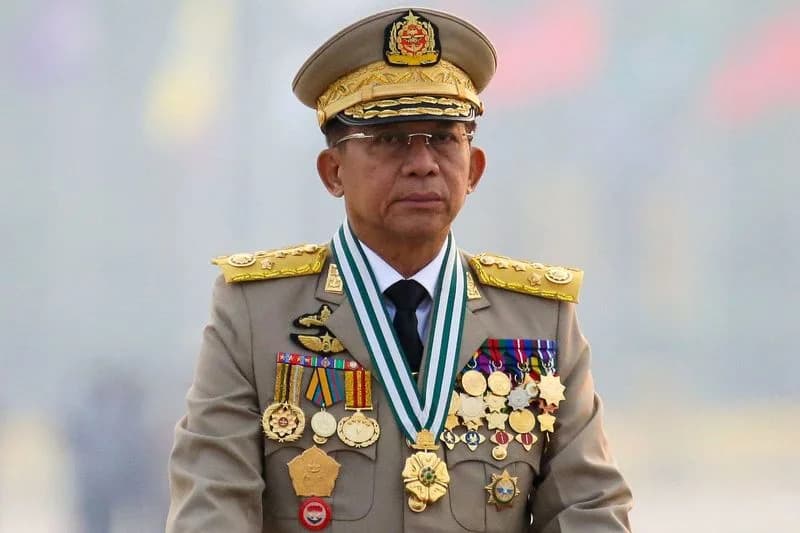
FILE PHOTO: Myanmar's junta chief Senior General Min Aung Hlaing, who ousted the elected government in a coup on February 1, presides an army parade on Armed Forces Day in Naypyitaw, Myanmar, March 27, 2021. REUTERS/Stringer/File Photo
Myanmar's military-backed president, Min Aung Hlaing, has called on armed opposition groups that are not party to the pre-coup ceasefire to join peace talks to be held by July 31, saying discussions should begin within 100 days. Two prominent groups — the Karen National Union (KNU) and the Chin National Front (CNF) — immediately rejected the invitation.
Government Offer and Rebel Responses
State media reported that Min Aung Hlaing, who led the 2021 coup that plunged Myanmar into a prolonged civil conflict, told a government meeting that signatories of the pre-coup Nationwide Ceasefire Agreement (NCA) and other armed groups should engage in dialogue by the specified deadline.
"For groups that have not yet engaged in dialogue and negotiation, we also invite them to come participate in discussions by the final deadline of July 31," Min Aung Hlaing said.
The KNU dismissed the outreach. KNU spokesperson Saw Taw Nee said the group formally withdrew from the NCA after the 2021 coup and has no intention of returning to negotiations under that framework.
CNF spokesman Salai Htet Ni said the CNF is fighting for a federal democratic system free from military influence and therefore has "nothing to discuss with those who currently call themselves an 'administration' after merely changing their appearance from the military."
Wider Context
Myanmar has been engulfed in unrest since the February 2021 coup that ousted the elected government of Aung San Suu Kyi. The Nobel laureate was later sentenced to 27 years in prison on charges her supporters describe as politically motivated; authorities last week reduced that sentence by one-sixth.
Earlier this month, Myanmar's parliament elected Min Aung Hlaing as president following a tightly controlled vote criticized by Western governments and opponents as an attempt to preserve military rule under a civilian veneer. The new administration has been recognised by only a small number of countries, limiting its international legitimacy while armed conflict continues across large areas of the country.
What Comes Next
The government has set a concrete timeline for talks, but the immediate rejections by major armed groups underscore the political and trust deficits that complicate any negotiation effort. Observers say any meaningful progress will require confidence-building measures, impartial mediation and guarantees that go beyond the pre-2021 ceasefire framework.
Reporting Note: This account is based on Reuters reporting.
Help us improve.