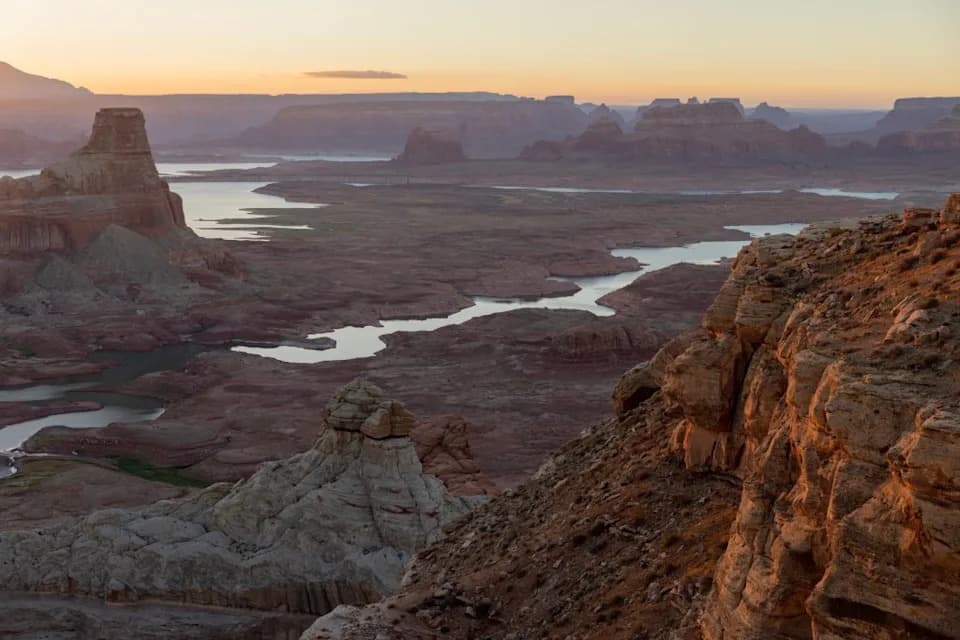
A new geological study revives a decades-old theory that an ancient lake spillover about 6.6 million years ago helped the Colorado River carve the Grand Canyon. Researchers compared zircon crystals from sandstone in the Bidahochi basin and the Grand Canyon and found matching geochemical fingerprints, and they identified ripple-marked layers consistent with strong river inflow into standing water. Some geologists remain skeptical, arguing alternative routes across the Kaibab Arch or different erosion scenarios could explain the observations. Additional fieldwork and analyses are needed to test the lake-spillover hypothesis further.
New Study Revives 1930s Idea: Ancient Lake Spillover May Have Helped Carve the Grand Canyon
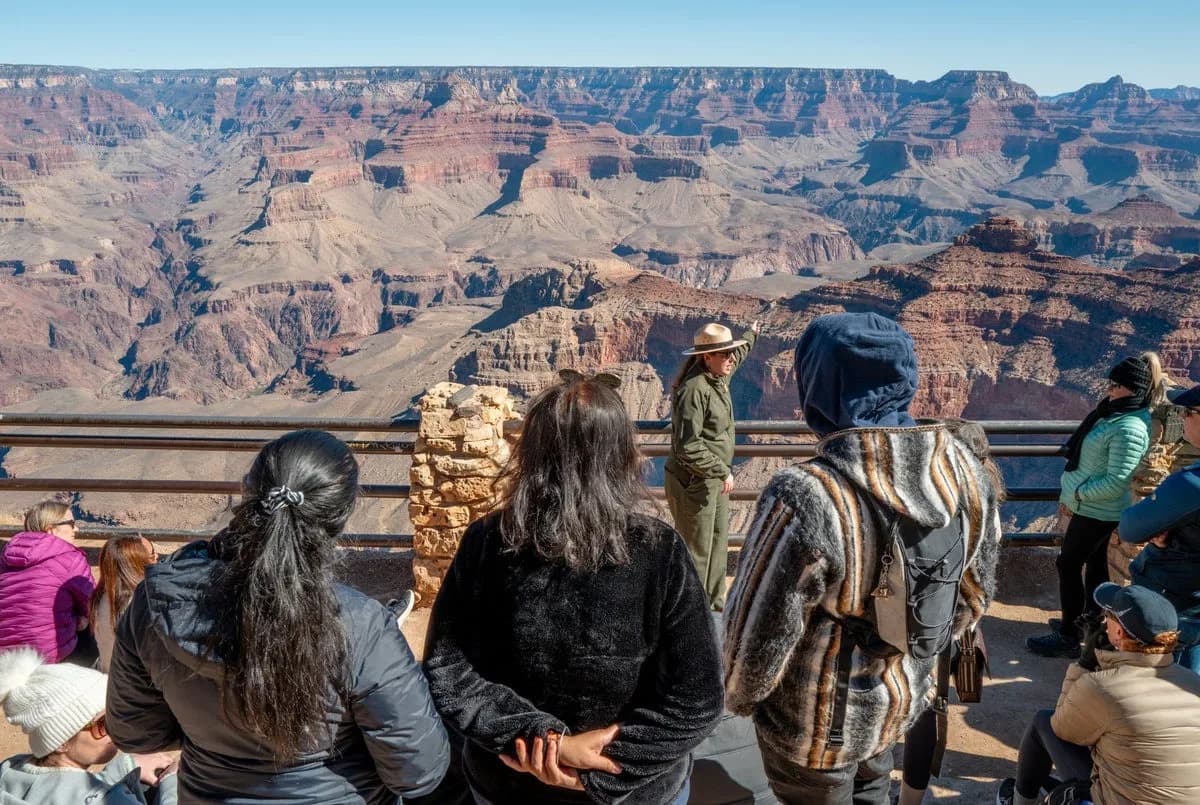
There’s a new theory about what helped form one of America’s grandest natural wonders
Northern Arizona’s Grand Canyon, one of the nation’s most dramatic natural features, stretches roughly 277 miles along the Colorado River’s 1,450-mile course. Geologists agree the canyon formed largely through river erosion beginning about 5–6 million years ago, but the detailed sequence of events and mechanisms remain debated.
New Evidence Supports an Old Hypothesis
A new study presents fresh support for a theory first proposed in the 1930s: the Colorado River may have begun cutting the Grand Canyon after an ancient lake in the region overflowed about 6.6 million years ago. The researchers argue that as water drained into the broad Bidahochi basin, the basin filled and eventually spilled over the Kaibab Arch — a high divide between Arizona and Utah — channeling water and sediment into what would become the Grand Canyon.
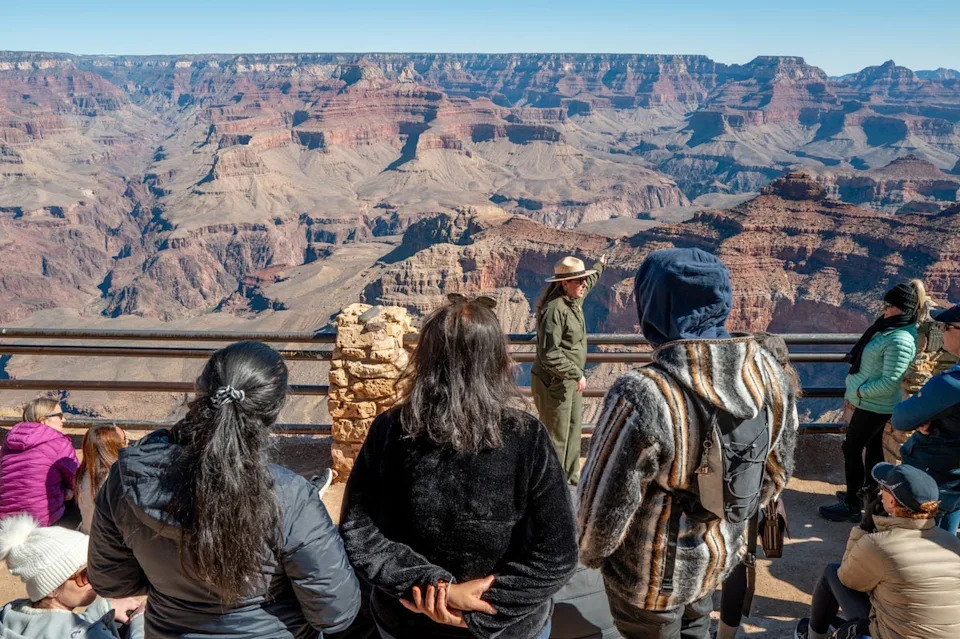
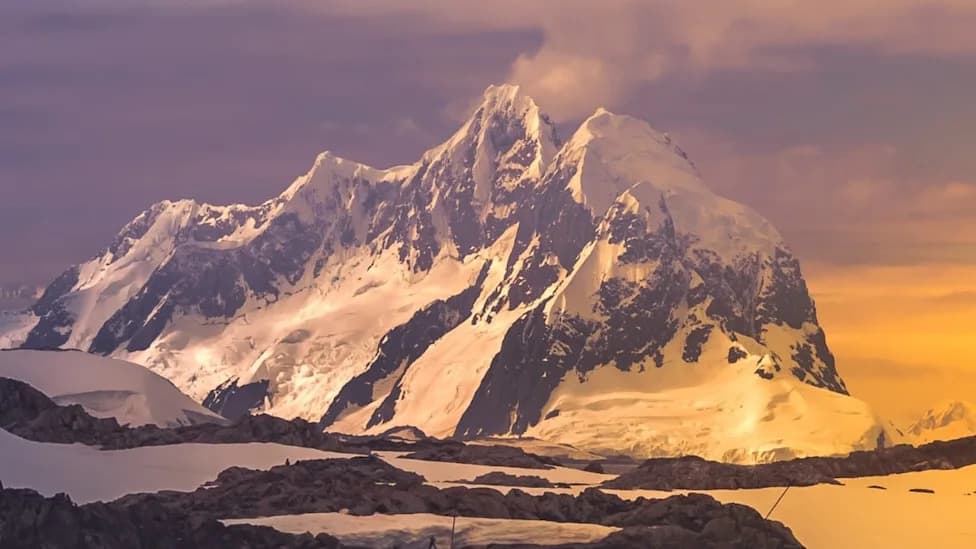
How the Grand Canyon formed has been a hot topic of debate for decades. Scientists say they’ve found new evidence to support one theory (Getty Images)
To test this scenario, the team compared sandstone samples from the Bidahochi basin and the Grand Canyon. They focused on microscopic zircon crystals preserved in the sediments. Zircons form in cooling volcanic magma and remain chemically robust over geologic time, making them useful "time vaults" that record both age and source information for transported sediments.
Using laser-based geochemical analyses, the scientists identified zircon signatures in the Bidahochi sediments that match those previously linked to ancestral Colorado River deposits. The roughly 6.6-million-year-old basin sediments show the same zircon fingerprint as older Colorado River sediments, suggesting the river contributed water and sediment to the basin before any downstream spillover carved the canyon.
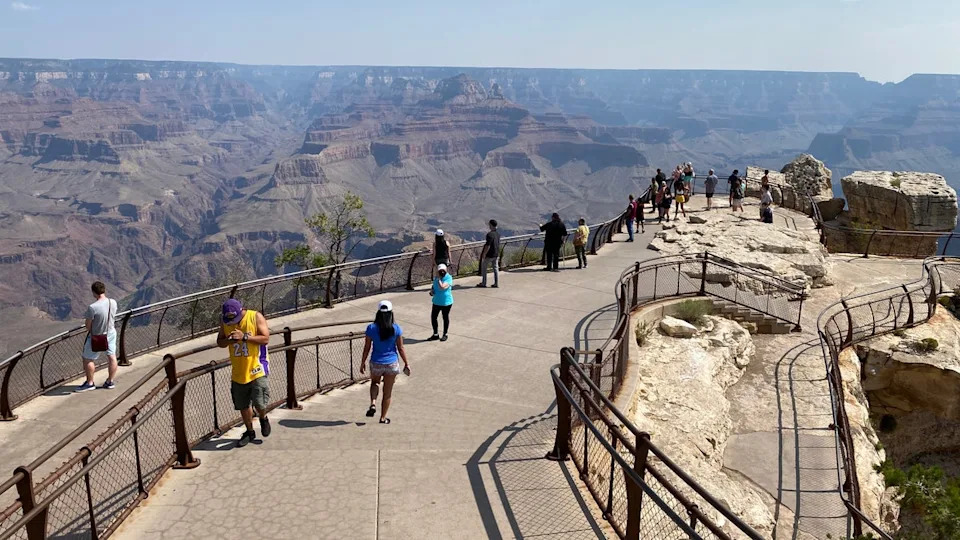
The Grand Canyon only stretches over 277 miles. Whereas, the Colorado River spans over 1,400 miles (AFP via Getty Images)
Additional stratigraphic evidence strengthens the case: rock layers from the same interval exhibit ripple structures consistent with strong river currents entering standing water, implying a robust fluvial inflow into a lake environment rather than only quiet lake deposition.
Skepticism and Alternative Interpretations
Not all experts are convinced. Karl Karlstrom, a geologist at the University of New Mexico, told Scientific American that he doubts the river created a high-standing lake as proposed, arguing that if an older canyon had already cut across the Kaibab Arch, water would not have pooled to the elevations suggested by the study. He said key details of the lake-spillover scenario remain untested.
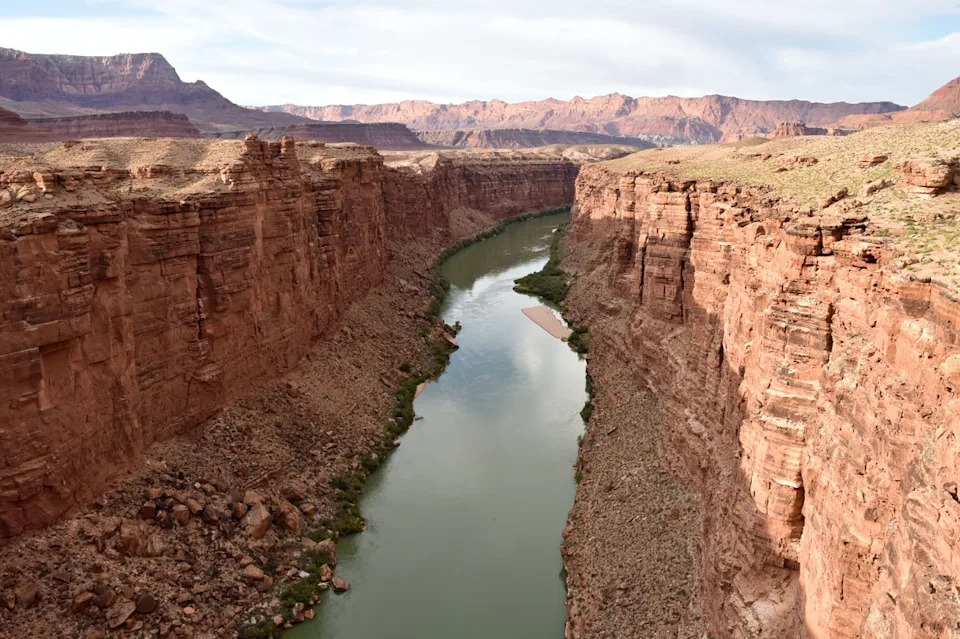
Just how the river reached the Grand Canyon is still up for debate, including how high the water from the Bidahochi basin would have to reach to flow into the canyon (AFP via Getty Images)
Matthew Heizler, a geochronologist at the New Mexico Institute of Mining and Technology, noted that a forthcoming paper further links Bidahochi deposits to the canyon but suggests that preexisting notches in the Kaibab could have allowed river access to the canyon without the lake rising as high as the new study proposes. Even so, Heizler and others describe the spillover mechanism as "perhaps the simplest" way to establish the modern course of the Colorado River through the Grand Canyon.
Why This Matters
While questions remain about the pace and exact processes of canyon incision — episodic flooding versus gradual erosion, or alternative drainage routes — the new zircon and sedimentary evidence provides a tangible link between the Bidahochi basin and the Grand Canyon. The findings revive a historical idea with modern analytical tools, illustrating how new geochemical techniques can illuminate ancient landscape evolution.
“In some ways, you could really think of it as the birth of the Colorado River that we know today,” said UCLA geologist John He, emphasizing how a continent-crossing river carrying water and sediment would have transformed regional ecosystems.
Further field work, refined stratigraphic tests, and more geochronological analyses will be needed to resolve remaining uncertainties. For now, the study offers a compelling step toward understanding how one of Earth’s grandest canyons came to be.
Help us improve.