Researchers at Cornell University estimate about 5.56 million ground-nesting bees live beneath East Lawn Cemetery in Ithaca, N.Y., based on emergence-trap sampling in spring 2023. The aggregation, mainly composed of Andrena regularis, spans roughly 6,500 square meters and rivals or exceeds previously recorded ground-nesting concentrations. The study underscores the ecological importance of cemetery habitats and the broader need to protect solitary, ground-nesting pollinators.
Researchers Find an Estimated 5.56 Million Bees Living Under a New York Cemetery — Possibly One of the Largest Aggregations Ever
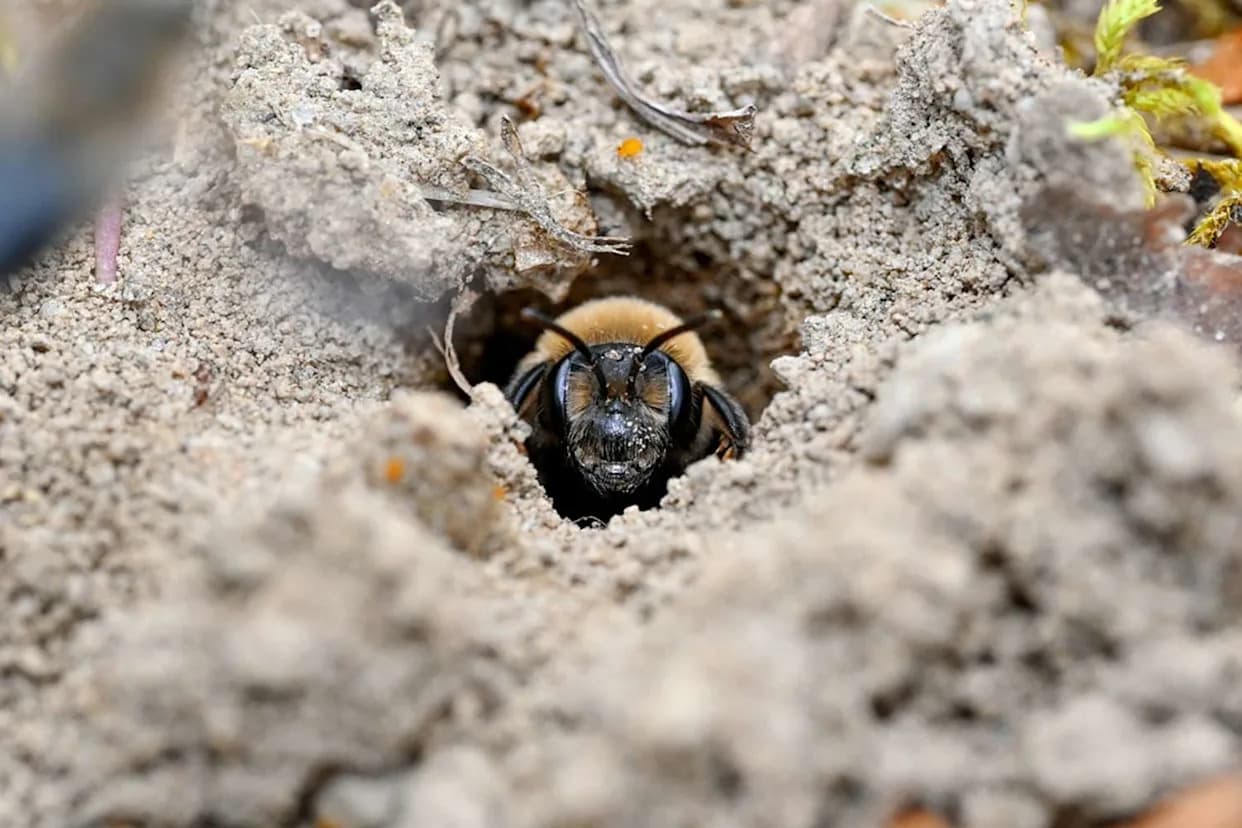
A bee in the East Lawn CemeteryCredit: Bryan Danforth
Researchers at Cornell University estimate that roughly 5.56 million ground-nesting bees inhabited the soil beneath East Lawn Cemetery in Ithaca, New York — a congregation the team calls an "extraordinary abundance." The findings were reported in the journal Apidologie based on field work conducted in spring 2023.
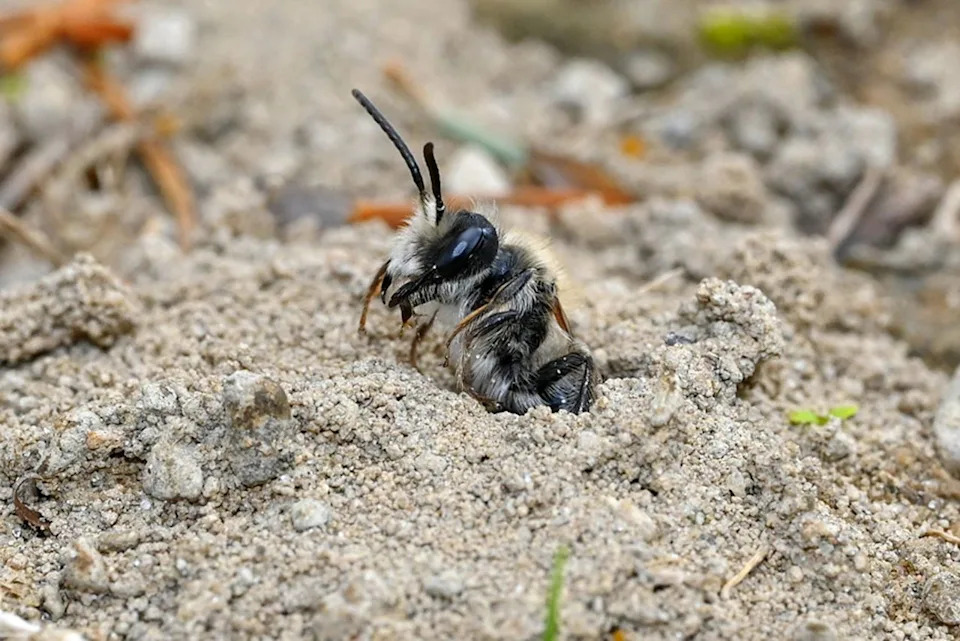
A bee in the East Lawn CemeteryCredit: Bryan Danforth
Study Methods and Findings
Over several weeks in spring 2023, entomologists deployed small emergence traps across an area of about 6,500 square meters to capture bees as they surfaced. By extrapolating from the trap catches, the team estimated that approximately 5.56 million bees emerged to mate and forage that season. The aggregation is primarily composed of the ground-nesting solitary bee Andrena regularis, a species known to occupy the site for more than 90 years.
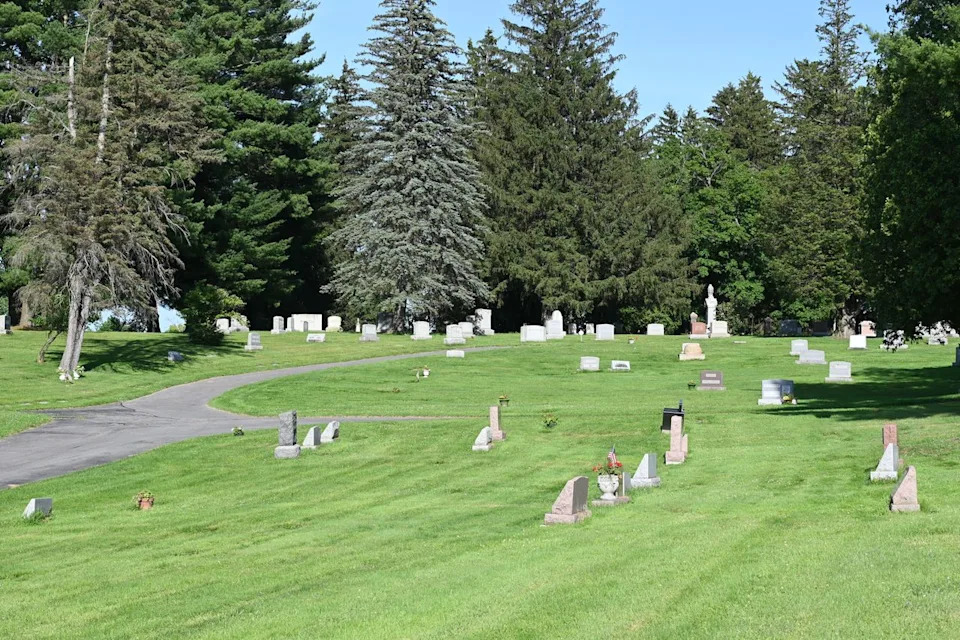
East Lawn Cemetery in Ithaca, N.Y.Credit: Bryan Danforth
“I was completely floored when we did the calculations,” said Bryan Danforth, an entomology professor at Cornell and the study's senior author, in an interview with Scientific American. “I have seen published estimates of bee aggregations in the hundreds of thousands, but I never really imagined that it would be 5.56 million bees.”
Context and Comparisons
For perspective, a typical honey bee colony contains about 20,000–40,000 worker bees and commonly occupies less than one hectare (10,000 square meters). On many apple farms there are typically two to three honey bee colonies per hectare — underscoring how dense the cemetery aggregation is compared with managed honey bee populations.
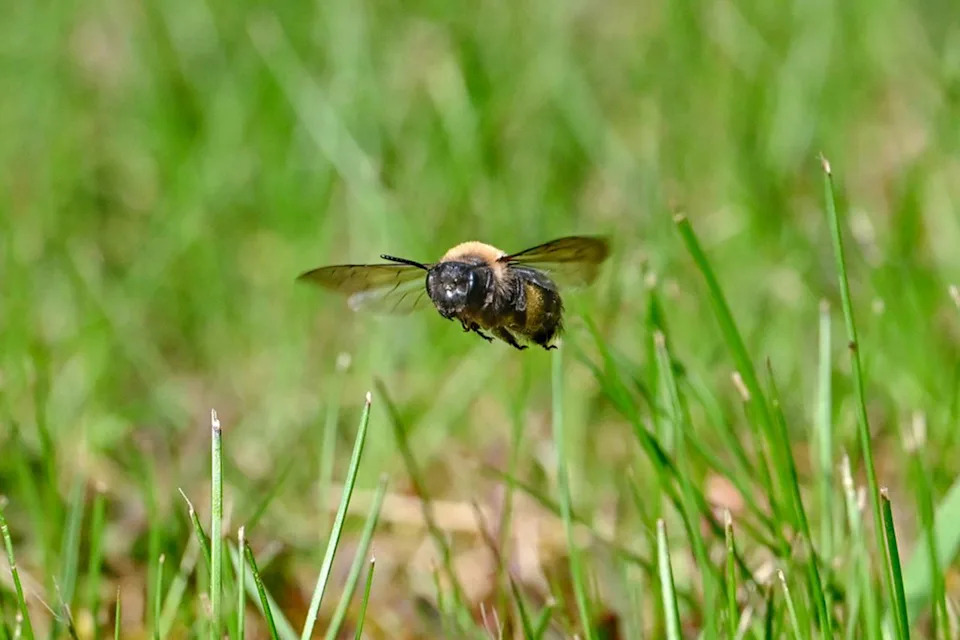
A bee in the East Lawn CemeteryCredit: Bryan Danforth
The Apidologie paper also cites historical records of other large ground-nesting aggregations, including an estimate of over 1.5 million Centris caesalpiniae emerging from a 1,290-square-meter site, a count of 651,400 Melissodes bimaculatus on a New York lawn, and roughly 13,500 Epicharis picta across 160 square meters in Brazil.
Why This Matters
Ground-nesting solitary bees are often overlooked but are "exceptionally important" pollinators, says Danforth. Large, long-standing aggregations in undisturbed green spaces — such as cemeteries with open, sparsely vegetated soil — can be critical refuges for these species.
The study comes amid broader concerns about pollinator health. Recent conservation efforts and technological advances — for example, researchers training a detection dog to sniff out a bacterium harmful to honey bee larvae — aim to protect both wild and managed bee populations. At the same time, surveys show ongoing high losses among commercial honey bee colonies, highlighting the need to preserve diverse pollinator habitats.
Takeaway
By documenting this unexpectedly large ground-nesting aggregation, the Cornell study highlights a hidden source of pollination services and the conservation value of seemingly ordinary urban and suburban green spaces.
Help us improve.