Summary: Yawning is an ancient, involuntary reflex involving a long inhalation, jaw gape and brief physiological shifts controlled by the hypothalamus and brainstem. Experimental evidence undermines the old oxygen theory and supports a thermoregulatory role: yawns often follow transient brain-temperature spikes and can be reduced by nasal or forehead cooling. Yawning also helps regulate arousal during sleep–wake transitions, and contagious yawning appears tied to social cognition and group synchronization.
Why We Yawn: Brain Cooling, Alertness, and Contagious Social Signals

It’s ancient, unstoppable and strangely contagious. Here’s what science now knows about the humble yawn, and why evolution never got rid of it.getty
You are reading this sentence, and there is a good chance that within the next thirty seconds you will yawn. That simple fact points to how deeply embedded and automatic yawning is in vertebrate biology.
What Is a Yawn?
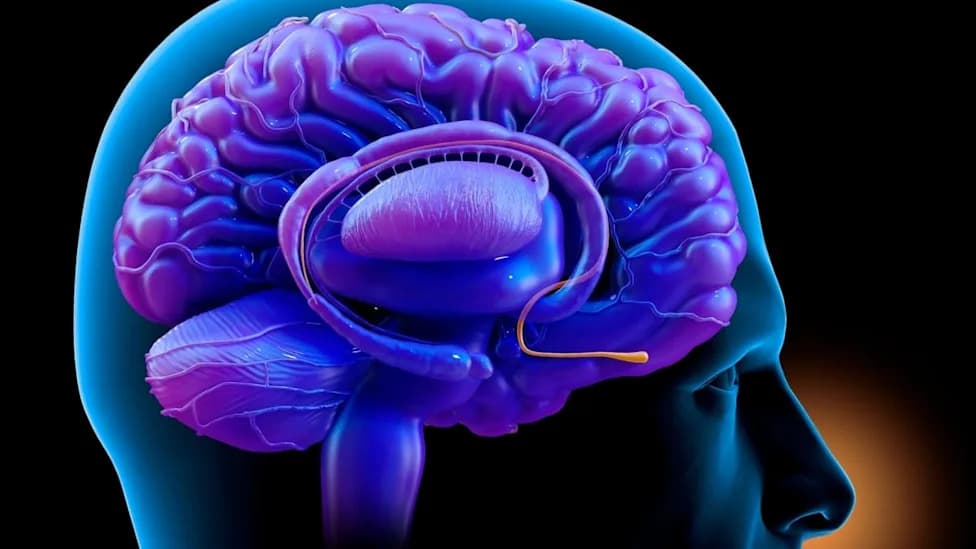
A yawn is an involuntary, highly coordinated reflex: a long inhalation, a wide opening of the jaw, a brief stretching of the eardrums, and a shorter exhalation. Eyes often narrow and the upper body may stretch. The sequence is governed by the hypothalamus and brainstem and modulated by neurotransmitters including dopamine, serotonin and oxytocin. Far from random, a yawn is a precisely timed neural event.
Ancient And Widely Conserved
Yawning appears extremely early in development — visible by the end of the first trimester and present in newborns — which suggests it is ancient and physiologically fundamental. Indeed, yawns occur across nearly all vertebrate groups: fish, reptiles, birds and mammals. This conservation across more than 400 million years of evolution implies yawning serves important functions.
Why It Wasn't About Oxygen
For decades the dominant idea was that yawning restores oxygen or expels carbon dioxide. Intuitively appealing, this ventilatory hypothesis fell apart under experimental scrutiny: exposing people to oxygen-rich or CO2-enriched air did not change yawning rates. The data forced researchers to look for better explanations.
Yawning As Brain Thermoregulation
In 2007 Andrew Gallup and Gordon Gallup Jr. proposed the thermoregulatory theory: yawns help cool the brain. The deep inhalation brings in cooler ambient air and the stretching alters cranial blood flow, acting like a brief heat exchanger that restores an optimal neural temperature.
Multiple lines of evidence support this idea:
- Behavioral experiments found that nasal breathing (which helps cool the brain via venous pathways) sharply reduced contagious yawning, whereas mouth breathing increased yawning incidence.
- Applying a cool pack to the forehead suppressed yawning, suggesting other cooling routes make yawning unnecessary.
- Physiological recordings in rats showed yawns coincide with transient spikes in frontal cortex temperature, with a return to baseline after yawning.
- Field observations showed people yawn more often in cooler outdoor temperatures and less when ambient air is as warm as body temperature, consistent with a thermal window effect.
- A 2021 comparative study across 101 species found that brain mass and neuron number predicted yawn duration, implying larger, more metabolically demanding brains require longer yawns for thermal or circulatory effects.
Arousal Regulation And State Transitions
Yawning is also linked to transitions in arousal: it commonly occurs on waking and just before sleep. Stretching the jaw and face likely activates the reticular activating system in the brainstem, helping shift the brain into higher or lower alertness. The thermal and arousal-regulation hypotheses are complementary: both explain why yawns cluster around moments of neural instability.
Contagious Yawning And Social Cognition
Contagious yawning — when seeing, hearing or even reading about yawns triggers one — affects more than 60% of healthy adults and has been documented in several social species, including chimpanzees, bonobos, dogs and some birds. It does not appear in human newborns but emerges years later, paralleling the development of social cognition and theory of mind.
Evidence links contagious yawning to empathy and social bonding: people with reduced social inference (for example, some individuals on the autism spectrum) show lower susceptibility, and observational work in primates finds stronger contagion among closely bonded individuals. This suggests contagious yawning helps synchronize group states of activity and rest.
Clinical Relevance
Abnormal yawning patterns show up in clinical contexts, including multiple sclerosis, migraine, epilepsy and anxiety disorders. Because yawning relates to brain temperature and arousal control, excessive or diminished yawning can provide a useful clinical clue to underlying dysregulation.
Conclusion
We still do not have a single definitive explanation that accounts for every aspect of yawning. But the accumulated evidence indicates yawning primarily helps regulate brain temperature and manage arousal, while contagious yawning reflects social-cognitive processes that promote group coordination. These ideas offer a richer and better-supported account than the old oxygen hypothesis.
Originally published on Forbes.
Help us improve.