Space is effectively silent because particles are too sparse to carry pressure waves. Scientists use sonification — mapping images and wave measurements into audible frequencies — to convert electromagnetic and plasma data into sound. Examples include NASA projects that turn light into musical notes and shifted pressure waves around black holes. Sonification offers both evocative experiences and practical scientific insights by revealing subtle patterns that visuals alone may miss.
Space Is Dead Silent — But Scientists Can 'Hear' Black Holes Through Sonification
(blackdovfx/iStock/Getty Images)
If you were to float, without a suit, through the vacuum of space, the moments before your death would be utterly silent. The interstellar medium is far too tenuous to carry pressure waves: sound needs particles to collide and pass along vibrations that eventually make eardrums vibrate.
That silence, however, does not prevent us from experiencing the cosmos audibly. Scientists use a range of sonification techniques to translate electromagnetic signals, plasma oscillations and other astrophysical measurements into sounds humans can hear. These audio renditions are often eerie and beautiful — and they can also be scientifically useful.
How We Turn Data Into Sound
Most astronomical data arrive as electromagnetic radiation (radio waves, visible light, X-rays, etc.), or as non‑electromagnetic signals such as plasma waves or gravitational-wave strain. On their own these signals are encoded carriers of information and must be decoded or remapped into forms our senses can interpret.
YouTube Thumbnail
Two common approaches to sonification are:
- Direct Mapping: Image pixels or light intensities are converted to pitch, volume or timbre so that bright points become higher or louder notes — a technique used in some NASA sonification projects.
- Frequency Shifting: Physical wave measurements (for example, pressure oscillations in hot gas or plasma waves along magnetic field lines) are shifted into the audible band while preserving their relative timing and structure.
Examples From the Solar System and Beyond
Every body in the Solar System produces a characteristic sonified soundscape. The Sun, driven by gigantic convective cells, would register as a constant, thunderous roar; scientists estimate those disturbances would be roughly 100 decibels if sound could propagate through vacuum.
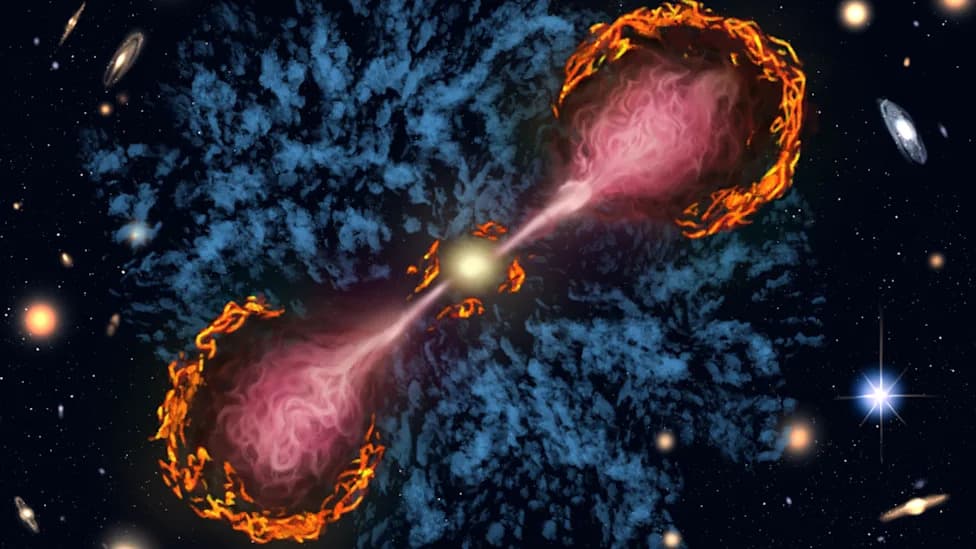
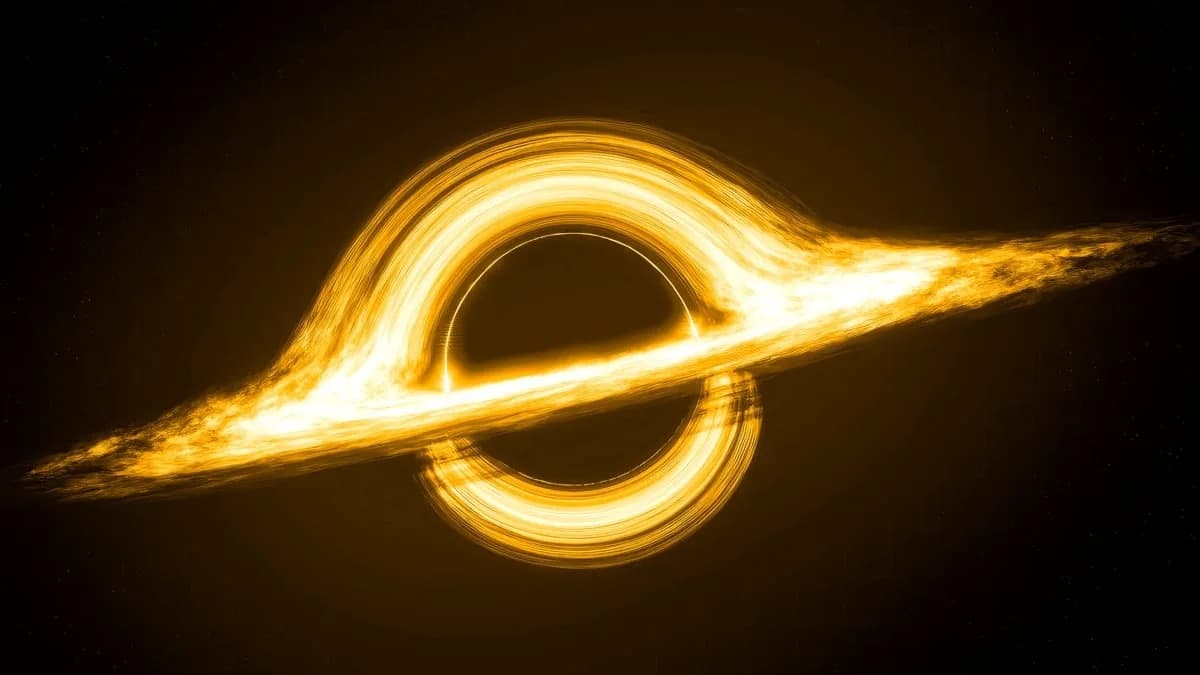
Translated radio and plasma signals from Saturn and Jupiter — influenced by complex ring and moon interactions — can sound like eerie, otherworldly music when shifted into our hearing range. Around supermassive black holes, pressure waves in hot gas can be sonified to reveal oscillations and structures that are difficult to spot visually.

Subscribe to ScienceAlert's free fact-checked newsletter
The First Cosmic 'Sounds' And Scientific Value
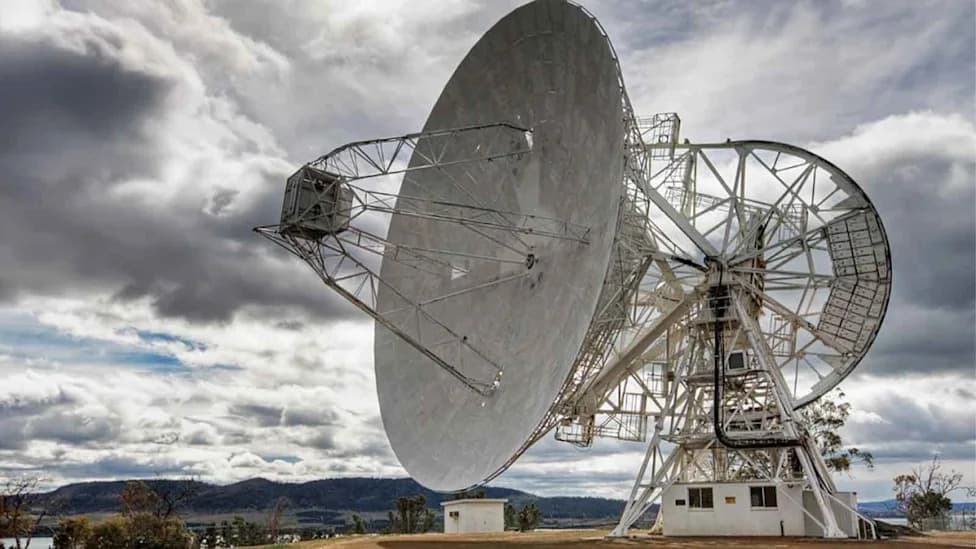
Radio astronomy’s first recorded cosmic signal came in 1933, when Karl Guthe Jansky built a rotating radio antenna (nicknamed Jansky’s Merry-Go-Round) and discovered a persistent hiss originating from the center of the Milky Way. That hiss was an early demonstration that the Universe emits rich, informative radio signals.
Sonification is more than an artistic curiosity: by converting data into audio, researchers gain an additional sensory channel that can help detect subtle patterns, transient events or anomalies that might be overlooked in images or plots.
Limits And Big Picture
Classical sound waves cannot travel across most of space because the Universe became too diffuse after its hot, plasma-filled early phase. Nevertheless, "fossilized" sound waves from that primordial era are imprinted in the large-scale distribution of galaxies. With careful signal processing, we can still open our ears to the cosmos and experience spacetime in a new, often striking way.
Note: Sonified audio examples are available from several astronomy and space-agency archives for those who want to hear these phenomena firsthand.
Help us improve.