The first reported direct clashes between al‑Qaeda‑linked JNIM and Islamic State’s Sahel branch have taken place in Niger’s Tillaberi region, according to an ISSP statement and analysts. ISSP claims it killed 35 JNIM fighters in an April 2 strike, part of a rivalry that ACLED says has caused more than 2,100 deaths since 2019. Analysts warn the spread into Niger underscores weak state control and may spur further recruitment, territorial expansion and violence across the Sahel.
Jihadist Rivalry Escalates: Al‑Qaeda‑Linked JNIM and ISIS‑Affiliated Fighters Clash in Niger’s Tillaberi
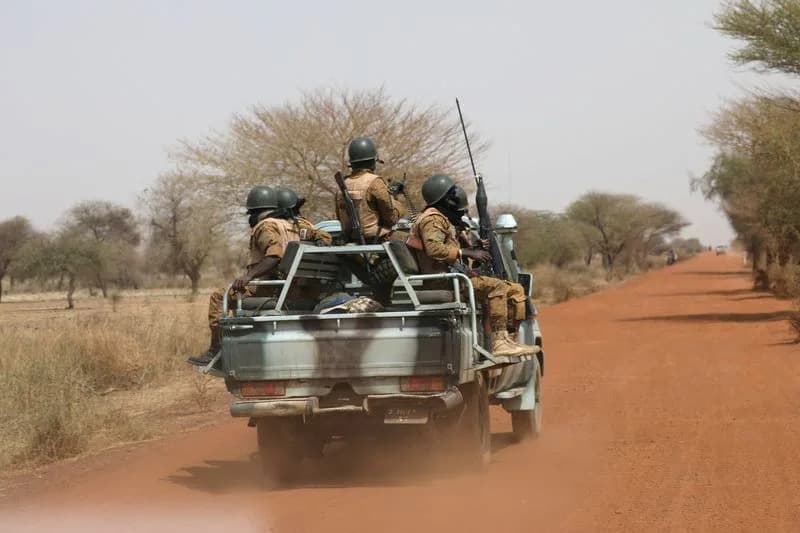
FILE PHOTO: Soldiers from Burkina Faso patrol on the road of Gorgadji in the Sahel region, Burkina Faso, March 3, 2019. REUTERS/Luc Gnago/File Photo
DAKAR, April 9 (Reuters) - For the first time, fighters linked to al‑Qaeda and Islamic State have engaged in direct clashes inside Niger, marking a worrying expansion of a years‑long insurgent rivalry that analysts say could deepen instability across the Sahel.
The al‑Qaeda‑aligned Jama'at Nusrat al‑Islam wal‑Muslimin (JNIM) and Islamic State in the Sahel Province (ISSP) first fought in 2019 and have since battled repeatedly, with the Armed Conflict Location & Event Data Project (ACLED) recording more than 2,100 deaths tied to their confrontations.
Those clashes were largely confined to Mali and Burkina Faso until last week, when ISSP fighters struck a JNIM position in the Tillaberi region of western Niger.
In a statement dated Monday, ISSP said its fighters killed 35 JNIM operatives and seized weapons and motorbikes in an attack on April 2 carried out in retaliation for an alleged JNIM assault on a village in Tillaberi. Human Rights Watch has previously accused ISSP of staging deadly attacks in Tillaberi that killed scores of civilians. JNIM has not issued a public comment on the reported Niger incident.
"ISSP statements have quite high credibility," said Heni Nsaibia, ACLED's senior analyst for West Africa, noting the group's habit of providing visual evidence of killed fighters and captured materiel.
Fighting Underscores Weak State Control
Nsaibia and other analysts say the shift of direct fighting into Niger highlights the limited reach of state authority across much of the Sahel and risks fueling recruitment and territorial expansion by jihadist factions.
In a separate video statement, JNIM claimed it had killed one member of a rival group and kidnapped another during an April 5 attack in Nigeria's Kebbi state. The group used the term "khawarij"—an Arabic label it commonly applies to ISSP, though it can also describe other splinter factions.
Beverly Ochieng, a senior analyst at consultancy Control Risks, warned that poor security coordination between Nigeria and Niger has left a gap that JNIM is exploiting to establish vantage points and rear bases in southern Niger and northwest Nigeria. That positioning, she said, is increasing friction with better‑established Islamic State branches and affiliates.
The spread of these clashes into Niger represents a potentially dangerous new phase in the Sahel's jihadist competition, with broader implications for regional security, humanitarian access and the capacity of governments and international partners to contain the violence.
Help us improve.