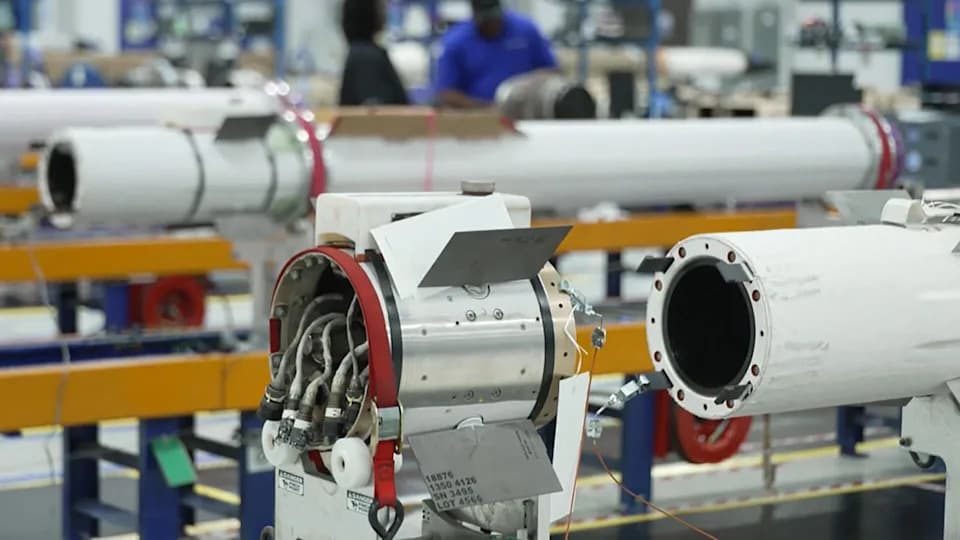
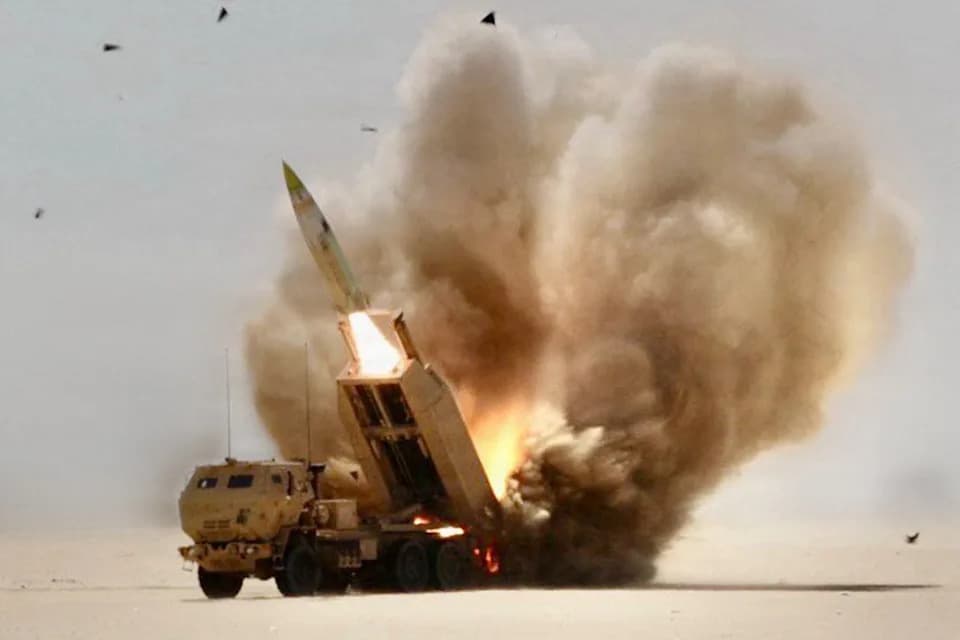
The U.S. Navy has asked for $3 billion to replenish Tomahawk cruise missiles depleted during the conflict with Iran. The purchase—part of the Pentagon’s $1.5 trillion FY2027 budget—would fund roughly 785 missiles and represents about a 1,200% production increase over last year. The budget prioritizes rebuilding stockpiles, expanding domestic munitions production, boosting shipbuilding, and investing in missile defense, AI, drones and next-generation aircraft.
U.S. Navy Seeks $3 Billion To Replenish Tomahawk Missiles After Iran Conflict

Defense Secretary Pete Hegseth arrives for a news conference at the Pentagon, June 22, 2025, in Arlington, Virginia.(Getty Images)
The U.S. Navy is requesting $3 billion in additional funding to rebuild its inventory of Tomahawk cruise missiles after drawing down stocks during the conflict with Iran.
The request is included in the Pentagon’s broader $1.5 trillion budget submission for fiscal 2027, which the Department of Defense released this week. Officials say the Tomahawk procurement in the request would represent roughly a 1,200% increase in production compared with the purchases approved last year.
Numbers and context: Last year, Congress approved the Navy’s purchase of 58 Tomahawk missiles at an estimated cost of $257 million. The current proposal would fund roughly 785 missiles at prevailing estimated prices. A Washington Post report last month said the United States had launched at least 850 Tomahawk missiles since the conflict with Iran began on Feb. 28, contributing to the urgent need to rebuild stockpiles.
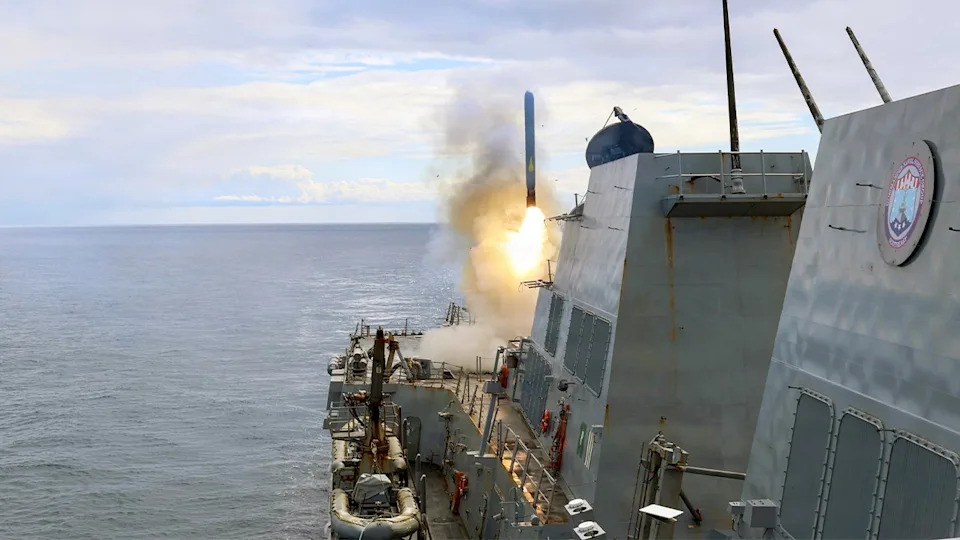
In this U.S. Navy handout, the USS Thomas Hudner fires a Tomahawk land attack missile in support of Operation Epic Fury on March 1, 2026, at sea.
Where the $1.5 Trillion Goes
The full $1.5 trillion request combines about $1.1 trillion in base discretionary funding for the Department of Defense with roughly $350 billion in mandatory funding aimed at priorities such as munitions production and expansion of the domestic defense industrial base. Pentagon officials say the package is intended to address near-term shortfalls revealed by the Iran conflict while also preparing for long-term strategic challenges from China, Russia and other competitors.
Key priorities highlighted in the proposal:
- Rebuilding depleted weapons stockpiles and strengthening domestic munitions manufacturing.
- Shipbuilding: $65.8 billion requested to procure 18 battle-force Navy ships and 16 non-battle-force vessels to expand maritime capacity.
- Continued funding for the "Golden Dome" missile defense effort, intended to develop a layered homeland-defense architecture using space-based sensors and interceptors.
- Investments in artificial intelligence, manned and unmanned systems, counter-drone technologies and next-generation aircraft, including continued development of the F-47 sixth-generation fighter program with a target first flight as early as 2028.
Defense officials say that if enacted, the proposal would amount to one of the largest increases in U.S. defense spending in decades, though they caution the total mixes discretionary and mandatory resources that are not typically combined in standard Pentagon budget comparisons.
Implications: The Tomahawk request underscores both the operational demands placed on U.S. munitions during the Iran conflict and broader concerns about industrial capacity to surge production in a crisis. Lawmakers and defense analysts are watching whether the Pentagon’s request will prompt new, large-scale congressional funding measures to shore up stockpiles and domestic defense manufacturing.
Help us improve.