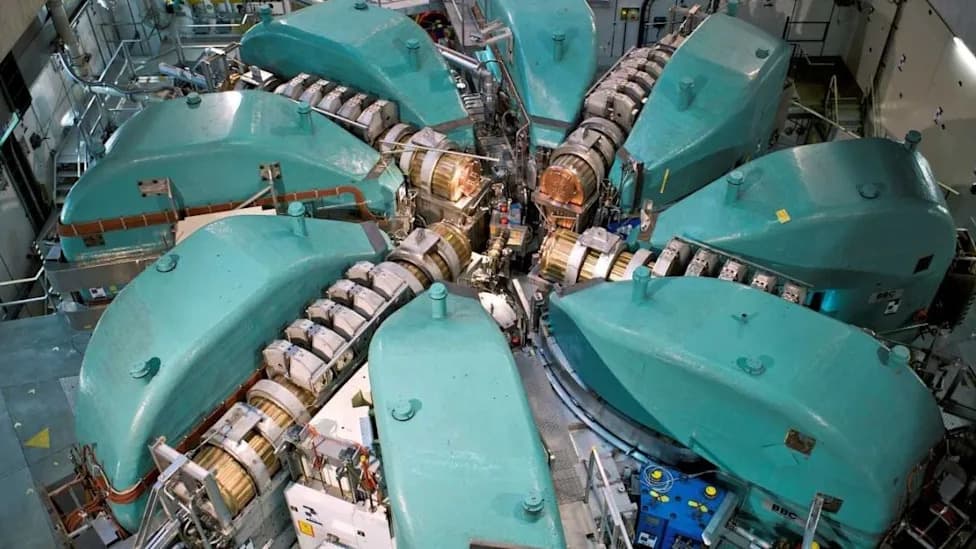
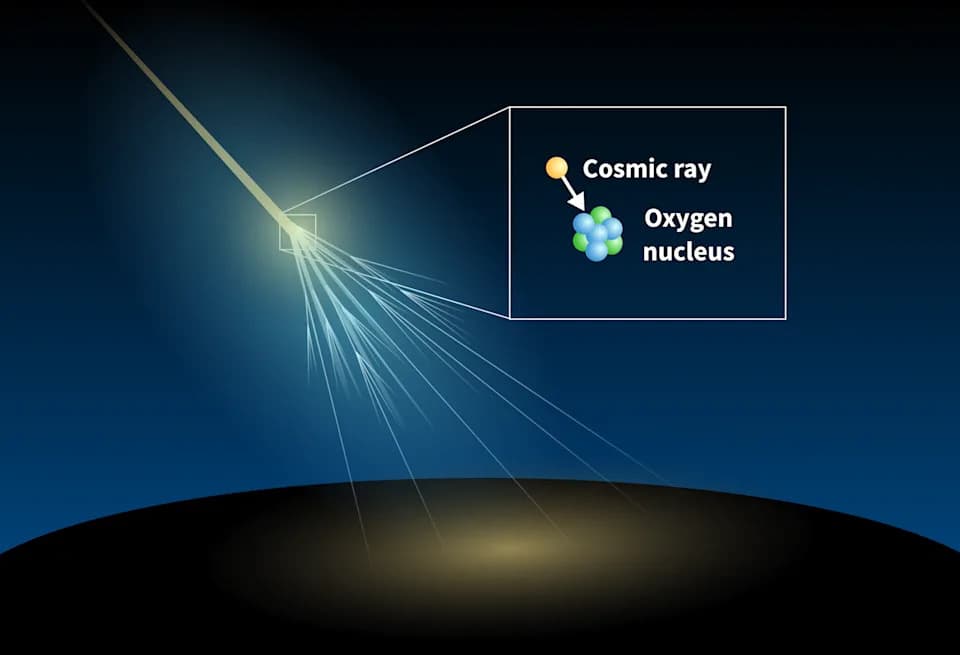
Physicists at CERN successfully transported 92 antiprotons in a heavily shielded, cryogenically cooled crate during a 1.5‑hour drive around the laboratory campus. The particles were held in an ultra‑high vacuum and confined by magnetic fields to prevent annihilation. Although the demonstration remained on CERN grounds, it validates the ability to move antimatter to partner institutions — such as Heinrich Heine University Düsseldorf — for further study. The test advances collaborative research options, even as antimatter production remains extremely expensive and technically challenging.
CERN Drives Antimatter: 92 Antiprotons Make a Safe 1.5‑Hour Trip in a Cryogenic Magnetic Container
Can Subatomic Antimatter Particles Survive a Drive?CERN
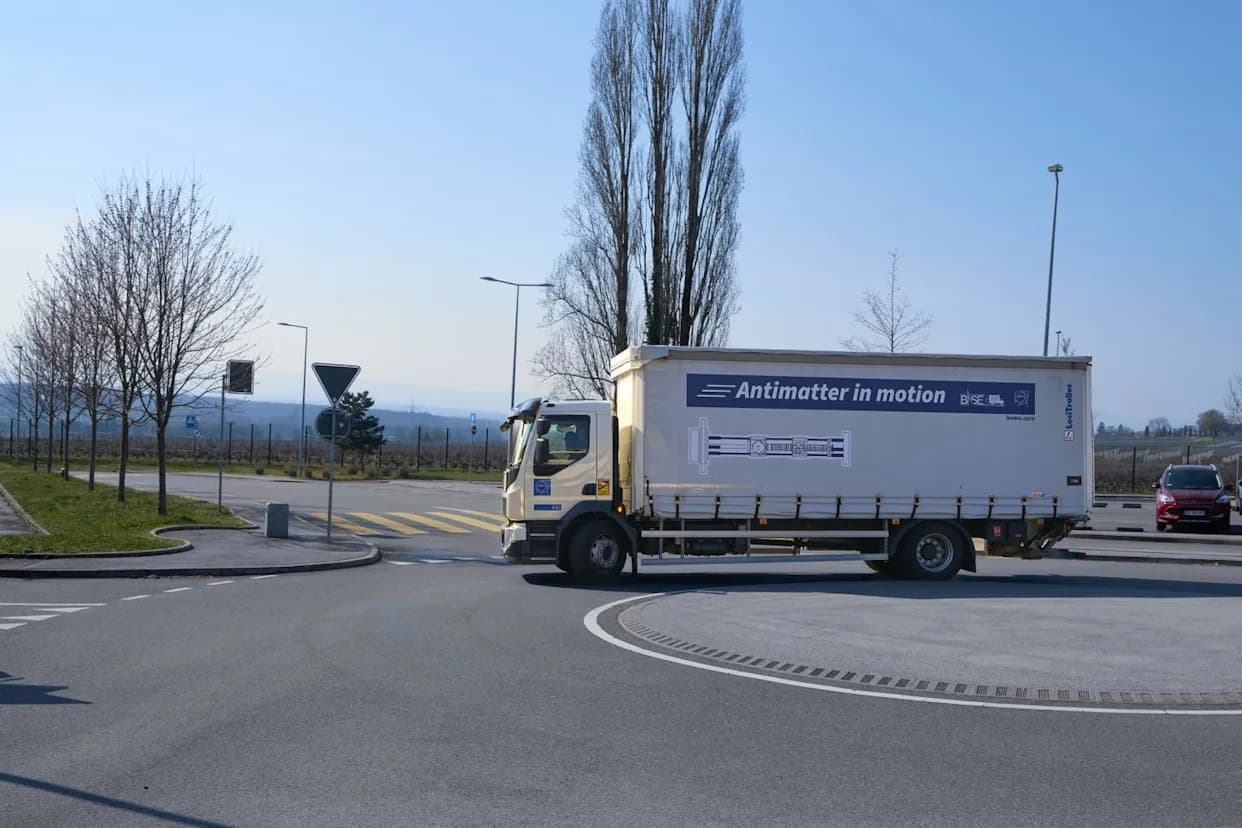
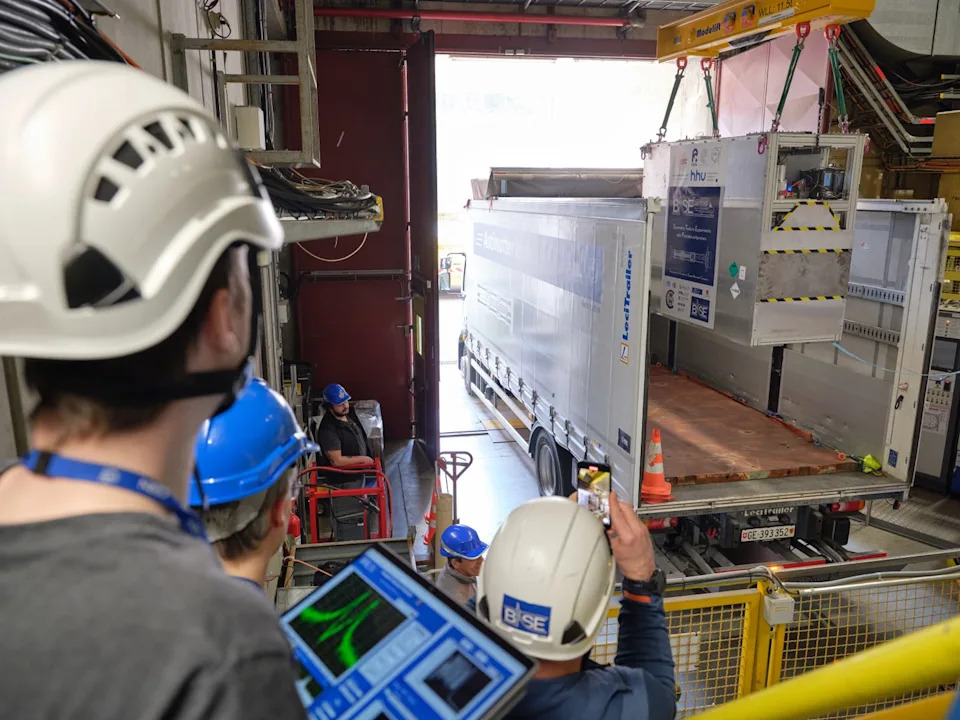
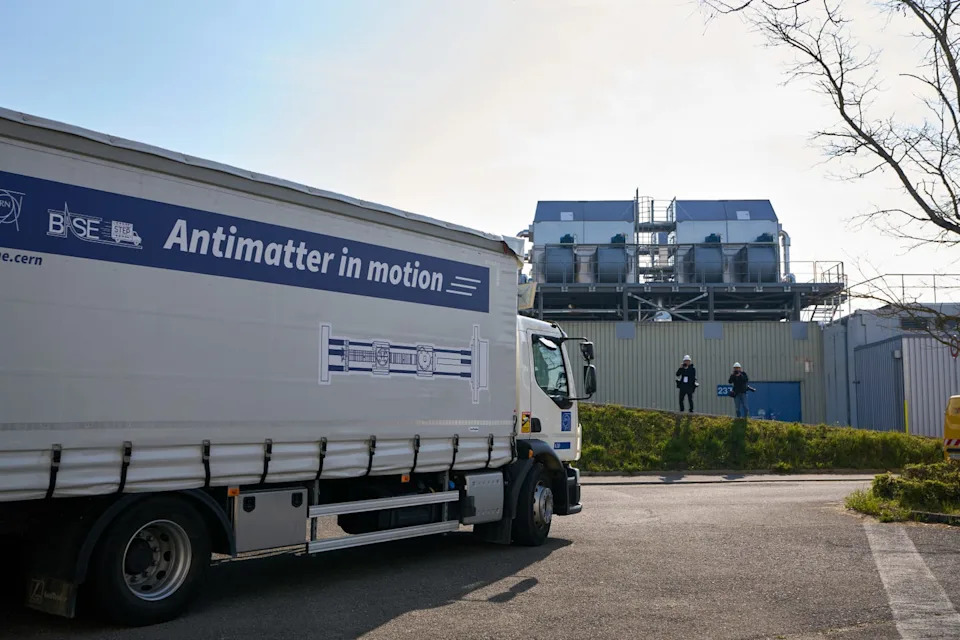
Physicists at CERN have demonstrated that tiny amounts of antimatter can be transported safely: researchers packed 92 antiprotons into a specially designed, heavily shielded crate and took it on a controlled 1.5‑hour drive around the laboratory campus.
CERN
How the particles were protected
CERN
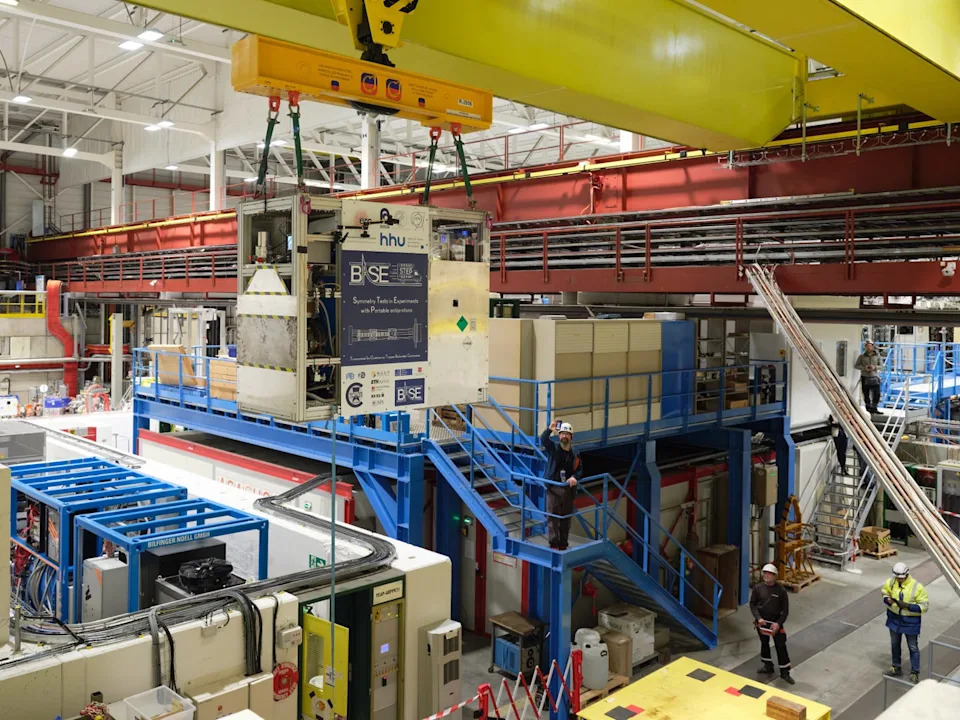
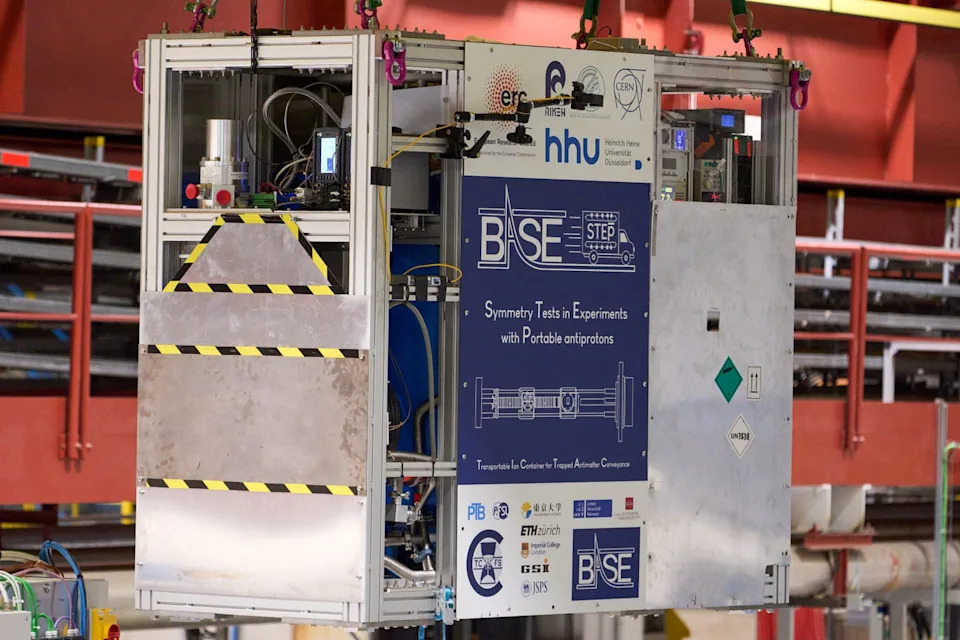
The antiprotons rode inside a crate weighing more than 2,000 pounds (~915 kg). The interior was an ultra‑high vacuum maintained at cryogenic temperatures to minimize interactions with ordinary matter. Within that vacuum the particles were confined by magnetic fields and kept circulating in what researchers describe as a "magnetic prison," preventing contact with container walls or air that would cause annihilation.
CERN
What the test proved
CERN
The vehicle never left CERN property during this demonstration, but the run validated a proof of concept: antiprotons produced at a central facility can be packaged and moved without immediate loss. That capability will enable collaborative experiments at other labs — for example, an upcoming plan to transport material to Heinrich Heine University Düsseldorf (HHU), a trip that would take roughly eight hours by road.
Why this matters
Antimatter is the charge‑mirror counterpart of ordinary matter. It is extremely rare in nature because most antimatter was eliminated early in the universe’s history, and when antimatter contacts matter the two annihilate and release energy. Transportability matters because building large particle accelerators is expensive and centralized: the ability to move trapped antimatter means smaller or specialist labs can perform precision measurements without building their own sources.
Longer‑term context
In principle, tiny masses of antimatter store enormous energy, which has prompted long‑term speculation about applications such as advanced propulsion. In practice, producing and storing antimatter remains extraordinarily costly and technically challenging, so such applications are far from realization. For now, the main significance of this test is practical: it opens a new path for collaborative antimatter research by showing that trapped antiprotons can survive transport when properly contained.
Bottom line: This demonstration is a milestone in particle‑physics logistics — a carefully engineered crate, vacuum, cryogenics and magnetic confinement kept 92 antiprotons stable during a road test, paving the way for inter‑laboratory experiments.
Help us improve.