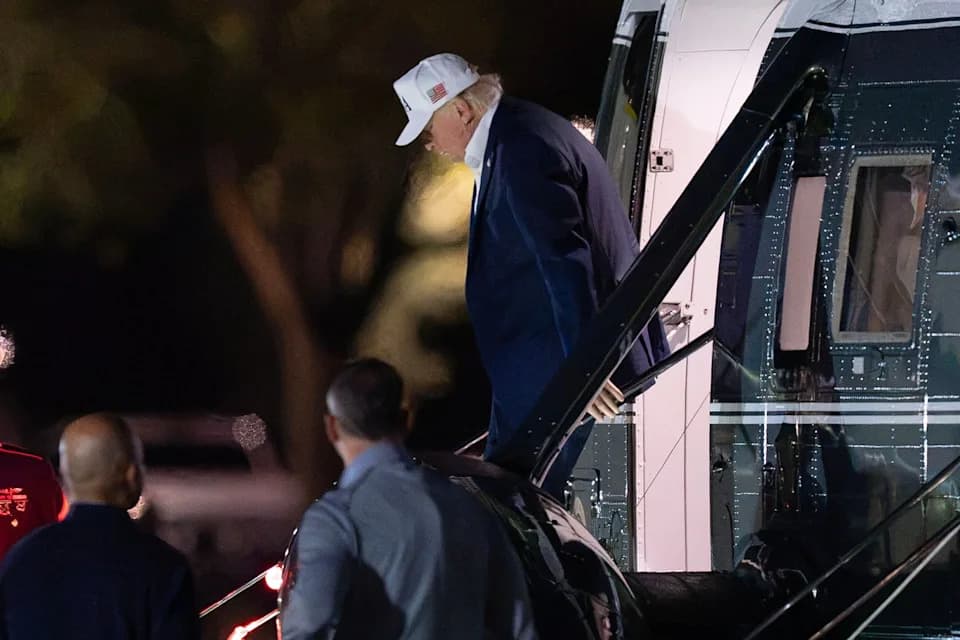
President Trump warned Iran he would “bring them back to the Stone Ages,” a phrase echoed by Defense Secretary Pete Hegseth and widely understood to imply large‑scale carpet bombing. Experts warn that deliberately targeting civilian infrastructure would violate international humanitarian law. The rhetoric recalls U.S. aerial campaigns from World War II, Korea and Vietnam, and raises fresh debate about whether modern precision weapons have reduced indiscriminate harm.
“Bomb Back To The Stone Age”: Trump’s Threat, Legal Warnings, and America’s History Of Carpet Bombing
[AFP]
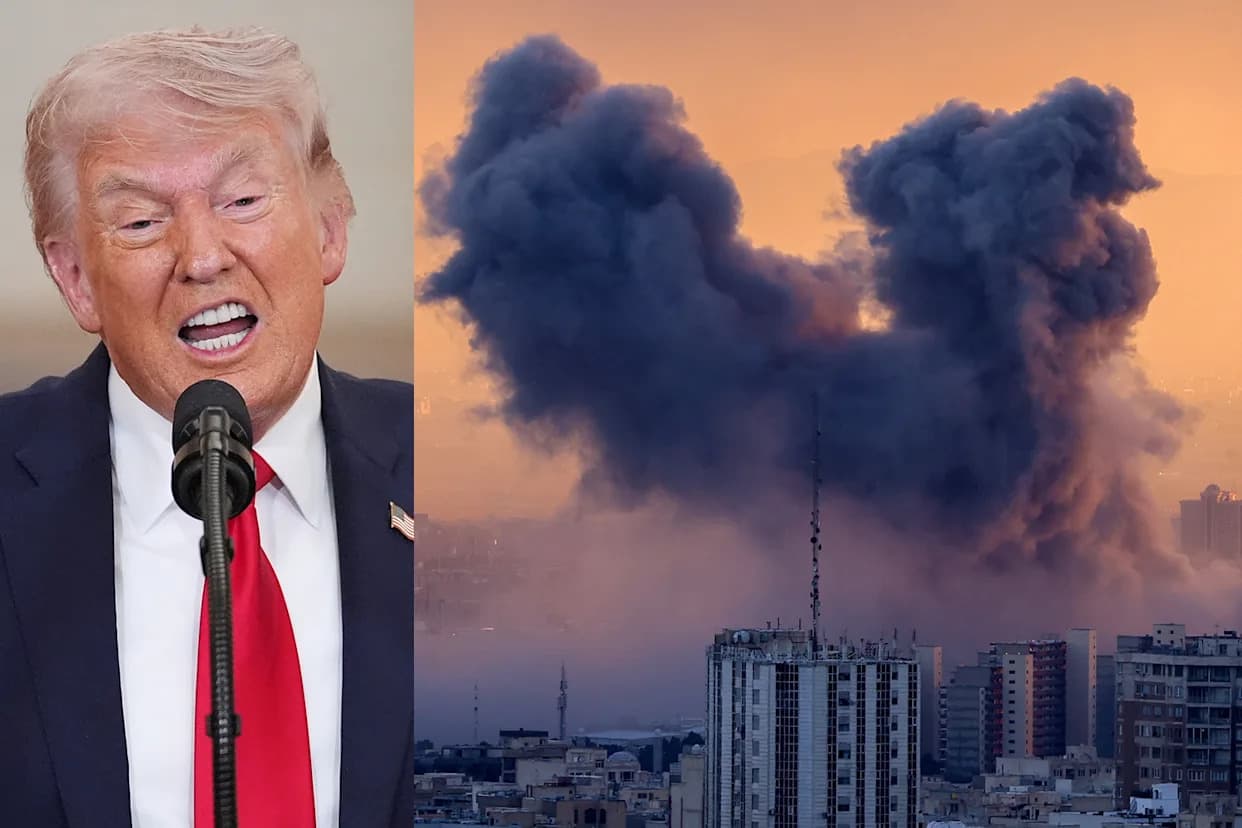
United States President Donald Trump on Wednesday warned Iran that he would “bomb the country back to the Stone Ages.” Minutes later, U.S. Defense Secretary Pete Hegseth amplified the rhetoric in a brief post on X:
“Back to the Stone Age.”
What The Phrase Means
The expression “bomb back to the Stone Age” commonly connotes large‑scale carpet bombing intended to destroy a nation’s modern infrastructure until it reverts to a primitive condition. That image carries powerful legal and moral implications because it suggests deliberate attacks on civilian structures that sustain everyday life.
Recent Context
In a prime‑time address, Mr. Trump said of Iran:
“We are going to hit them extremely hard over the next two to three weeks, we’re going to bring them back to the Stone Ages, where they belong.”He added that “discussions are ongoing” and suggested the confrontation could be resolved within the same two‑to‑three‑week window. According to reports, U.S. and Israeli strikes began on February 28, and Tehran has since launched strikes targeting Israel and some Gulf states. Reported casualties in the recent fighting exceed 2,000 Iranians, and thousands of civilian sites — including hospitals, schools, universities and pharmaceutical facilities — have been hit.
Legal And Humanitarian Concerns
Janina Dill, professor of global security at the University of Oxford, told Al Jazeera that if the “stone ages” formulation means deliberately destroying infrastructure that defines modern society — energy grids, telecommunications, medical and educational facilities, and civilian industry — such attacks would be unlawful. International humanitarian law, as reinforced by the International Committee of the Red Cross, forbids intentionally targeting civilian objects and requires parties to distinguish between combatants and non‑combatants.
“An announcement that they will nonetheless be targeted wholesale would be an announcement of systematic and serious violations of longstanding laws of war,” Dill said. Observers also note the rhetorical implication that the statement appears to target not only Iran’s government but Iranian society more broadly.
Historical Precedents
The phrase is widely associated with U.S. Air Force officer Curtis LeMay, who in his 1965 book Mission With LeMay wrote,
“We’re going to bomb them back into the Stone Age.”LeMay had been a central figure in U.S. strategic bombing during World War II and later served as Air Force Chief of Staff.
U.S. aerial strategy has included several campaigns that produced massive civilian and infrastructure damage. During World War II, large‑scale bombing devastated many Japanese cities. In the Korean War (1950–1953), U.S. bombing campaigns heavily damaged North Korea’s towns and infrastructure; assessments say strikes eliminated much of the country’s power generation and destroyed a high share of buildings.
In the Vietnam War, extensive U.S. bombing — including the 1972 “Christmas bombings” ordered under President Richard Nixon — struck North Vietnam, Hanoi and Haiphong and extended into Cambodia and Laos. Millions of Vietnamese soldiers and civilians were killed or wounded across the broader conflict.
During the 1990–91 Gulf crisis, then‑Secretary of State James Baker warned Iraq it would be “bombed back to the Stone Age” if it did not withdraw from Kuwait. Analysts note that since the 1991 Gulf War, the U.S. has increasingly used precision‑guided munitions to limit collateral damage, though critics argue that heavy use of unguided bombs and large strikes have still caused widespread destruction in practice.
After the September 11, 2001 attacks, Pakistan’s then‑president Pervez Musharraf later said a senior U.S. official warned Pakistan it could be “bombed back to the Stone Age” if it refused to cooperate in the campaign against the Taliban — showing how the phrase recurs in coercive diplomacy as well as military planning.
Why This Matters
The rhetoric matters because explicit threats to destroy civilian infrastructure raise legal, ethical and humanitarian alarms. Even if military planners claim they would limit targets to military objectives, public statements that imply wholesale destruction can erode legal safeguards, inflame regional tensions and increase civilian fear and suffering.
Conclusion
The “bomb back to the Stone Age” formulation evokes a long history of destructive air campaigns and remains controversial because it conjures attacks on the infrastructure of daily life. Legal experts warn that intentionally targeting civilian objects would violate long‑standing laws of war; analysts are divided over whether modern precision weapons have meaningfully eliminated the indiscriminate effects associated with historical carpet bombing.
Help us improve.