Florida researchers report a major advance in understanding extreme supersonic jet noise. Using Mach 1.5 tests, schlieren imaging and synchronized microphones, they found that stationary acoustic standing waves between exhaust and ground set the pitch while turbulent structures determine loudness. Their predictive model points to practical ways — from nozzle design to engineered landing surfaces — to break resonant loops and reduce harmful noise.
Florida Team Cracks 70‑Year Mystery Behind Supersonic Jet Roar
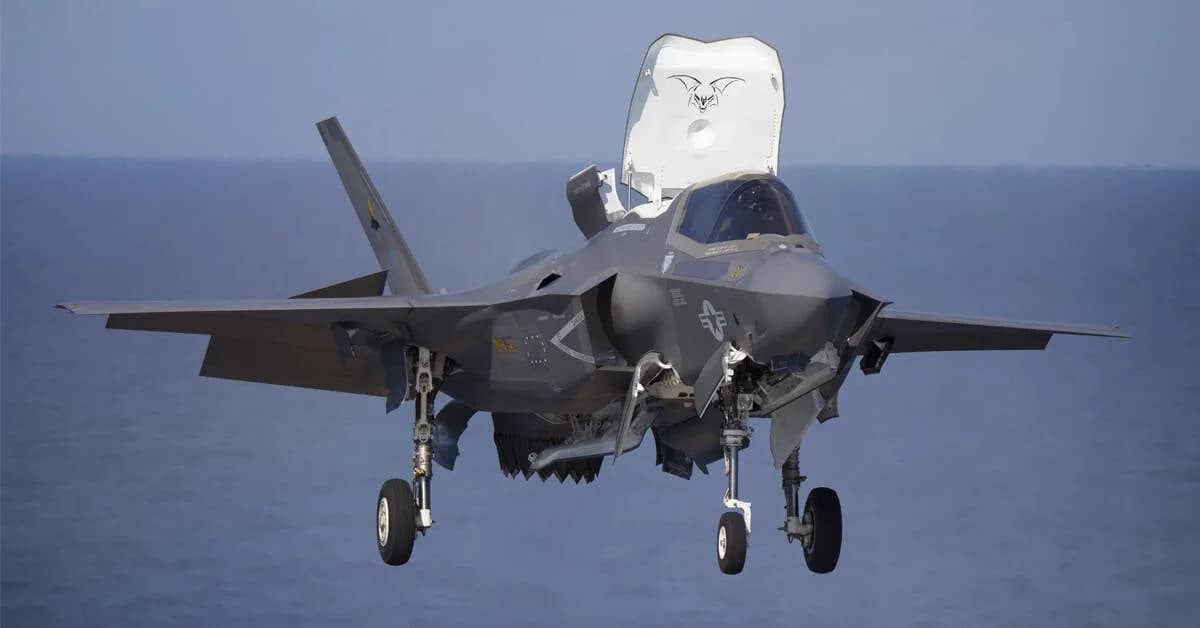
A high-speed jet experiment at Mach 1.5 helps scientists decode the mystery behind engine noise. | ©Image Credit: Lance Cpl. Tyler Harmon / Wikimedia Commons
For more than seven decades, the thunderous roar of supersonic jet engines has resisted explanation — limiting efforts to design quieter aircraft and preventing routine supersonic flight over land. Now, researchers at the FAMU‑FSU College of Engineering, in collaboration with the Florida Center for Advanced Aero‑Propulsion (FCAAP), say they have identified the physical mechanism that produces extreme jet noise and created a predictive model that could help stop it at the source.
The team's study, published in the Journal of Fluid Mechanics, demonstrates how supersonic exhaust interacts with the ground or nearby structures to form a resonant feedback loop that dramatically amplifies sound. The experiments targeted Short Takeoff and Vertical Landing (STOVL) jets — such as the F‑35B Lightning II — whose exhaust plumes can slam into landing surfaces and produce noise levels routinely exceeding 140 decibels.
Those pressure levels accelerate structural fatigue, can create low‑pressure zones that pull aircraft toward the ground, and pose severe health risks to personnel: prolonged exposure above 140 dB can cause permanent hearing loss and, at extreme intensities, even damage internal organs.
To reproduce real operating conditions, the researchers pushed a jet to Mach 1.5 while varying engine pressure and the exhaust-to‑ground distance. They combined high‑speed photography with schlieren imaging — a technique that "visualizes" air‑density changes — and synchronized those images with ultra‑sensitive microphones to capture both the airflow and the acoustic signature in real time.
A high-speed jet experiment at Mach 1.5 helps scientists decode the mystery behind engine noise. | ©Image Credit: Lance Cpl. Tyler Harmon / Wikimedia Commons
The experiments revealed that when the noise becomes extreme, the airflow and sound waves lock into a steady, repeating pattern: a resonant cycle. Crucially, the team discovered that stationary acoustic standing waves established between the exhaust and the ground determine the perceived pitch (frequency) of the noise, while the size and speed of turbulent structures in the jet control the loudness (acoustic intensity).
"Only a tiny fraction of the jet's energy becomes sound, but that fraction has outsized effects," said Farrukh S. Alvi, professor of Mechanical and Aerospace Engineering and FCAAP founding director. "Our results show how standing waves set the tone while turbulence sets the volume — and that gives engineers clear targets to disrupt hazardous feedback loops."
Why This Matters
By showing that standing waves — not turbulence speed — set the tonal character, the new model simplifies how designers predict and mitigate dangerous noise. Practical applications include redesigned nozzles, active nozzle control, and engineered landing pads or surfaces that prevent standing‑wave formation and break resonant loops before they amplify sound.
Next Steps
The study offers a blueprint for quieter supersonic operations, but further work remains to translate laboratory findings into fieldable solutions: testing mitigation concepts in larger-scale systems, integrating active controls into operational engines, and designing landing surfaces tailored to suppress standing waves under varied conditions.
Overall, the Florida team's work peels back a decades‑old aerodynamic mystery and points toward engineering changes that could make supersonic flight less damaging, safer for personnel, and more compatible with populated areas.
Help us improve.