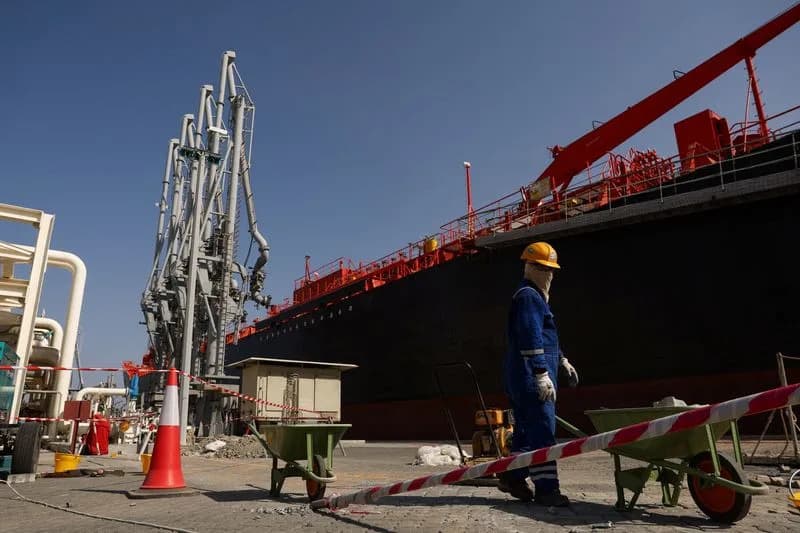
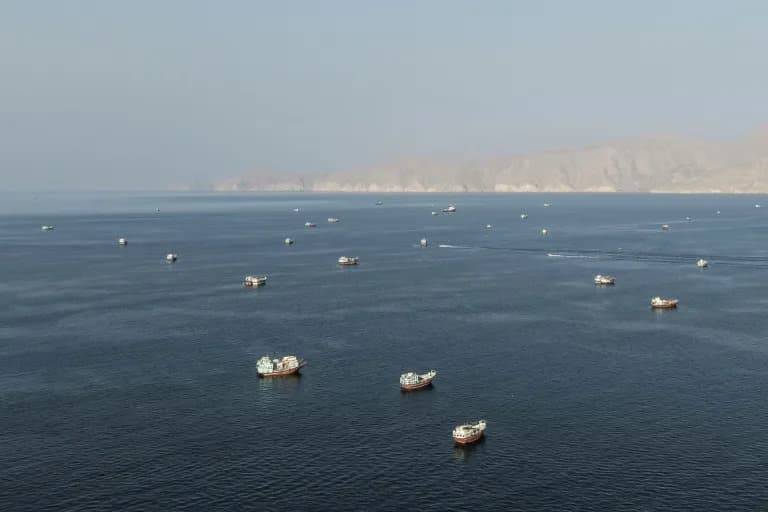
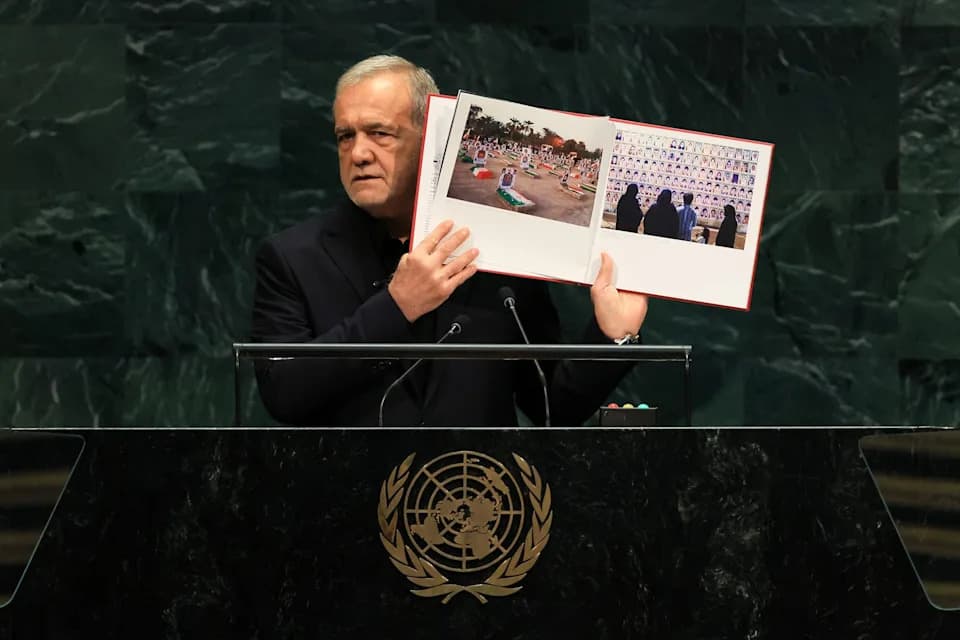
Lana Nusseibeh, UAE minister of state, told Fox News that Iran's closure of the Strait of Hormuz is an attempt to inflict a "heart attack" on the global economy by disrupting oil and gas flows. She accused Tehran of launching more than 2,200 missiles and drones, with about 89% hitting civilian infrastructure in the UAE. Nusseibeh said diplomatic talks—including February meetings with Iran's Abbas Araghchi—were "useful and constructive," but warned a simple cease-fire may not be sufficient. The UAE urges stronger measures while U.S. officials say negotiations with Tehran continue.
UAE Minister: Iran Is Trying To Give The Global Economy A "Heart Attack" By Closing The Strait Of Hormuz
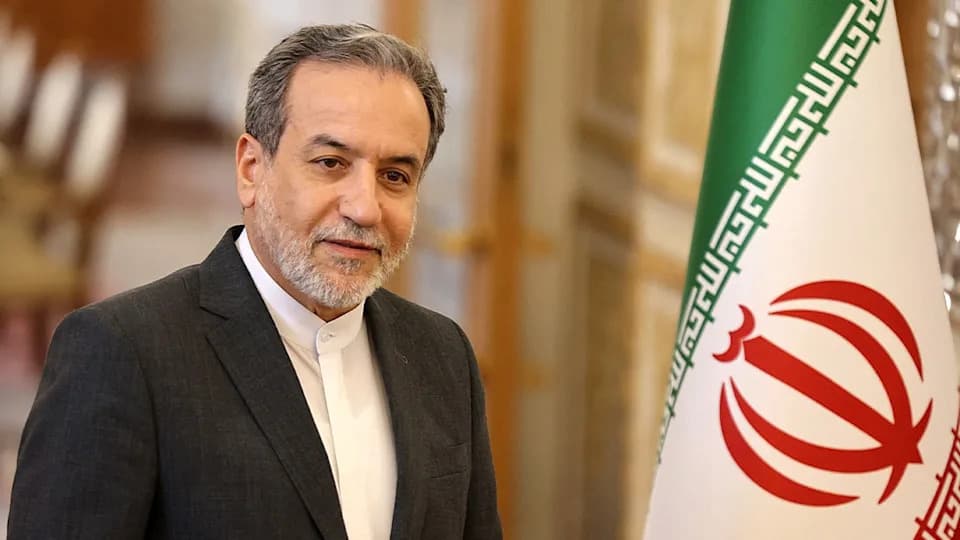
Iran's foreign minister, Abbas Araghchi, waits for the arrival of his Qatari counterpart before their meeting in Tehran on Aug. 26, 2024.(Getty Images)
United Arab Emirates minister of state Lana Nusseibeh warned on Wednesday that Iran's closure of the Strait of Hormuz is an attempt to inflict a "heart attack" on the global economy by disrupting the flow of oil and gas.
What Happened
Nusseibeh told Fox News that the shutdown of the vital shipping corridor has interrupted energy shipments worldwide amid a conflict the UAE did not seek. She said the UAE has endured repeated Iranian missile and drone strikes as part of Tehran's regional retaliation.
"What happens in the Gulf clearly doesn’t stay in the Gulf," Nusseibeh, who serves at the UAE Ministry of Foreign Affairs, said on "Special Report."
Diplomatic Efforts
The minister noted that diplomatic channels have been pursued for years. She traveled to Tehran in early February for talks with Iranian Deputy Foreign Minister Abbas Araghchi, meetings she described as "useful and constructive." Despite those efforts, Nusseibeh accused Iran of choosing escalation over negotiation.
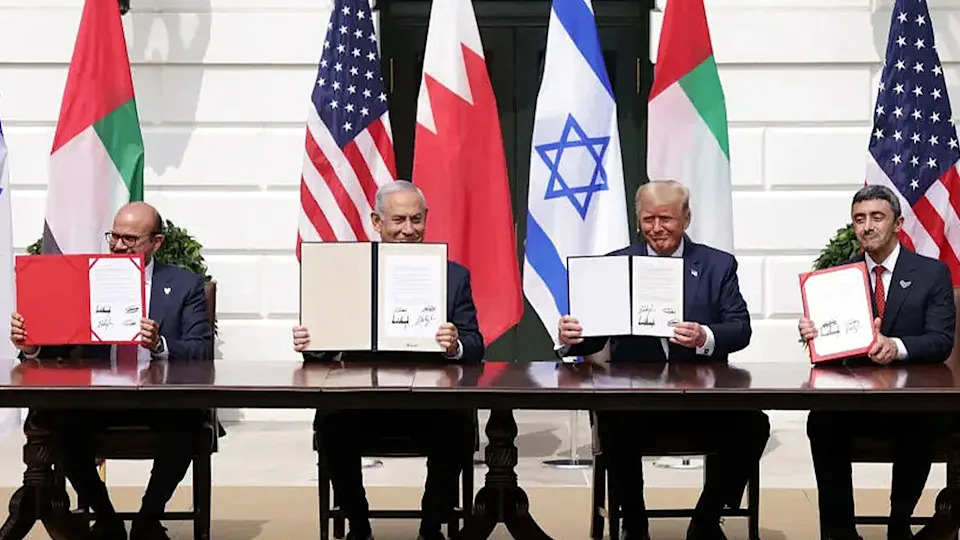
Bahrain’s Foreign Affairs Minister Abdullatif bin Rashid Al Zayani, Israeli Prime Minister Benjamin Netanyahu, President Donald Trump and United Arab Emirates Foreign Affairs Minister Abdullah bin Zayed Al Nahyan at the Abraham Accords signing ceremony on the South Lawn of the White House on Sept. 15, 2020, in Washington, D.C.
Allegations and Impact
Nusseibeh said Tehran launched more than 2,200 missiles and drones, and claimed that roughly 89% of the reported strikes targeted civilian infrastructure in the UAE. She argued such attacks not only harm the UAE but threaten global energy security and economic stability.
Regional and International Responses
White House press secretary Karoline Leavitt told reporters that "talks continue" between the United States and Iran even as media reports described disputes over competing proposals. Emirati Ambassador to the U.S. Yousef Al Otaiba wrote in the Wall Street Journal that a "simple cease-fire isn’t enough," urging broader measures to prevent future escalation.
UAE Position
Nusseibeh emphasized the UAE's preference for a diplomatic off-ramp but said diplomacy must be used from a position that makes clear Tehran's behavior is unacceptable. She framed the UAE's open, progressive model—highlighting its role as an early signatory of the Abraham Accords—as a perceived ideological threat to Iran and part of the motive for attacks.
She concluded by saying the prospect for de-escalation is in Iran's hands: "The light at the end of the tunnel is in Iran's hands."
Help us improve.