A study published in Nature Astronomy reports that samples from asteroid Ryugu contain all five primary nucleobases used in DNA and RNA, supporting the idea that essential ingredients for life could have been delivered to Earth from space. Similar nucleobases were previously identified in Bennu samples and in the Murchison and Orgueil meteorites. Differences in purine-to-pyrimidine ratios among samples may be linked to ammonia and distinct chemical histories, but the exact formation pathways remain unclear.
Asteroid Ryugu Yields All Five DNA/RNA Nucleobases — Clues to Life’s Cosmic Origins
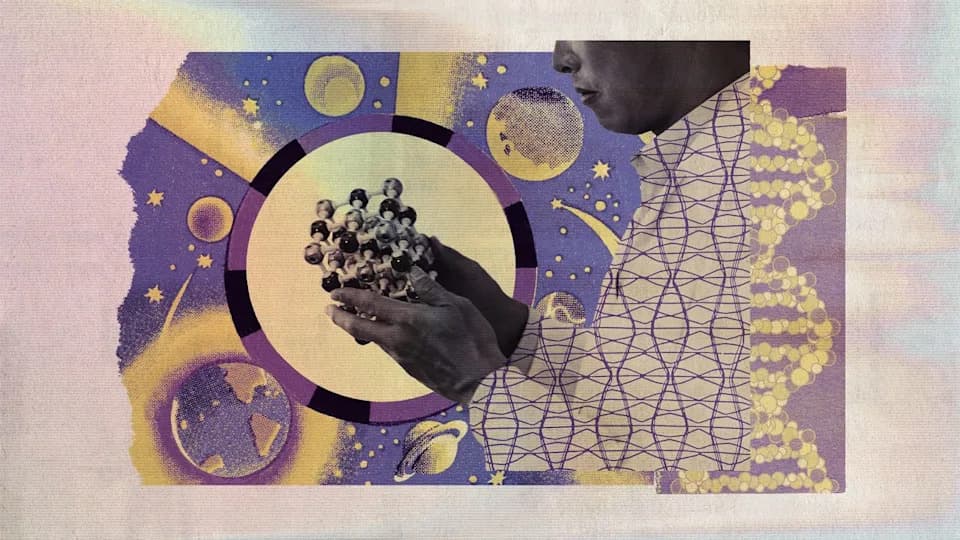
Asteroid Ryugu and other space samples contain vital nucleobases needed to build DNA. | Credit: Illustration by Julia Wytrazek / Getty Images
Scientists report that a nearly pristine sample from asteroid Ryugu contains all five primary nucleobases used in DNA and RNA, strengthening the idea that some of life’s essential chemical ingredients may have been delivered to Earth from space. The finding, published in Nature Astronomy, suggests complex organic chemistry was already active in the early solar system and may be widespread across small bodies such as asteroids.
What the Study Found
Analyses of material returned by Japan’s Hayabusa2 mission — which delivered Ryugu samples to Earth in December 2020 — identified adenine, thymine, guanine, cytosine and uracil. These nucleobases, when combined with sugars and phosphate groups, form the nucleic acids that store and transmit genetic information (DNA and RNA).
Context and Comparisons
Detection of all five nucleobases in Ryugu joins earlier detections in samples from asteroid Bennu (returned in 2023) and in historic meteorites such as Murchison (Australia, 1969) and Orgueil (France, 1864). Together, these finds indicate that the basic building blocks of genetic material can form in space and be transported to planetary surfaces by asteroids and meteorites.
Variation Between Samples
Although nucleobases appear across multiple samples, their relative abundances differ. Ryugu showed roughly equal amounts of purines (adenine and guanine) and pyrimidines (thymine, cytosine and uracil), while the Murchison meteorite is richer in purines and Orgueil and Bennu show higher proportions of pyrimidines. Researchers note a correlation between higher ammonia content and a lower purine-to-pyrimidine ratio, implying each body's chemical environment influenced nucleobase synthesis.
Why This Matters
Finding nucleobases in ancient, relatively unaltered asteroids supports the hypothesis that some prebiotic molecules required for life could have been seeded on the early Earth from space. If complex organic chemistry was common on primordial asteroids, that widens the possible pathways for the origin of life and raises the prospect that similar chemistry occurred elsewhere in the solar system.
Open Questions and Next Steps
Key questions remain: what precise chemical pathways created these nucleobases in asteroid environments, and could even more complex molecules — such as short strands of RNA or DNA — exist on small bodies? Researchers involved in the study (including Toshiki Koga and Yasuhiro Oba) say current formation models do not fully explain the observed ammonia correlation, suggesting that previously unrecognized reaction pathways may be involved. Upcoming sample analyses and laboratory simulations will aim to clarify these processes.
Bottom line: Ryugu’s sample strengthens the idea that important prebiotic molecules formed in space and were available to contribute to life’s emergence on Earth.
Help us improve.