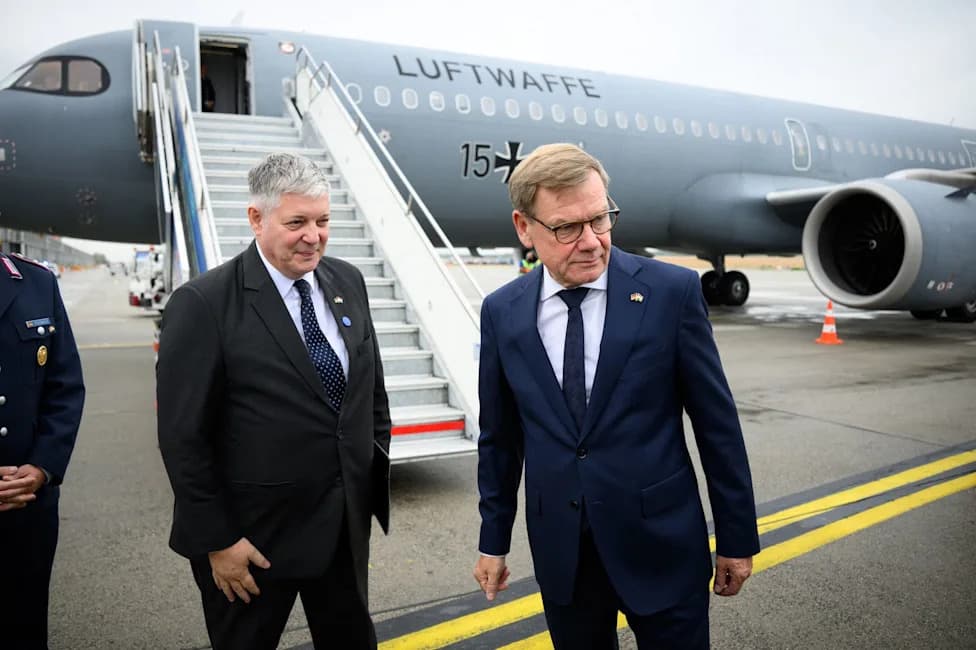
Hungarian Prime Minister Viktor Orbán has ordered an immediate investigation after alleging that Foreign Minister Péter Szijjártó was wiretapped amid reports he shared details from EU meetings with Russian officials. The Washington Post cited a European security official saying Szijjártó gave "live reports" to Russia's Sergey Lavrov, a claim the minister calls "fake news." A Hungarian outlet published audio and a reporter says he matched phone numbers to European security material. Brussels has described the allegations as worrying and has asked Hungary for clarification.
Orban Launches Probe After Alleged Wiretap of Foreign Minister Over Russia Briefings
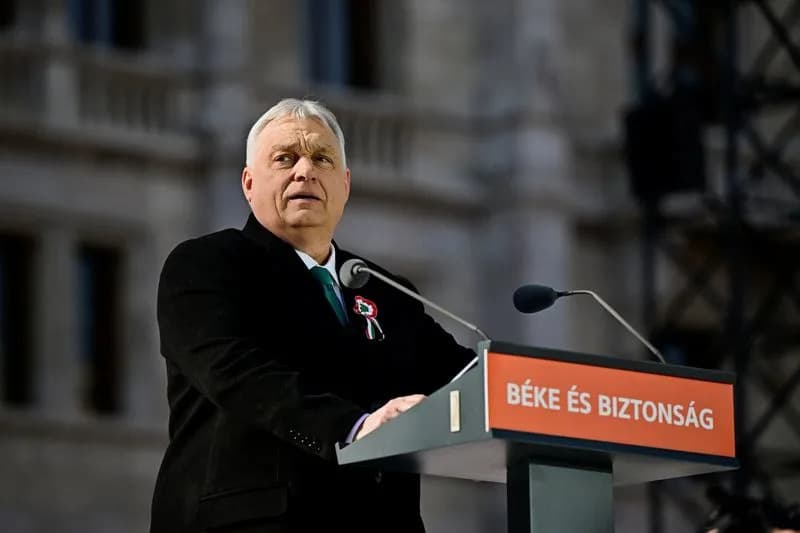
Hungarian Prime Minister Viktor Orban speaks at the Kossuth Lajos Square during Hungary's National Day celebrations, which also commemorates the 1848 Hungarian Revolution against Habsburg rule, in Budapest, Hungary, March 15, 2026. REUTERS/Marton Monus
BUDAPEST — Hungarian Prime Minister Viktor Orbán on Monday ordered an immediate investigation after alleging that Foreign Minister Péter Szijjártó had been the target of a wiretap, amid media reports that he passed information to Russian counterparts ahead of an April election.
Orbán, who has led Hungary since 2010, is facing a competitive re-election contest on April 12. The controversy comes as the government seeks to manage fallout from reports about high-level contacts with Russia.
"We are dealing with two serious issues: there is evidence that Hungary's Foreign Minister was wiretapped, and we also have indications of who may be behind it. This must be investigated immediately," Orbán wrote on Twitter.
The Washington Post reported, citing a European security official, that Szijjártó allegedly made routine calls during breaks at EU meetings to brief his Russian counterpart, Foreign Minister Sergey Lavrov, with "live reports on what's been discussed." Szijjártó dismissed that account as "fake news."
Mandiner Audio, Journalist's Claims
The conservative Hungarian outlet Mandiner published a separate report and released an audio file in which investigative journalist Szabolcs Panyi speaks with a source who said he provided two phone numbers that Szijjártó used to call "a state organ of an EU country." Panyi confirmed the conversation on his Facebook page and said he compared those numbers with material from a European security service while preparing an investigation into alleged information transfers to Russia.
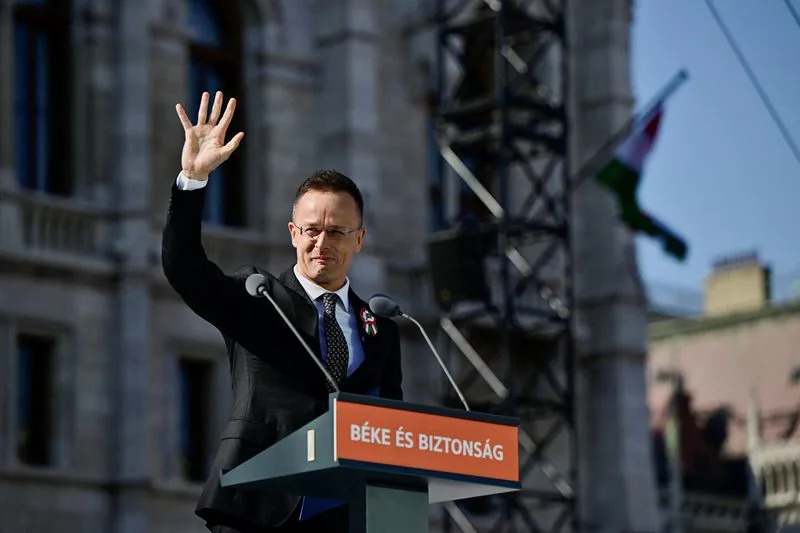
FILE PHOTO: Hungary's Foreign Minister Peter Szijjarto waves as he speaks at the Kossuth Lajos Square during Hungary's National Day celebrations, which also commemorates the 1848 Hungarian Revolution against Habsburg rule, in Budapest, Hungary, March 15, 2026. REUTERS/Marton Monus/File Photo
Panyi told Reuters he believes state actors used secret-service methods to identify his sources while he was probing a matter that would be "unpleasant" for the authorities. A government spokesperson did not answer requests for comment on the specifics of the reporting.
EU Concern And Energy Ties
An EU Commission spokesperson described the allegations of information-sharing with Russia as worrying and said Brussels expected clarification from Hungarian authorities. The episode highlights longstanding concerns in Brussels about Budapest's close energy and political ties with Moscow.
Szijjártó has made frequent visits to Moscow since Russia's full-scale invasion of Ukraine in 2022 and met President Vladimir Putin on March 4 to discuss oil supplies and other issues. Last week, citing a dispute with Kyiv over a damaged pipeline, Orbán blocked the implementation of an EU loan to Ukraine that had been agreed in December.
Hungary has said it will investigate the reported wiretapping and the related allegations. The probe's findings and any clarifications from Hungarian officials are likely to shape the political debate in the run-up to the April vote.
Reporting by Krisztina Than in Budapest; additional reporting by Bart Meijer in Brussels; editing by Andrew Cawthorne.
Help us improve.