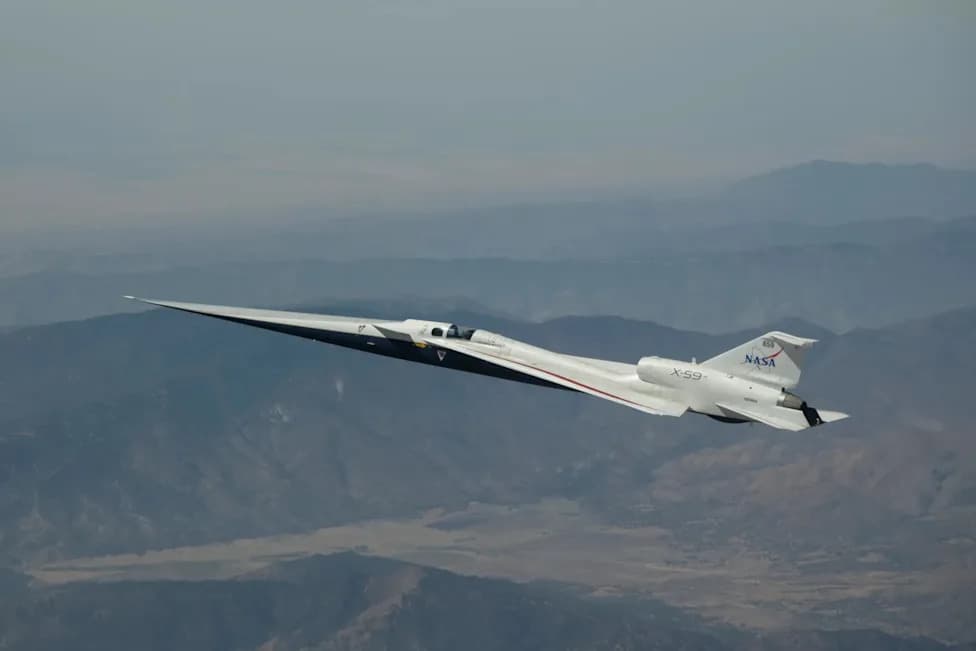
The X-59, NASA's experimental supersonic jet built with Lockheed Martin, made a second test flight on March 20 but landed after nine minutes when a cockpit warning light appeared. The aircraft remained subsonic and never exceeded 230 mph during the mission. Test pilot Less said the plane handled like the simulator training despite flying without a traditional front windscreen, relying instead on a camera-based high-definition display. NASA plans more than 100 flights, gradually increasing speed and altitude before community overflights to measure the aircraft's muted sonic signature.
NASA's X-59 Lands Early After Warning Light; Pilot Praises Windowless Cockpit System
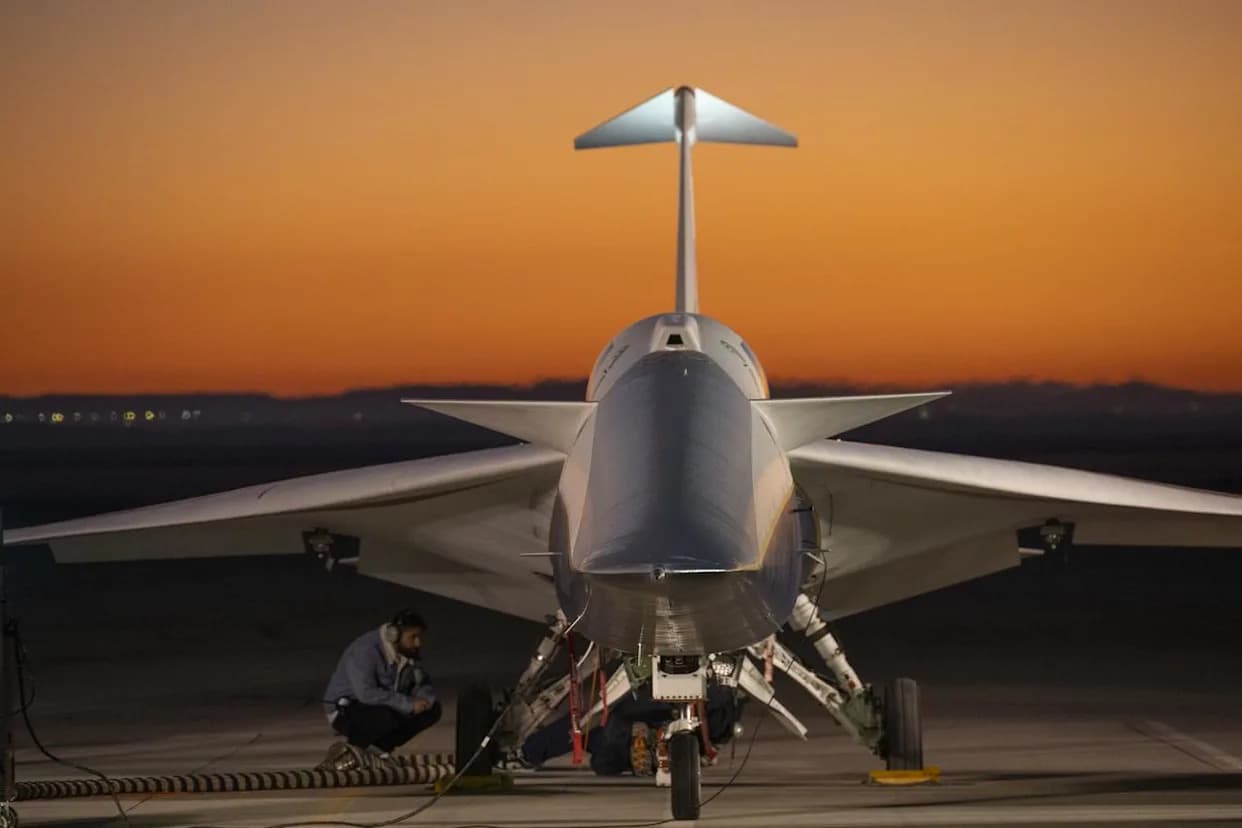
NASA's X-59 supersonic jet ended its second test just nine minutes into flight, ending the one-hour event almost as soon as it began because of a system warning. - NASA / Jim Ross
NASA's experimental X-59 supersonic jet made a second test flight on March 20 but returned to the runway after nine minutes when a cockpit warning light illuminated, officials said. Nothing appeared visibly wrong as the needle-nosed airplane rolled smoothly onto the runway at Edwards Air Force Base.
Cathy Bahm, project manager at NASA's Armstrong Flight Research Center, said the warning was separate from an earlier caution light that appeared during a previous takeoff attempt just before 10 a.m. P.T. The flight departed Edwards at 10:54 a.m. P.T. and was planned to last about an hour; team leaders emphasized that even brief flights at this stage yield valuable data to move the program forward.
Testing, Troubleshooting and Prudence
Bob Pearce, head of NASA aeronautics research, said the team made the correct decision to cut the flight short. "At this stage of an X‑plane program, finding and fixing issues is expected," Pearce said at a news conference. "Building this kind of experimental aircraft means creating something that never existed before."
Why the X-59 Matters
The X-59, developed by NASA with Lockheed Martin, is part of a long-term effort to enable routine supersonic flight over land by reducing a loud sonic boom to a much quieter "thump." Traditional supersonic aircraft compress pressure waves into a sharp shock wave that people perceive as a boom; the X‑59's elongated shape spreads those pressure changes along the airframe to produce a sequence of smaller pulses.
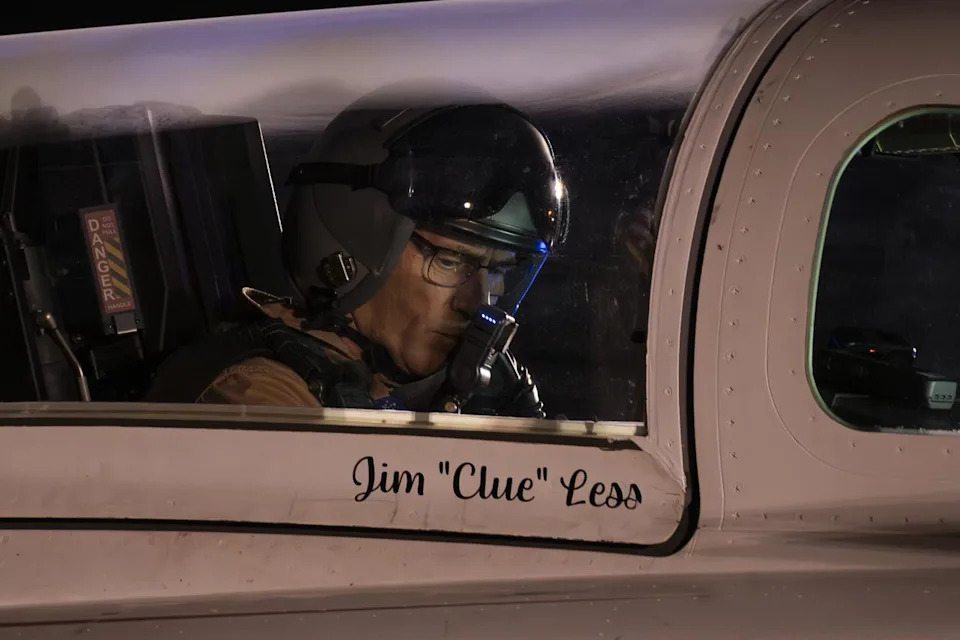
NASA test pilot Jim 'Clue' Less sits inside the cockpit of the experimental X-59 quiet supersonic jet at NASA's Armstrong Flight Research Center in Edwards, California.
NASA's target cruise speed for the X-59 is roughly 925 mph — speeds that could cut a nonstop New York–Los Angeles flight to under three hours compared with today’s typical 5–6 hour cross-country times at about 550 mph. Both of the X-59's first flights were intentionally subsonic, so residents beneath the test corridor did not hear the project's intended low‑intensity sonic signature.
Flight Details and Pilot Experience
On Friday, mission plans called for a roughly one-hour sortie that would climb to 12,000 feet and cruise near 230 mph before accelerating to about 260 mph at 20,000 feet. Officials said the aircraft never exceeded 230 mph before it returned.
Test pilot Less — flying the X-59 for the first time on this mission — said the jet handled like the simulator had predicted. He and other pilots had logged hundreds of hours in simulators using the aircraft's unconventional vision system, which stitches camera images into a high-definition cockpit display. The X-59's long nose, required to soften the sonic signature, does not leave room for a traditional forward windscreen.
"It really felt comfortable," Less said. "Even though I wasn't seeing out the front, I could see out the sides and match that up."
Engineered image processing can also reduce glare and improve contrast, offering advantages in some situations over unaided vision.
Next Steps
NASA plans more than 100 test flights, gradually increasing altitude and speed before conducting community overflights to measure the X-59's low‑intensity sonic signatures over towns. Video of the landing and additional mission updates are available from NASA and partner releases.
Help us improve.