New ETH Zurich simulations show that the climate benefit of planting forests depends strongly on location. Tropical planting (Amazon, West/Central Africa, parts of SE Asia) combines carbon uptake with strong evaporative cooling, while planting in high northern latitudes can reduce albedo and cause net warming. Two scenarios differing by ~450 million hectares can yield nearly identical cooling by 2100, and the best-case reforestation reduces global temperature by only ~0.25°C—so deep emissions cuts remain essential.
Planting Trees Helps — But Location, Not Just Numbers, Determines Climate Benefit

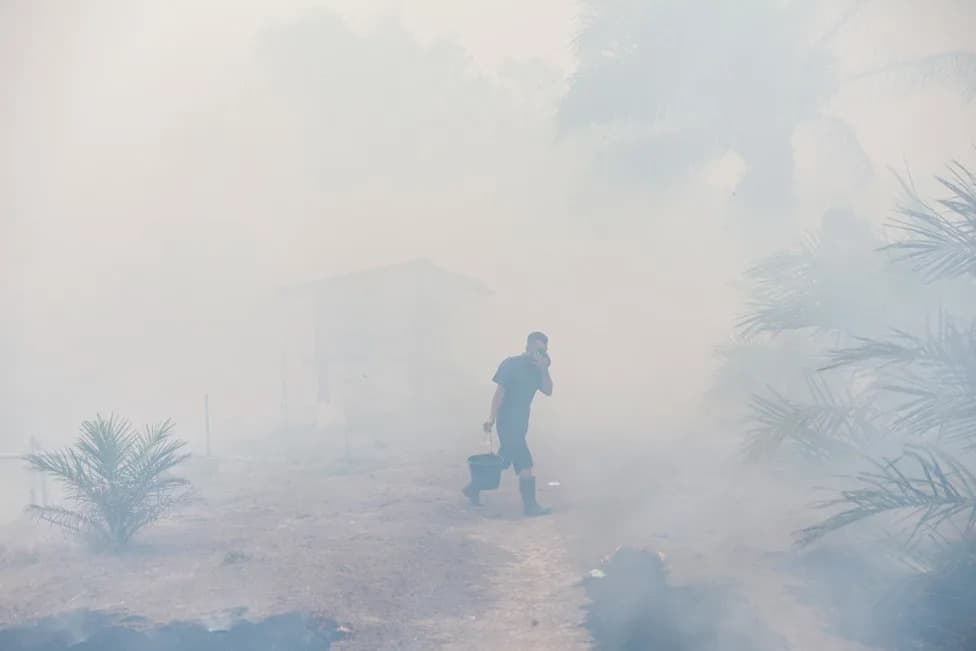
A new ETH Zurich study finds that where you plant trees matters more than how many. (CREDIT: Shutterstock)
The appeal of mass tree-planting is intuitive: trees remove carbon dioxide, and planting more of them should help cool the planet. New research from ETH Zurich shows that the reality is far more complex—where trees are planted can matter as much as, or more than, how many hectares are planted.

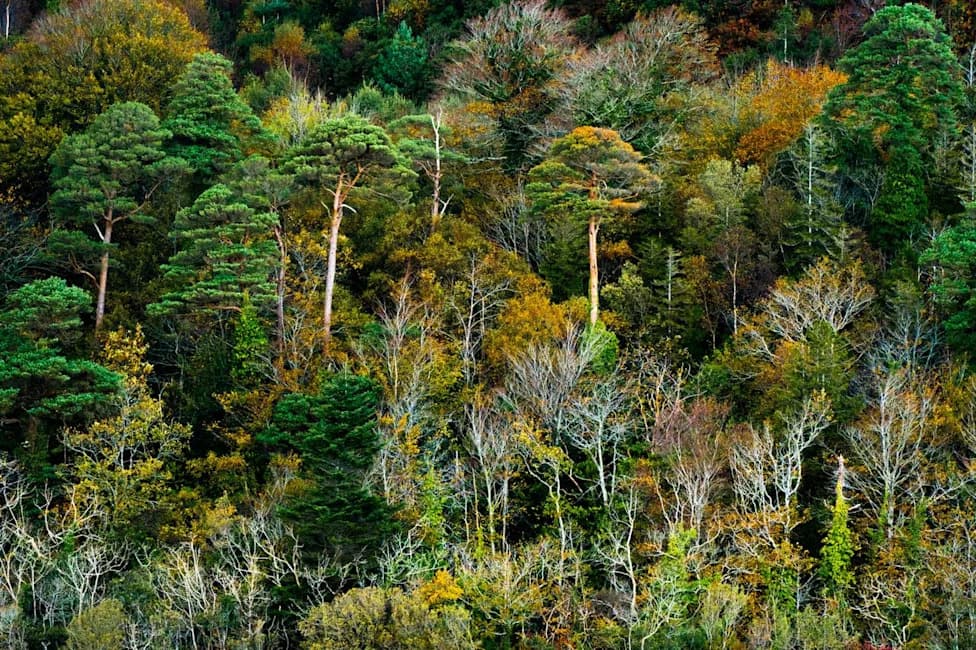
New research from ETH Zurich, finds that the location of reforestation matters as much as the scale, and in some cases more. (CREDIT: Shutterstock)
What the Study Did
Researchers from ETH Zurich's Climate Dynamics group used a fully coupled Earth system model to simulate three global reforestation scenarios. Unlike simplified approaches, this model links atmosphere, ocean and land processes so it can capture both the carbon (biochemical) and physical (biophysical) effects of new forests. The team ran five ensemble simulations on ETH Zurich's Euler supercomputer for maximum reforestation from 2015–2070 and tracked climate impacts through 2100. The project produced roughly 300 terabytes of data and required about four months of computation.
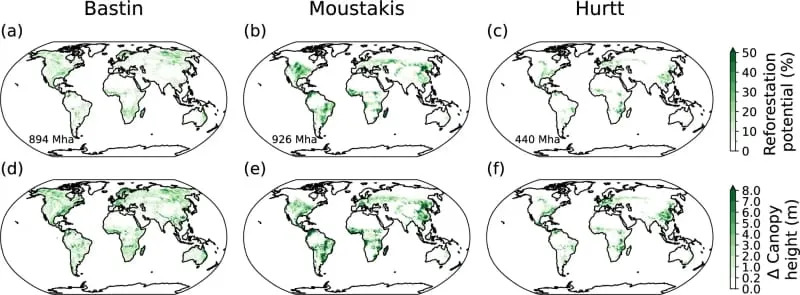
Global maps of the (a–c) implemented reforestation potential (given as the change in the percentage of grid cell covered by trees) and (d–f) simulated canopy height changes from 2071 to 2100. (CREDIT: Communications Earth & Environment)
Biochemical vs. Biophysical Effects
Planting trees changes the climate in two main ways. Biochemically, trees absorb carbon dioxide through photosynthesis, lowering greenhouse-gas concentrations. Biophysically, forests alter surface reflectivity (albedo), local water cycling (evapotranspiration) and energy exchanges with the atmosphere. In some regions, these biophysical effects can amplify cooling; in others they can counteract or even reverse the carbon benefit.
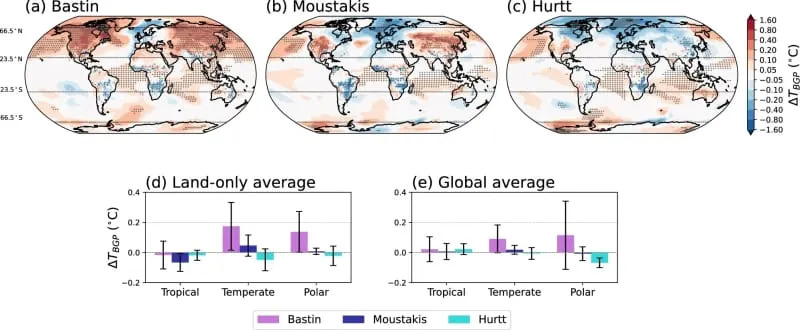
a–c Global maps of the BGP annual-mean near-surface temperature changes for the ensemble mean of the three reforestation potentials relative to the baseline, averaged over 2071–2100. d, e Average land-only and global temperature changes over the tropics (23.5∘S–23.5∘N), temperate (23.5∘–66.5∘ in both hemispheres), and polar (66.5∘–90∘ in both hemispheres) regions. (CREDIT: Communications Earth & Environment)
Key Findings
The simulations show clear regional differences:
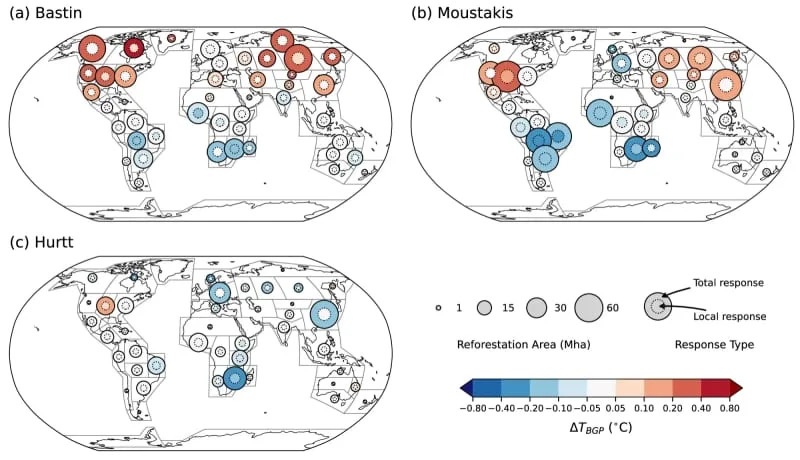
Synthesis of reforestation potentials and biogeophysical temperature responses. (CREDIT: Communications Earth & Environment)
- High northern latitudes (Siberia, Canada, Alaska and parts of northern North America) often warmed after large-scale planting. Snow-covered landscapes reflect sunlight; replacing them with darker tree canopies reduces albedo and can offset carbon benefits.
- Tropical regions (the Amazon basin, West and Central Africa, parts of Southeast Asia) delivered the strongest combined benefit: substantial carbon storage plus strong evaporative cooling per hectare.
- Two scenarios that differed by roughly 450 million hectares—an area similar to the entire European Union—produced nearly the same net global cooling by 2100 because the location of planting changed the balance of biophysical effects.
- A smaller scenario (the Hurtt scenario, ~440 million hectares) matched the net cooling of a much larger northern-focused scenario because its plantings were in more effective locations.
- Reforestation can also alter atmospheric and ocean circulation, producing temperature effects thousands of kilometres from planted areas; these non-local effects vary by scenario and in some places outweigh local responses.
Magnitude And Policy Implications
Even in the most favourable scenario modelled, global temperature reduction from reforestation by 2100 is roughly 0.25°C. That is meaningful but only a fraction of the reductions required to meet 1.5–2°C targets. The study underscores that aggressive cuts in fossil-fuel emissions remain essential.
The research also highlights a policy gap: major international frameworks such as the Paris Agreement and REDD+ typically credit forests only for carbon storage and do not account for biophysical warming or cooling effects. Ignoring those effects can lead to investments in planting programs that deliver far less climate benefit than expected — and in some cases may be counterproductive.
Practical Cautions
The authors note several important caveats: simulations used a single Earth system model (multi-model comparisons would strengthen confidence); the study focused on climate impacts and did not evaluate biodiversity, ecosystem services or social outcomes; and reforestation should avoid monocultures because single-species plantations are more vulnerable to disease and fire and provide lower long-term ecological value.
"Where we plant is more important than how much we plant," said Nora Fahrenbach, a doctoral student at ETH Zurich and lead author of the study.
Takeaway
Trees matter and planting them helps, but targeted, science-guided reforestation in the right places delivers far more climate benefit than indiscriminate mass planting. Policymakers should evaluate reforestation commitments by location as well as scale, prioritizing tropical and subtropical regions where carbon storage and evaporative cooling combine to produce the strongest climate benefits.
Publication: The study is published in Communications Earth & Environment. The original reporting appeared in The Brighter Side of News.
Help us improve.