Tanyka amnicola is a newly identified Early Permian stem tetrapod known from nine matching twisted lower jaws recovered in Brazil. The lower jaw was rotated outward, with lateral-facing teeth and internal grinding denticles that likely ground food. This unusual mouth suggests an omnivorous or herbivorous diet and indicates some primitive tetrapod lineages persisted in parts of Pangaea long after they were thought to have vanished.
Scientists Uncover Tanyka amnicola — A Prehistoric Animal With a Bizarre Twisted Jaw
Getty Images
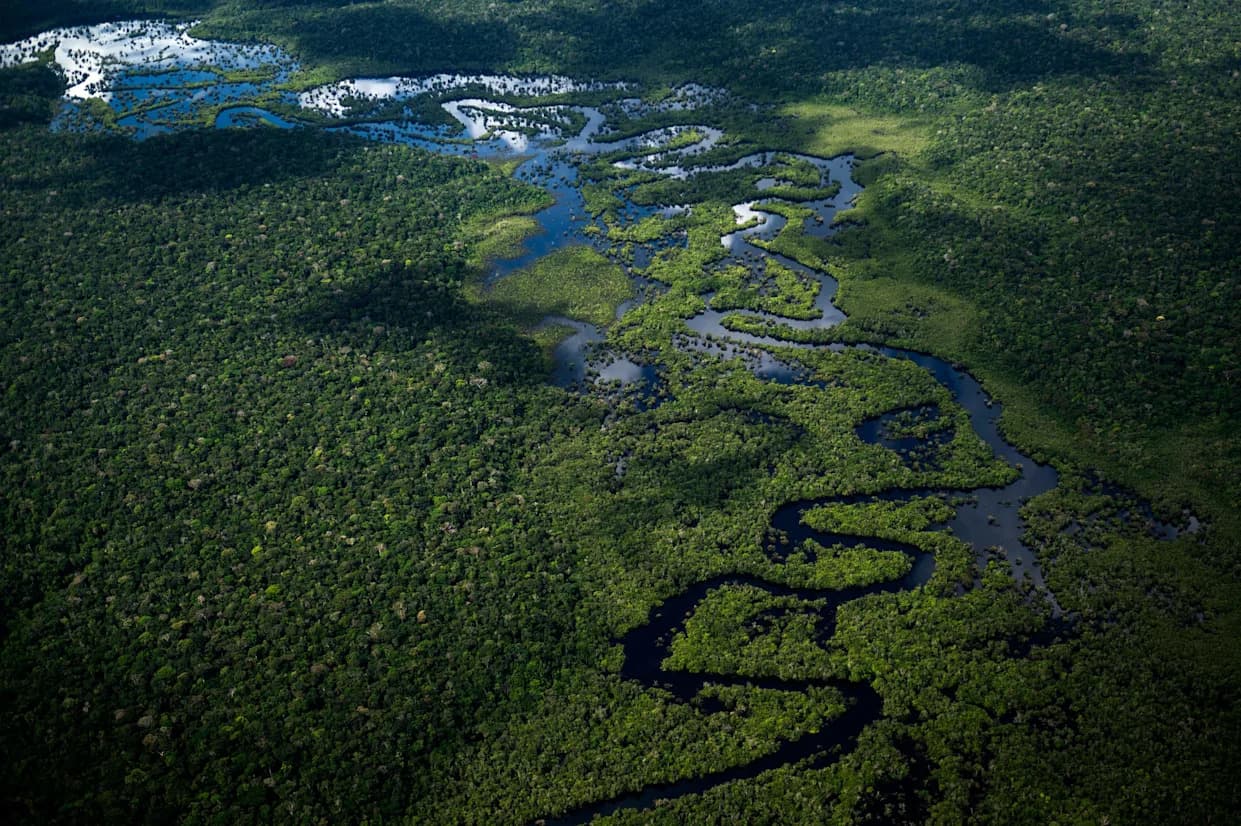
Imagine digging near the Amazon and unearthing a jawbone so oddly twisted you assume it was crushed underground — then finding eight more with the same unusual shape. That is exactly what happened to researchers working in Brazil, and their discovery has revealed one of the strangest mouth designs in the fossil record.
What the Fossils Show
The newly named species, Tanyka amnicola (roughly “jaw living next to the river”), dates to about 275 million years ago in the Early Permian. The team recovered nine lower jaws that share an identical lateral twist: the lower jaw is rotated outward from rear to front so that many teeth point sideways rather than toward the opposing upper teeth.
"At first, we wondered if these fossils might be the remains of a fish," said coauthor Martha Richter. "It was only once the fossils were properly prepared in the lab that the true nature of Tanyka was clearly revealed to us."
Because multiple well-preserved jaws show the same morphology, the researchers concluded the twist is an inherent anatomical feature, not damage from fossilization. After detailed comparisons with other species spanning hundreds of millions of years, the jaws were identified as belonging to a primitive tetrapod — an early relative of modern four-limbed animals.
A Jaw Built to Grind
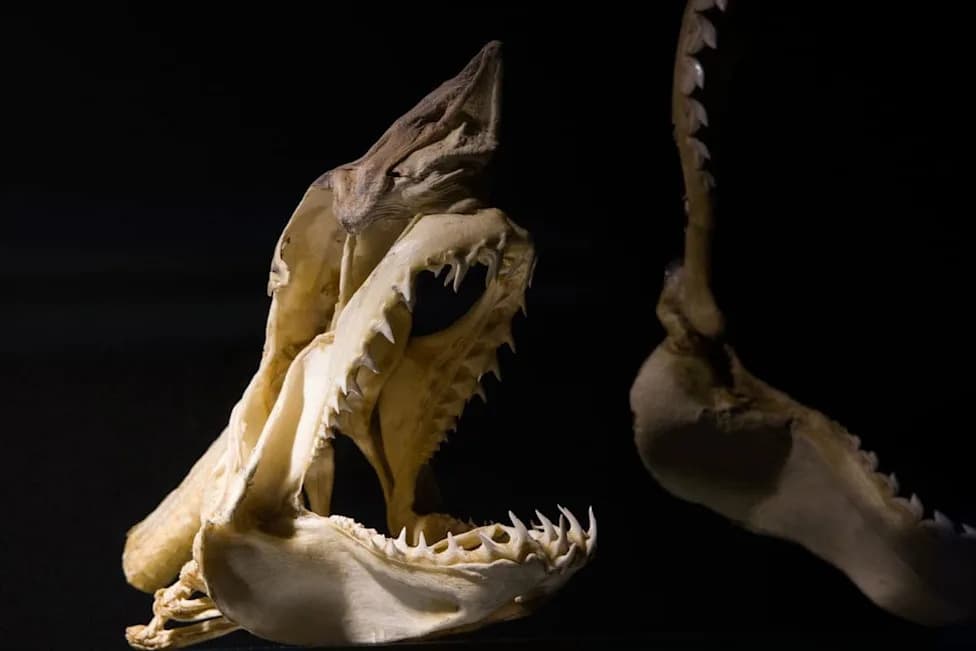
Along the inner surfaces of both the upper and lower jaws are rows of small grinding teeth, called denticles. The team proposes these denticles likely rubbed together like a built-in mortar and pestle to process food. In a typical tetrapod the crowns of lower teeth face upward toward the roof of the mouth; in Tanyka the twisted jaw reoriented those crowns laterally, suggesting a very different feeding technique.
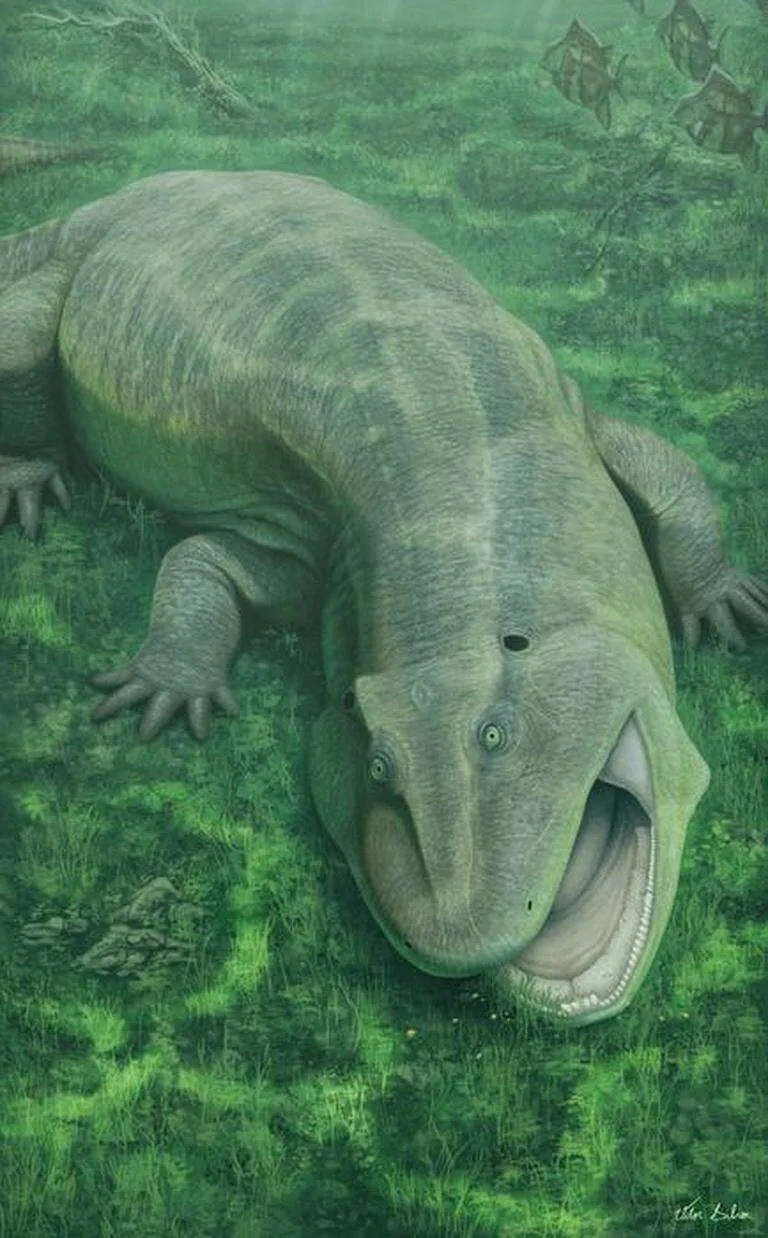
Vitor Silva, Field Museum
This unusual arrangement implies a diet that may have included tough plant material and small, hard-shelled invertebrates — meaning Tanyka was likely omnivorous or herbivorous rather than primarily carnivorous like many of its contemporaries.
Evolutionary Significance
The authors describe Tanyka as part of a more experimental phase in early tetrapod evolution, when diverse mouth designs were being tested by natural selection. The discovery is significant because most stem tetrapods were thought to have disappeared after the Carboniferous Rainforest Collapse, but Tanyka lived millions of years later than expected.
"It’s a really strange animal, and the weird twist in the jaw drove us crazy trying to figure it out," said lead author Jason Pardo. "But nine jaws we’ve found have this twist, including the really well-preserved ones, so it’s not a deformation. It’s just the way this animal was."
One possible explanation for Tanyka’s persistence is regional climate variation across Pangaea: the southern parts of the supercontinent (where these fossils were found) may have offered refuges with environmental conditions that allowed some primitive lineages to survive longer than their northern counterparts.
What We Still Don’t Know
So far, only jaw elements have been definitively linked to Tanyka, so its full body shape remains uncertain. The researchers suspect a salamander-like body with a relatively long snout, but additional fossils will be needed to confirm the animal’s overall anatomy and lifestyle.
The study describing Tanyka amnicola was published in Proceedings of the Royal Society B, and the fossils were excavated in Brazil near the Amazon rainforest. The find highlights how a single baffling fossil can open a window onto unexpected branches of vertebrate evolution.
Help us improve.